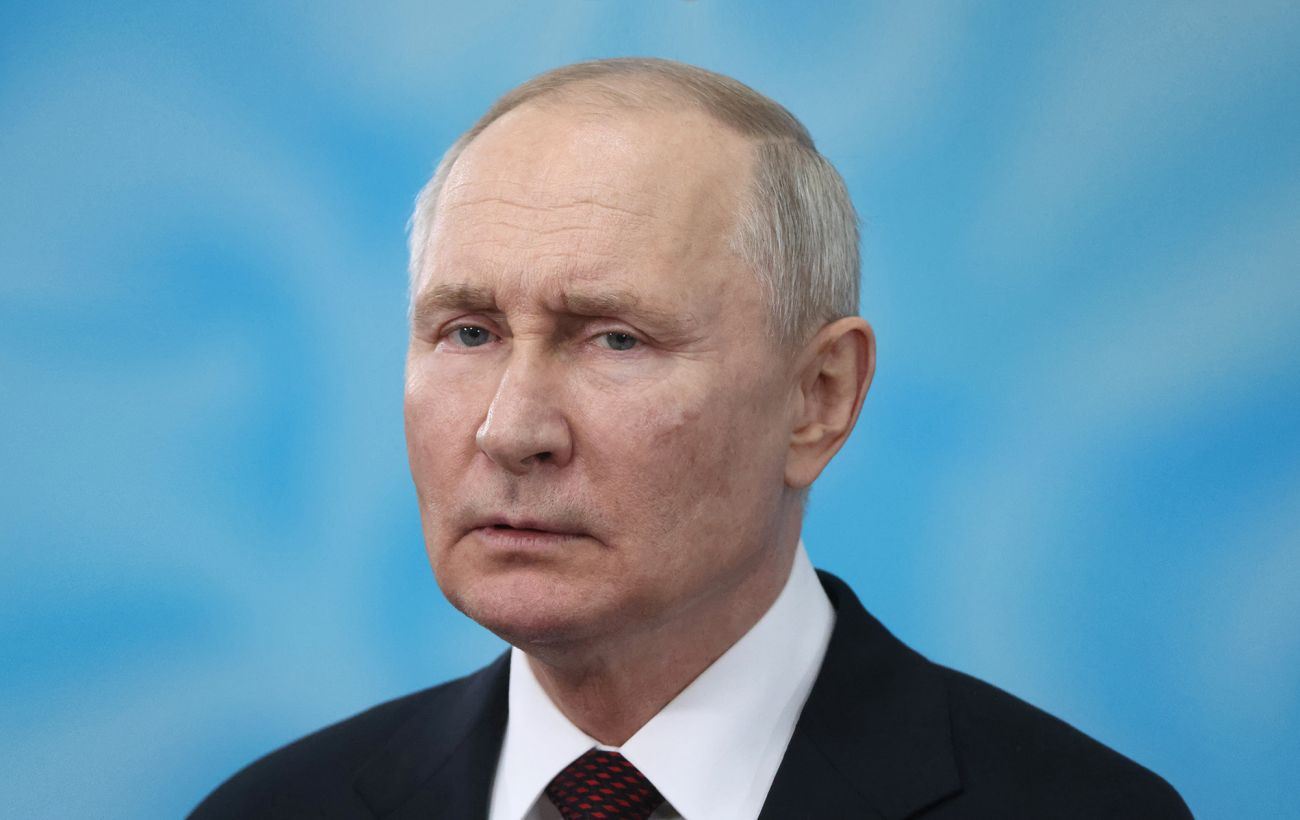
Recent surveys indicate a significant drop in Russian President Vladimir Putin’s approval ratings, coinciding with government efforts to restrict access to the messaging platform Telegram and broader internet disruptions. Even state-affiliated polling organizations acknowledge this decline.
The Russian state-run sociological center VTsIOM reported that Putin’s approval rating fell from 79% in 2024 to 66.7% by April 2026. This decline has accelerated in recent months, particularly in light of internet blockages.
Since the beginning of 2026, Putin’s approval rating has decreased by 9%, marking the lowest levels since 2022, when Russia launched its full-scale invasion of Ukraine.
According to Bloomberg, the sharp decline in approval ratings is largely attributed to the government’s crackdown on Telegram. Internet outages and growing public dissatisfaction have prompted the Kremlin to reconsider its approach to internet censorship.
The Kremlin has recognized the adverse economic and political repercussions of its internet policies, particularly those linked to the Federal Security Service (FSB) of Russia. Efforts to promote a state-sanctioned messaging app, Max, have backfired, leading to increased public resistance.
Internet outages have particularly angered residents of Moscow, who are unaccustomed to such restrictions. As Putin’s ratings continue to plummet, the Kremlin, facing upcoming elections for the State Duma, is compelled to alter its strategy to maintain the appearance of widespread public support.
On March 31, the Ukrainian Foreign Intelligence Service reported a growing lack of trust among Russians towards their government and key state institutions. An increasing number of citizens are expressing negative views about the situation in the country, while support for the Kremlin’s policies is waning.
In a notable development, the Russian government began blocking Telegram earlier than anticipated, with restrictions starting on March 29, rather than the initially planned April 1. This has led to protests advocating for a ‘free internet’ in several major Russian cities on March 29, resulting in arrests ranging from three to twelve individuals, with most demonstrators being dispersed.
Telegram, which the government is attempting to restrict, has received an update that includes a new protocol designed to circumvent censorship, theoretically allowing users to access the platform even where it is blocked.
Vladimir Putin's approval ratings have significantly declined, attributed to internet restrictions and public dissatisfaction. The Kremlin is adjusting its strategy in response to growing unrest and upcoming elections.