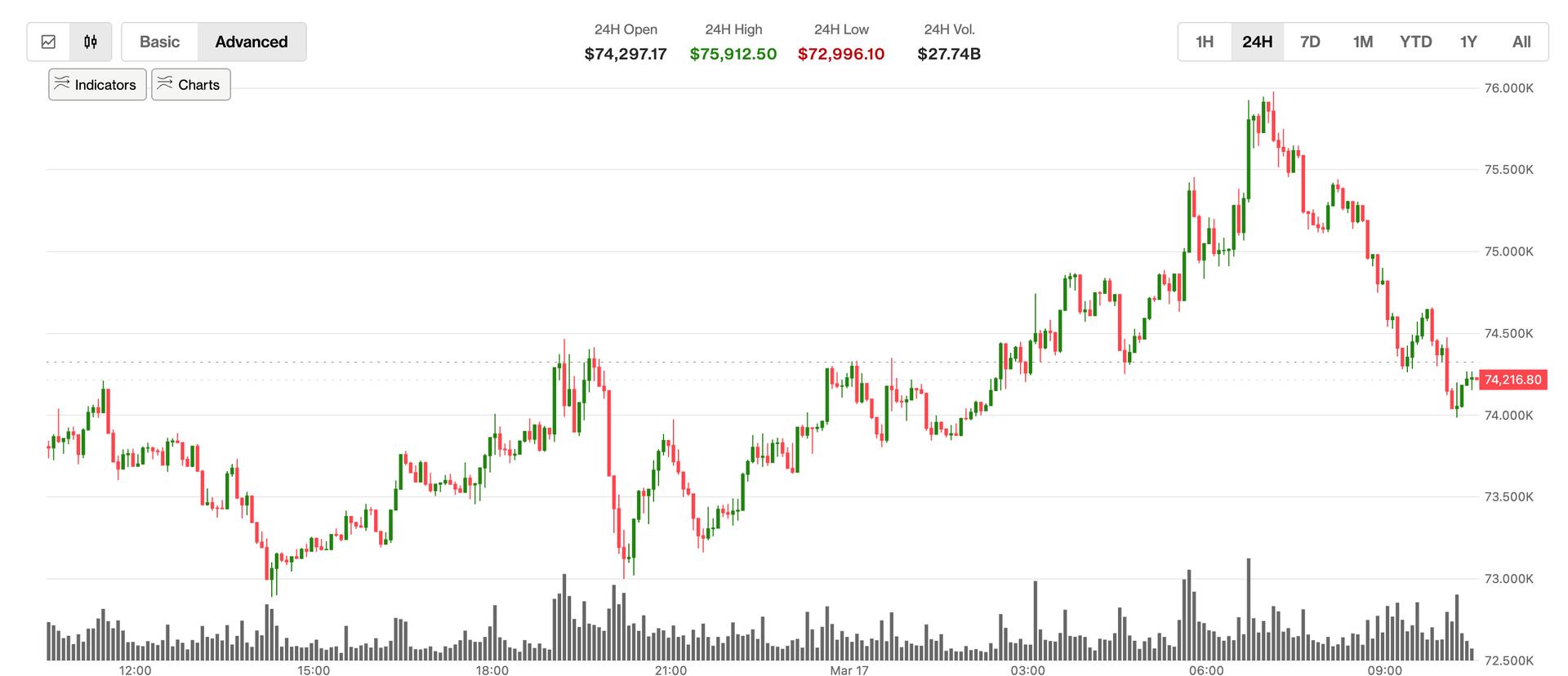
Bitcoin’s price has fallen back below $75,000 after briefly reaching a six-week high of $75,912. This fluctuation highlights the volatility of the cryptocurrency market, as the recent rally was short-lived.
The surge in Bitcoin’s value, observed early Tuesday, was attributed primarily to the closure of significant bearish put positions. According to 10x Research, this activity in the derivatives market was a crucial factor behind the price increase. Market makers, who had taken the opposing side of these trades, were required to adjust their positions, which involved purchasing Bitcoin and contributed to the upward price movement.
However, the rally quickly dissipated, indicating that the gains were more a result of the removal of downside hedges rather than a strong influx of new buying interest. Notably, the early price increase was not accompanied by substantial upside call buying, which typically signals trader confidence in further price appreciation.
The broader cryptocurrency market mirrored Bitcoin’s retreat, with other major tokens such as ether (ETH), XRP, and solana (SOL) also declining from their earlier highs. The CoinDesk 20 Index, which tracks the performance of various cryptocurrencies, fell to 2,162 points from 2,202.
Bitcoin’s inability to maintain its position above $74,400—a former support level from April 2025—has raised concerns among traders. This level is now acting as resistance, suggesting that market participants are closely monitoring it as a potential ceiling for short-term price movements. The previous support level had previously facilitated a rally to record highs above $126,000 in October 2025.
Market behavior indicates that technical reference points from earlier market cycles continue to shape trader sentiment. The quick retreat from $75,000 suggests that participants are hesitant to pursue rallies without a definitive catalyst.
Bitcoin's recent surge above $75,000 was short-lived, retreating below this threshold as market dynamics shifted. Analysts indicate that the rally was primarily driven by the closure of bearish positions in the derivatives market rather than new buying interest.