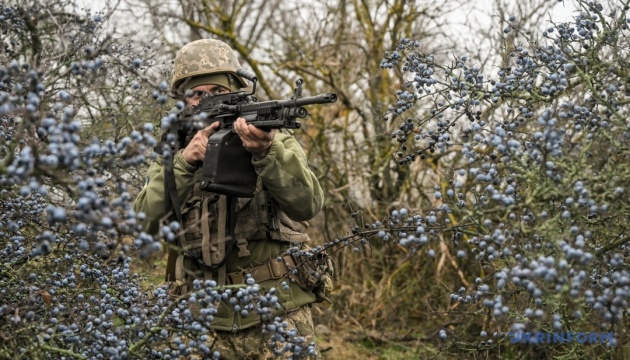
International partners will commence training artificial intelligence models for drone systems utilizing real-time data from the battlefield in Ukraine. This initiative comes as part of an experimental project approved by the Ukrainian government, aimed at enhancing the operational capabilities of unmanned aerial vehicles (UAVs).
Key Developments
Ukrainian President Volodymyr Zelensky recently visited Romania, where he and Romanian President Nicolae Ciucă signed a declaration on strategic partnership, alongside several other agreements. Zelensky highlighted that Ukrainian specialists are already engaged in the Middle East, receiving positive feedback from international partners.
During a press conference, Zelensky addressed the origins of drone attacks on Ukraine, stating that the initial Iranian-made drones, known as “Shahed,” were launched by Iranian operators who trained Russian forces. He also announced plans for the construction of two new power transmission lines between Ukraine and Romania, and the opening of an additional border crossing this summer.
In an interview with Politico, Zelensky emphasized the necessity for U.S. approval to finalize a drone production agreement and reiterated Ukraine’s readiness for peace, while firmly rejecting any ultimatums from Russia. He characterized Hungarian Prime Minister Viktor Orbán as an ally of Russia.
A meeting between the presidents of Ukraine and France is scheduled for March 13 in Paris, where they will discuss the current situation, France’s support for Ukraine, and strategies to increase pressure on Russia.
European Commission Initiatives
The European Commission has proposed sending a mission to Ukraine to assess the damage to the Druzhba oil pipeline, which was struck by a Russian missile on January 27. This assessment aims to evaluate the extent of the damage and the implications for energy security in the region.
In a related development, Saudi Aramco, the world’s largest oil company, is reportedly in negotiations with at least two Ukrainian firms to purchase interceptor drones designed to enhance defenses against Iranian attacks.
Middle Eastern Conflict Updates
The International Energy Agency (IEA) has announced the release of 400 million barrels of crude oil from strategic reserves among member countries to mitigate rising prices amid the ongoing conflict in the Middle East and the effective closure of the Strait of Hormuz. The IEA has also reported unprecedented disruptions in global oil supplies due to the ongoing war in Iran, which has severely impacted transportation routes.
Iran’s new Supreme Leader, Mojtaba Khamenei, has vowed to retaliate for the deaths of Iranian martyrs, threatening to keep the Strait of Hormuz closed and to attack U.S. bases in the Middle East. Concurrently, Iran has launched new attacks on Gulf nations, targeting oil facilities and tankers, leading to the complete shutdown of Iraqi oil ports following assaults on two tankers and energy infrastructure in the region.
Israel has confirmed an attack on a nuclear facility in Iran, which was reportedly involved in developing critical capabilities for nuclear weapons. Additionally, Israel has conducted extensive strikes against Hezbollah command centers in Lebanon.
U.S. intelligence suggests that Iran’s leadership is not at immediate risk of collapse, despite ongoing bombardments from U.S. and Israeli forces.
Military Developments in Ukraine
As of March 12, Russian forces have conducted 45 attacks, primarily in the Huliaipole direction, according to the Ukrainian General Staff. Ukrainian defense forces successfully targeted a Russian S-300 launch system, a radar station, and ammunition depots.
In the Krasnodar region of Russia, a drone attack has resulted in a fire at an oil depot, which is one of the largest oil transfer points in southern Russia. Reports indicate an increase in Russian assault operations in the Huliaipole sector of the Zaporizhzhia region.
Ukrainian armed forces have received 500,000 drones, robotic systems, and electronic warfare assets over the past seven months, with a total supply value of 23.3 billion UAH. Air defense forces have neutralized 77 out of 94 enemy drones in recent attacks.
In Chernihiv, a child was killed, and parents injured due to the fall of an enemy drone, highlighting the ongoing civilian impact of the conflict.
Government Initiatives
President Zelensky has announced new support programs for Ukrainians, including special payments for pensioners and social assistance recipients. The Cabinet of Ministers is preparing a package of measures aimed at supporting vulnerable populations, including a 1,500 UAH aid for at-risk groups.
The Ukrainian parliament has simplified the process for foreign volunteers in Ukraine and ratified agreements related to cybersecurity and technical cooperation with Slovakia.
The National Bank of Ukraine has outlined a contingency plan in case EU funding does not arrive in early April. Meanwhile, over 80% of registered unemployed individuals in Ukraine are women, according to the Ministry of Economy.
International Relations
On March 17, the European Union is expected to provide Ukraine with conditions to initiate technical work on three additional clusters as part of its accession negotiations. The EU has also threatened to terminate a 2 million euro project with the Venice Biennale if Russia participates.
Despite the evolving situation in the Middle East, the Czech Republic has stated it will not return to Russian energy resources. Additionally, Hungary has agreed to return confiscated cash transport vehicles to Ukraine but will retain the cash and gold they carried.
In summary, Ukraine continues to navigate a complex landscape of military conflict, international partnerships, and domestic challenges, as it seeks to bolster its defenses and maintain its sovereignty amid ongoing hostilities.
Ukraine is advancing its defense capabilities through international partnerships, focusing on AI training for drones and strategic agreements with Romania and the EU. As military tensions persist, the country also addresses domestic support initiatives and international relations.
