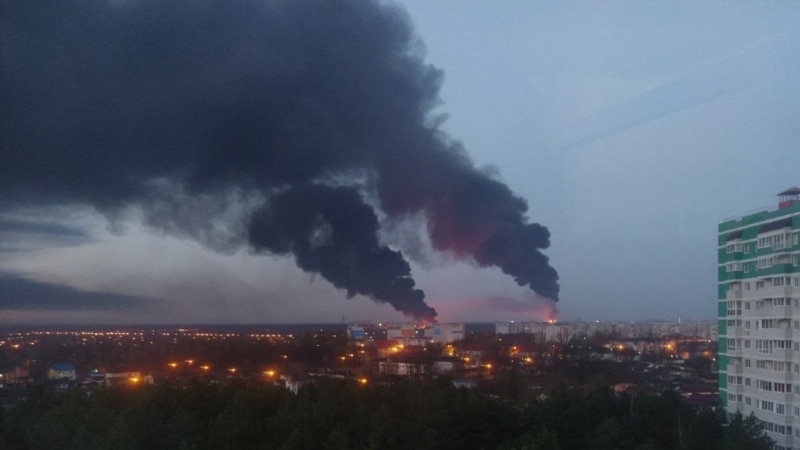
On the evening of March 10, the General Staff of the Armed Forces of Ukraine confirmed that a missile strike targeted a defense manufacturing facility in Bryansk, Russia. This operation is part of Ukraine’s broader strategy to diminish the military and economic capabilities of the Russian military.
The facility, known as ‘Kremlin El’, is described by Ukrainian military officials as a crucial component in the production of Russia’s precision weaponry. It specializes in discrete semiconductor technology and integrated circuits, which are essential for advanced weapon systems, including the Iskander missile.
According to the Ukrainian General Staff, the strike involved Storm Shadow air-launched missiles, resulting in confirmed damage to the target and significant impairment of production capabilities at the plant. The extent of the damage is still being assessed.
In contrast, Russian authorities have not officially acknowledged the attack on the military-industrial complex, labeling it instead as a ‘terrorist missile attack.’ The governor of Bryansk, Alexander Bogomaz, reported that six civilians lost their lives and 37 others were injured as a result of the strike.
This incident marks a continuation of the ongoing conflict, where Russian regions and territories occupied by Russia frequently experience drone strikes and artillery fire. Ukrainian officials have emphasized their commitment to targeting the logistical and support bases of the Russian military to reduce its offensive capabilities.
In January 2025, Ukrainian command had previously reported a strike on the ‘Kremlin El’ facility, indicating a sustained focus on disrupting Russian military production.
Ukrainian forces have successfully targeted a key electronics plant in Bryansk, Russia, as part of their strategy to weaken Russian military capabilities. The attack has drawn contrasting narratives from both Ukrainian and Russian officials regarding the impact and consequences of the strike.