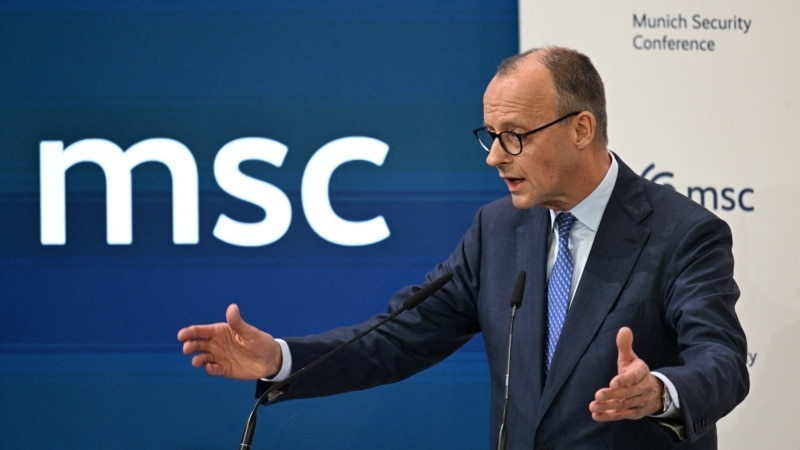
Chancellor of Germany, Friedrich Merz, stated that while Europe is prepared to engage in discussions with Russia, Moscow is not currently ready for substantial negotiations. He emphasized that Russia must acknowledge its willingness to discuss a ceasefire before any peace plan can be considered.
Merz recalled an incident nearly two years ago when Hungarian Prime Minister Viktor Orbán visited Moscow without a mandate, resulting in no progress. He noted that shortly after this visit, there were significant attacks on civilian infrastructure in Ukraine, highlighting the ongoing challenges in dialogue. “If there is a willingness to talk, we are open to it. However, as seen from the American perspective, Russia is not prepared for serious negotiations at this time,” he remarked.
The Chancellor believes that the conflict will only conclude when Russia is economically and possibly militarily exhausted. He stated, “We are approaching that moment, but we are not there yet.” He pointed out the prolonged nature of the war, which has now surpassed the duration of World War II, and remarked on Russia’s capacity to halt the conflict. He stressed the need for a united effort from the U.S., Europe, and Ukraine to achieve this.
In December 2022, French President Emmanuel Macron indicated that Europeans would need to reinitiate direct talks with President Putin if U.S. mediation efforts for a peace agreement failed. Following this, Macron’s diplomatic advisor visited Moscow last week to engage in discussions with Yuri Ushakov, an aide to Putin, focusing on key issues, primarily concerning Ukraine.
Macron, in an interview with Süddeutsche Zeitung, mentioned that he reached out to several European leaders to join efforts aimed at establishing direct contact with Russia. He explained that the desire to restore dialogue is linked to a new phase in the Ukraine conflict, where peace negotiations have commenced.
European leaders, wary of Putin’s military ambitions, expressed frustration over their exclusion from peace talks led by the Trump administration. Analysts from the Institute for the Study of War reported in December that Putin had publicly reaffirmed his commitment to maximalist military objectives in Ukraine, which were the reasons behind his full-scale invasion in 2022. The ISW noted that the Kremlin has repeatedly rejected peace proposals from the U.S. and Ukraine, attempting to shift the blame for the lack of progress onto Ukraine.
Chancellor Friedrich Merz of Germany has asserted that Europe is ready to negotiate with Russia, but Moscow is not prepared for serious talks. He believes the conflict will only end when Russia is sufficiently weakened, while European leaders express frustration over their exclusion from peace negotiations.