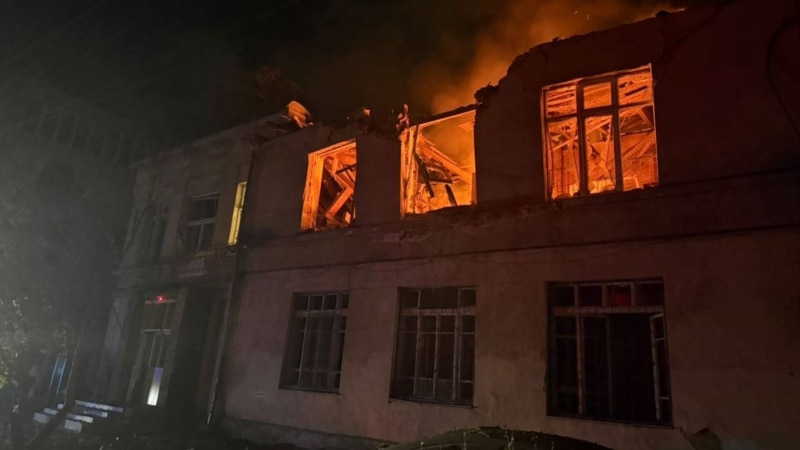
On the morning of April 30, the number of individuals injured in a recent Russian attack in Odesa rose to 20, according to Oleg Kiper, the head of the regional military administration. The injured range in age from 17 to 70 years old.
Initially, the city’s military administration chief, Serhiy Lysak, reported 16 injuries. Kiper noted that two individuals are currently in critical condition in intensive care, while another has been hospitalized in the trauma department. Others received immediate assistance on-site or were referred for outpatient care.
The Russian military targeted residential areas and civilian facilities across various districts of Odesa, with the Primorsky district suffering the most extensive damage. Kiper reported that a high-rise building and a five-story residential block were severely affected, leading to large-scale fires on the upper floors and roof, which firefighters managed to contain. Additionally, private homes and residential buildings in the city center were damaged.
Social and commercial establishments were also hit, with significant destruction reported at a kindergarten, a shopping center, a hotel, and administrative offices. Several parking lots saw damage to numerous buses and cars.
In the Khadzhybei district, infrastructure, warehouse buildings, and a garage cooperative were struck, according to Lysak. Earlier reports indicated six injuries.
The Russian military has been consistently attacking Ukrainian cities and civilian infrastructure using various weaponry, including drones, missiles, and artillery systems. Ukrainian authorities and international organizations have classified these attacks as war crimes, emphasizing their targeted nature.
These strikes on essential services and healthcare facilities aim to deprive civilians of electricity, heat, water supply, communication, medical assistance, and other vital living conditions, which some legal experts and human rights advocates characterize as genocidal actions.
During the ongoing war, Russia has been accused of committing various crimes that may fall under the definition of genocide. This includes public declarations of intent to eliminate Ukrainians as an ethnic group, with Russian officials asserting that Ukrainians do not exist as a distinct nation.
The 1948 United Nations Convention on the Prevention and Punishment of the Crime of Genocide obliges its 149 member states to prevent and punish acts of genocide during both wartime and peacetime.
The Convention defines genocide as actions intended to destroy, in whole or in part, a national, ethnic, racial, or religious group. Indicators of genocide include killing members of the group, causing serious bodily or mental harm, deliberately inflicting living conditions calculated to destroy the group, preventing births, and forcibly transferring children from one group to another.
Russian leadership denies that its military is intentionally targeting civilian infrastructure in Ukraine, asserting that such claims are unfounded.
The recent Russian strikes in Odesa have resulted in 20 injuries and significant damage to civilian infrastructure, raising concerns about potential war crimes. Ukrainian authorities continue to classify these attacks as targeted actions against civilians, reflecting ongoing tensions in the region.