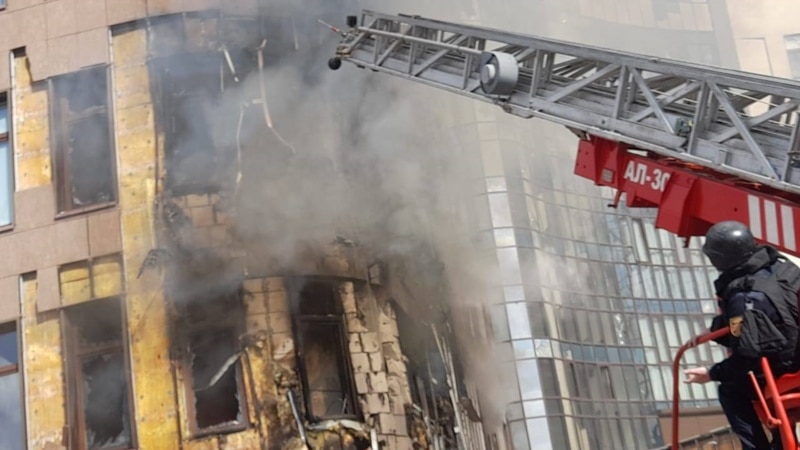
Two individuals were injured in a Russian attack in the Kharkiv region on Easter Sunday, according to the Ministry of Internal Affairs of Ukraine.
The incident occurred in the village of Zolochiv, located in the Bohodukhiv district, despite a declared ceasefire. A drone strike resulted in an explosion that ignited a food store in the area.
Emergency response efforts were complicated by the threat of additional strikes, as noted by the Ministry. Ukrainian authorities and international organizations have categorized these attacks as war crimes, emphasizing their deliberate nature.
Attacks targeting critical infrastructure, including energy, health care, and water supply systems, are viewed as attempts to deprive civilians of essential services, which some legal experts and human rights advocates argue may constitute genocidal actions. They cite a pattern of behavior by Russian officials, including public statements that undermine the existence of Ukrainians as an ethnic group.
The 1948 United Nations Convention on the Prevention and Punishment of the Crime of Genocide obligates signatory countries to prevent and punish acts of genocide during both wartime and peacetime. The Convention defines genocide as actions intended to destroy, in whole or in part, a national, ethnic, racial, or religious group.
Indicators of genocide include the killing of group members, causing serious bodily or mental harm, deliberately inflicting conditions calculated to destroy a group, and forcibly transferring children from one group to another.
Despite these allegations, Russian leadership denies targeting civilian infrastructure, claiming that their military operations do not intentionally harm civilians or destroy essential services.
A Russian drone strike in Zolochiv, Kharkiv region, injured two people on Easter, raising concerns over targeted attacks on civilian infrastructure. Ukrainian officials classify these actions as potential war crimes and genocidal behavior, citing ongoing threats to essential services.