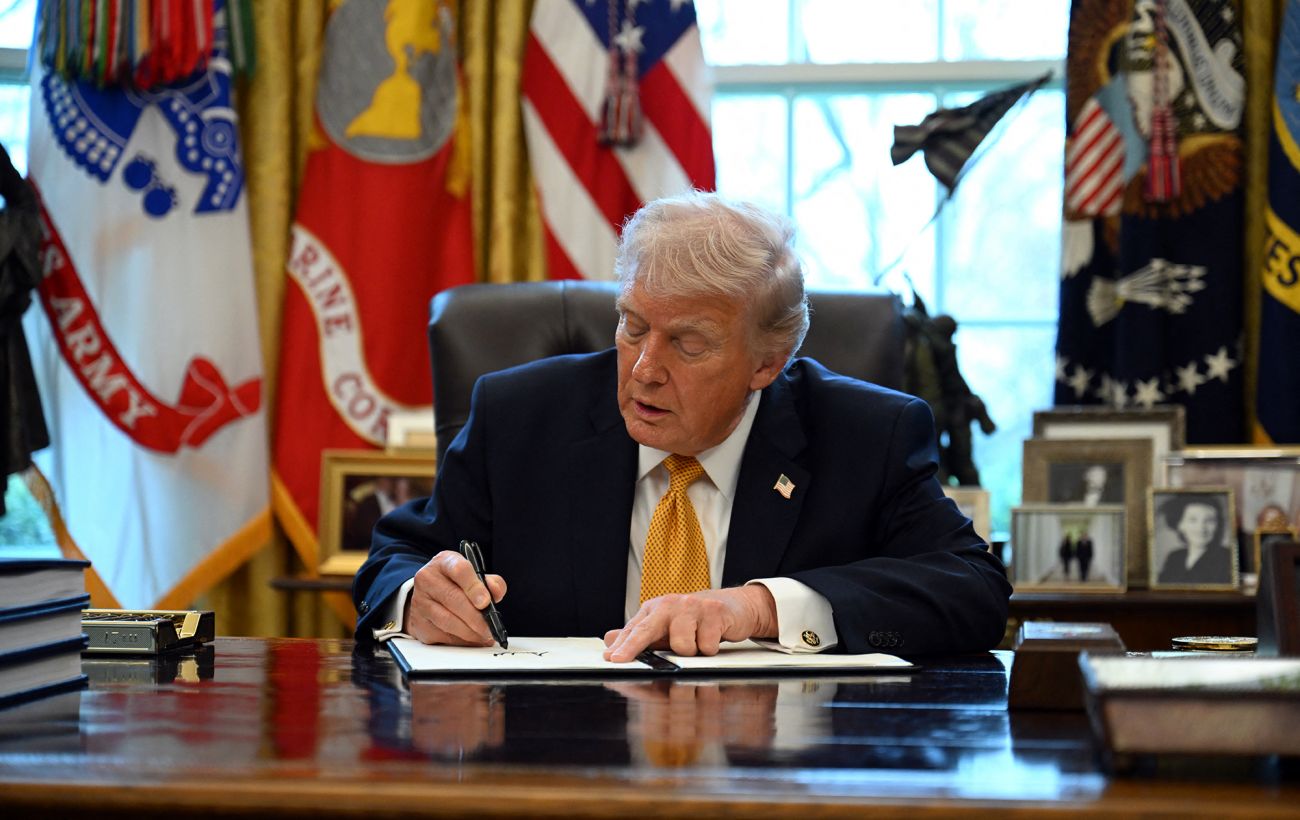
On May 1, President Donald Trump announced a new set of sanctions targeting high-ranking Cuban officials as part of a sustained effort to exert pressure on the Cuban government.
The White House confirmed that Trump signed an executive order aimed at imposing “new sanctions on organizations, individuals, or their affiliates that support the security forces of the Cuban regime, involved in government corruption, or serious human rights violations.” Specific entities subject to these sanctions were also named in the order.
This latest directive allows the U.S. State Department and Treasury to implement even stricter economic sanctions against anyone linked to individuals already sanctioned under this order.
Trump has repeatedly threatened to take action against the leftist Cuban government amid increasing efforts by the U.S. to cut off fuel and funding to the island. Cuba has been under a stringent U.S. embargo for decades and is currently facing widespread power outages due to a halt in oil and fuel supplies.
These actions have sparked speculation about a potential military attempt by the U.S. to overthrow the communist regime in Cuba, especially following Trump’s orders to capture Venezuelan President Nicolás Maduro and the initiation of new airstrikes against Iran.
In March, Trump indicated that the U.S. was in discussions regarding Cuba, stating, “but we will first deal with Iran, and then Cuba.”
Additionally, U.S. Secretary of State Marco Rubio remarked in an interview that Cuba poses a national security threat, as it has “rolled out the welcome mat for adversaries” of the United States.
Washington has previously accused Havana of providing a foothold for Chinese and Russian military forces in the hemisphere.
The U.S. has introduced new sanctions against Cuban officials, intensifying its campaign to pressure the Cuban government. This move is part of broader efforts to address concerns over human rights violations and national security threats posed by Cuba.