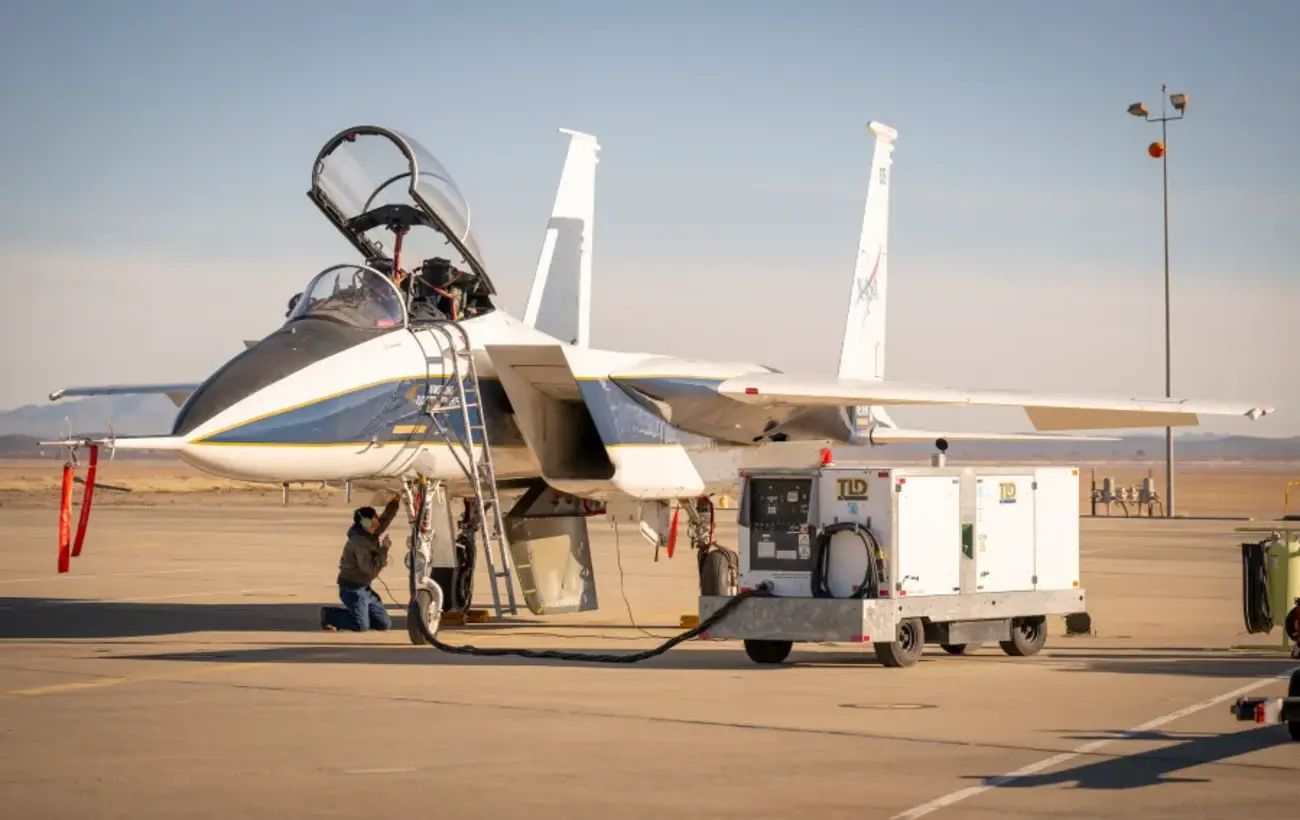
NASA has initiated flight tests of a groundbreaking wing technology that could potentially reduce fuel consumption for commercial airlines by 10%. The testing involves the F-15B fighter jet, which has been equipped with a vertical model of the “future wing” beneath its fuselage.
The technical foundation of the project, known as CATNLF (Crossflow Attenuated Natural Laminar Flow), focuses on maintaining stable laminar flow over the wing’s surface. This design aims to allow air to flow smoothly without turbulence, a challenge that has historically been difficult to achieve.
Researchers at NASA have been developing this wing shape since 2014, starting with computer simulations and later conducting tests in the Langley Research Center’s wind tunnel.
Mike Frederick, the principal investigator for CATNLF at NASA’s Armstrong Flight Research Center, remarked, “Even a small increase in efficiency can lead to significant reductions in fuel consumption and emissions for commercial airlines.”
During the tests, the F-15B serves as a flying laboratory, enabling the team to evaluate the design in a real-world environment with lower turbulence compared to wind tunnel conditions. Michelle Bunch, the project’s lead researcher from Langley, noted, “Flight tests allow us to scale up the model and fly in less turbulent air. These are excellent conditions for studying laminar flow.”
NASA testing (photo: NASA)
The significance of this research is underscored by the fact that fuel costs represent a major expense in the aviation industry. The implementation of the CATNLF design promises substantial savings.
Key considerations from the research include:
- Flight savings: For a standard Boeing 777 on a New York to London route, a 10% reduction in fuel consumption translates to approximately 5,500 liters of fuel saved per flight.
- Financial implications: Based on April 2026 fuel prices (over $1.45 per liter in Europe), savings for a single transatlantic flight could exceed $7,000.
- Annual impact: A single aircraft operating daily on this route could save up to $2.6 million annually. With over 1,300 Boeing 777s in service worldwide, the total benefit to the industry could reach hundreds of millions of dollars.
As for the project’s status and future testing, NASA reported that on January 12, 2026, the aircraft successfully completed speed tests on the runway, achieving a speed of 232 km/h. By the end of January, the first full flight lasted 75 minutes at an altitude exceeding 10,300 meters.
Utilizing the F-15B as a test platform has allowed NASA to avoid the high costs associated with building a dedicated demonstration aircraft, significantly reducing development expenses.
Looking ahead, a series of 15 additional test flights is planned to evaluate performance at various speeds and altitudes. According to the International Civil Aviation Organization (ICAO), the number of air passengers is expected to double over the next 20 years, prompting NASA to consider implementing the CATNLF technology in the next generation of aircraft. In addition to subsonic aviation, researchers are also exploring adaptations of the design for supersonic flight.
NASA's flight tests of the CATNLF wing design aim to significantly reduce fuel consumption in commercial aviation. The project, which has been in development since 2014, could lead to substantial cost savings and lower emissions for airlines, with implications for future aircraft design.