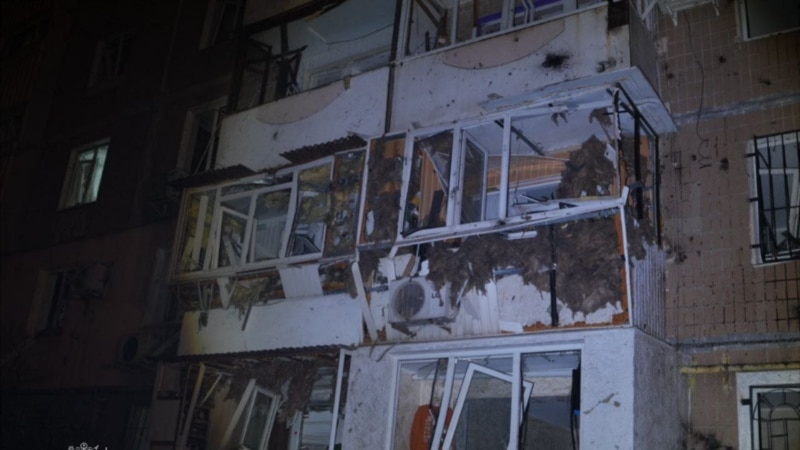
On the night of February 24, drone strikes targeted Zaporizhzhia, resulting in injuries to five individuals, including one child, according to the State Emergency Service of Ukraine.
Local authorities reported at least eight strikes in the regional center, causing damage to residential buildings, non-residential structures, and infrastructure. Ivan Fedorov, head of the Zaporizhzhia Regional Military Administration, indicated that emergency services have begun addressing the aftermath of the attacks, which affected homes and public facilities.
Emergency responders extinguished a fire that spread over an area of 200 square meters. Fedorov noted that municipal workers are actively engaged in recovery efforts, while social service professionals are assessing the damage inflicted by the strikes.
The Russian military has consistently targeted Ukrainian cities and civilian infrastructure using various weaponry, including strike drones, missiles, and artillery systems. These attacks have raised serious concerns, with Ukrainian officials and international organizations categorizing them as war crimes, emphasizing their systematic nature.
Attacks on essential services and healthcare facilities have been highlighted as attempts to deprive civilians of electricity, heating, water supply, communication, and medical assistance, leading some legal experts and human rights advocates to characterize these actions as genocidal.
Legal scholars assert that the Russian Federation’s actions during the ongoing conflict meet various criteria for genocide, including public declarations of intent to eliminate Ukrainians as a distinct ethnic group. Russian officials have made statements suggesting that Ukrainians do not exist as a nation, which they claim is artificially constructed and should be eradicated.
Other indicators of potential genocide include targeted attacks on essential services, persecution of pro-Ukrainian individuals in occupied territories, and the systematic destruction of Ukrainian cultural identity through the targeting of educators, artists, and cultural artifacts.
The 1948 United Nations Convention on the Prevention and Punishment of the Crime of Genocide obligates its 149 member states to prevent and punish acts of genocide during both wartime and peacetime.
This convention defines genocide as actions aimed at the complete or partial destruction of a national, ethnic, racial, or religious group. Key indicators include the killing of group members, causing serious bodily or mental harm, deliberately inflicting conditions calculated to bring about a group’s destruction, preventing births, and forcibly transferring children.
Despite these allegations, Russian leadership continues to deny that its military is intentionally targeting civilian infrastructure, asserting that such claims are unfounded.
Recent drone strikes in Zaporizhzhia have resulted in civilian injuries and significant damage to infrastructure. Authorities and international organizations are increasingly labeling these attacks as war crimes, reflecting the broader context of the ongoing conflict in Ukraine.