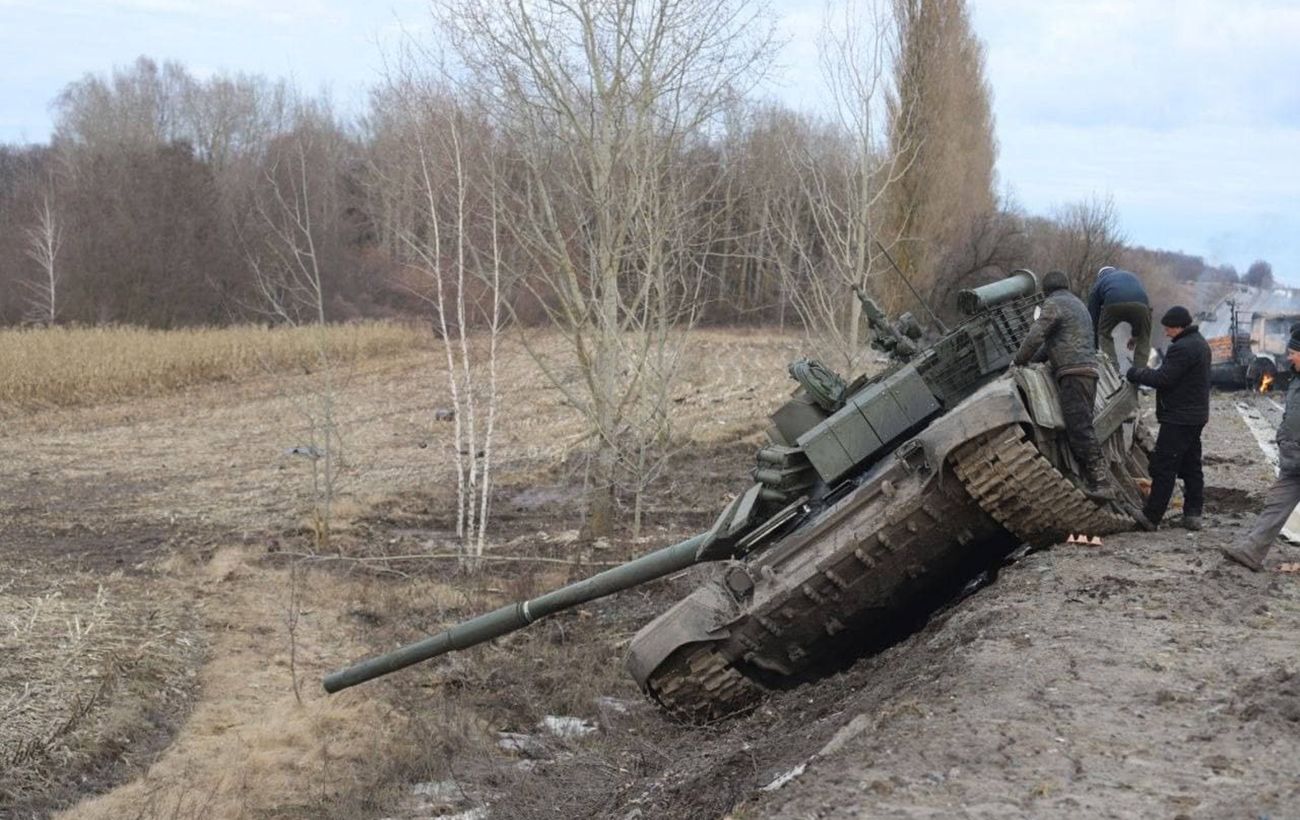
As the conflict in eastern Ukraine evolves, military strategies have undergone significant changes, impacting logistics and the very concept of rear support. Even far from the front lines, any misstep can prove fatal.
Recent reports indicate that mere minutes from Russian positions, any visible activity can be life-threatening. Helicopters are continuously monitoring the area, while fiber-optic lines crucial for drone operations crisscross the fields.
Military vehicles, often modified with metal reinforcements, are now designed to mitigate the risks of aerial strikes. In frontline regions, infrastructure is adapting to these threats; in Kherson, protective nets are being installed over roads and hospitals to reduce vulnerability to air attacks.
Movement near the frontline has drastically decreased, with troops typically deploying at night. They utilize thermal cloaks or wait for dense fog to obscure their movements. Supplies of food and equipment are frequently delivered via drones, while robotic systems are sometimes employed for the evacuation of the wounded.
Taras Chmut, a Marine Corps veteran and head of the Come Back Alive Foundation, described the situation as a “death zone.” He emphasized that the nature of warfare has changed dramatically, with the area of danger expanding monthly, a reality that remains difficult for many Europeans to grasp.
First-person view (FPV) drones have become pivotal in this new tactical landscape, tracking and striking vehicles with remarkable precision. As a result, standard vehicles have nearly vanished from areas close to the front. Irina Rybakova, a representative of the 93rd Brigade “Kholodny Yar,” noted that transportation is almost nonexistent in the immediate combat zone.
To protect roadways, kilometers of nets are being stretched overhead, creating makeshift tunnels. However, even this measure does not guarantee safety. The front line has transformed into a testing ground for modern warfare technologies, with electronic warfare actively disrupting drone control signals.
In response, Russian forces have begun using drones connected by long fiber-optic cables—sometimes extending up to 40 kilometers—that are less susceptible to jamming. Traditional armored columns have largely disappeared, as military units increasingly rely on improvised defense methods such as armed pickups and netting to intercept drones.
Additionally, unconventional tactics are emerging, including small group movements under cover and the use of motorcycles, buggies, and even horses for transport.
Meanwhile, U.S. presidential advisor Mark Burns has stated that the crimes committed by Russian forces in Ukraine cannot be overlooked or excluded from potential peace negotiations. He characterized the situation not merely as a war, but as a deliberate campaign of terror against civilians, highlighting systematic attacks on infrastructure, including hospitals and schools, and the tragic loss of children during these assaults.
Ukrainian President’s Office head Kyrylo Budanov has remarked that the negotiation process between Ukraine and Russia is gradually reaching a point where both sides will need to make definitive decisions.
The ongoing conflict in eastern Ukraine has led to a dramatic shift in military tactics, with new technologies and strategies redefining the battlefield. As both sides adapt, the risks for soldiers and civilians alike continue to escalate.