“
In the narrow sense, it is 1–5 kilometers from the line of combat contact (LCL), on which the Russian army erases all shelters, remnants of buildings and even holes in which the infantry can hold the defense. In the wider one – 5–10–15 kilometers from the LBZ, where the occupiers make the movement of Ukrainian military personnel as risky as possible, and sometimes completely impossible.
The good news, if you can really call it that, is that killzone works both ways. The Russians also suffer from Ukrainian FPV drones, and, as the UP military assures, the enemy takes even longer to get to their positions.
Advertising:
The establishment of a dense keelzone dictates new rules of war.
Gunners are pushed back deep, and sometimes they have no work at all, because they do not reach the range of the projectile.
UAV pilots, together with bulky and heavy equipment (charging stations, antennas, and eventually drones) go to their positions 10 or more kilometers on foot (or carry it with them on ground robotic complexes, NRK).
The only ones who stand out from this list are infantrymen. They were least and at the same time most affected by the formation of the keel zone.
The least – because 50-year-old men in “pixels” with assault rifles were and are still standing on the front line. Most of all, because now they go to these positions 5 at a time–10 kilometers on foot under Russian FPV drones in the sky and on the ground. And there are 100 of them in these positions–150 days.
All support for infantry positions has been carried out exclusively for more than half a year heavy bombers – “Heavy shots”, “Vampires”, etc.
Drones, which in 2023 received the general nickname “Baba Yaga” from the enemy, because they terrified enemy infantry with their size, sound and amount of damage, henceforth became the “New Post” for Ukrainian infantrymen.
They carry everything from a walkie-talkie to mom’s Olivier, but only if they haven’t been shot down by an enemy with their FPV drone.
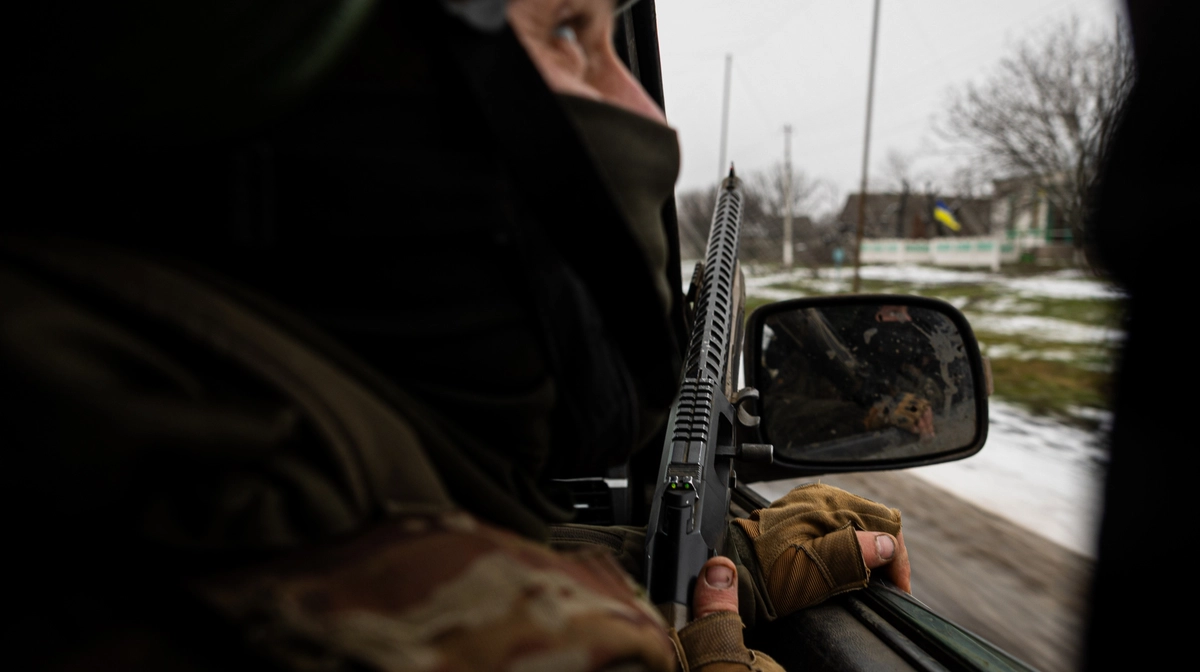
A few weeks ago, while working at the positions of the 152nd separate hunting brigade in the Pokrovsky area, “Ukrainian Pravda” had the opportunity to see with its own eyes what the supply chain of the Ukrainian infantry looks like, what the soldiers talk about after four months in the positions and how, from the point of view of military expediency, such a long stay of people at the LBZ is commented by mid-level commanders.
Cinematography by Olga Kyrylenko, editing by Timur Khachuev, UP
”, — write: www.pravda.com.ua
In the narrow sense, it is 1–5 kilometers from the line of combat contact (LCL), on which the Russian army erases all shelters, remnants of buildings and even holes in which the infantry can hold the defense. In the wider one – 5–10–15 kilometers from the LBZ, where the occupiers make the movement of Ukrainian military personnel as risky as possible, and sometimes completely impossible.
The good news, if you can really call it that, is that killzone works both ways. The Russians also suffer from Ukrainian FPV drones, and, as the UP military assures, the enemy takes even longer to get to their positions.
Advertising:
The establishment of a dense keelzone dictates new rules of war.
Gunners are pushed back deep, and sometimes they have no work at all, because they do not reach the range of the projectile.
UAV pilots, together with bulky and heavy equipment (charging stations, antennas, and eventually drones) go to their positions 10 or more kilometers on foot (or carry it with them on ground robotic complexes, NRK).
The only ones who stand out from this list are infantrymen. They were least and at the same time most affected by the formation of the keel zone.
The least – because 50-year-old men in “pixels” with assault rifles were and are still standing on the front line. Most of all, because now they go to these positions 5 at a time–10 kilometers on foot under Russian FPV drones in the sky and on the ground. And there are 100 of them in these positions–150 days.
All support for infantry positions has been carried out exclusively for more than half a year heavy bombers – “Heavy shots”, “Vampires”, etc.
Drones, which in 2023 received the general nickname “Baba Yaga” from the enemy, because they terrified enemy infantry with their size, sound and amount of damage, henceforth became the “New Post” for Ukrainian infantrymen.
They carry everything from a walkie-talkie to mom’s Olivier, but only if they haven’t been shot down by an enemy with their FPV drone.
A few weeks ago, while working at the positions of the 152nd separate hunting brigade in the Pokrovsky area, “Ukrainian Pravda” had the opportunity to see with its own eyes what the supply chain of the Ukrainian infantry looks like, what the soldiers talk about after four months in the positions and how, from the point of view of military expediency, such a long stay of people at the LBZ is commented by mid-level commanders.
Cinematography by Olga Kyrylenko, editing by Timur Khachuev, UP