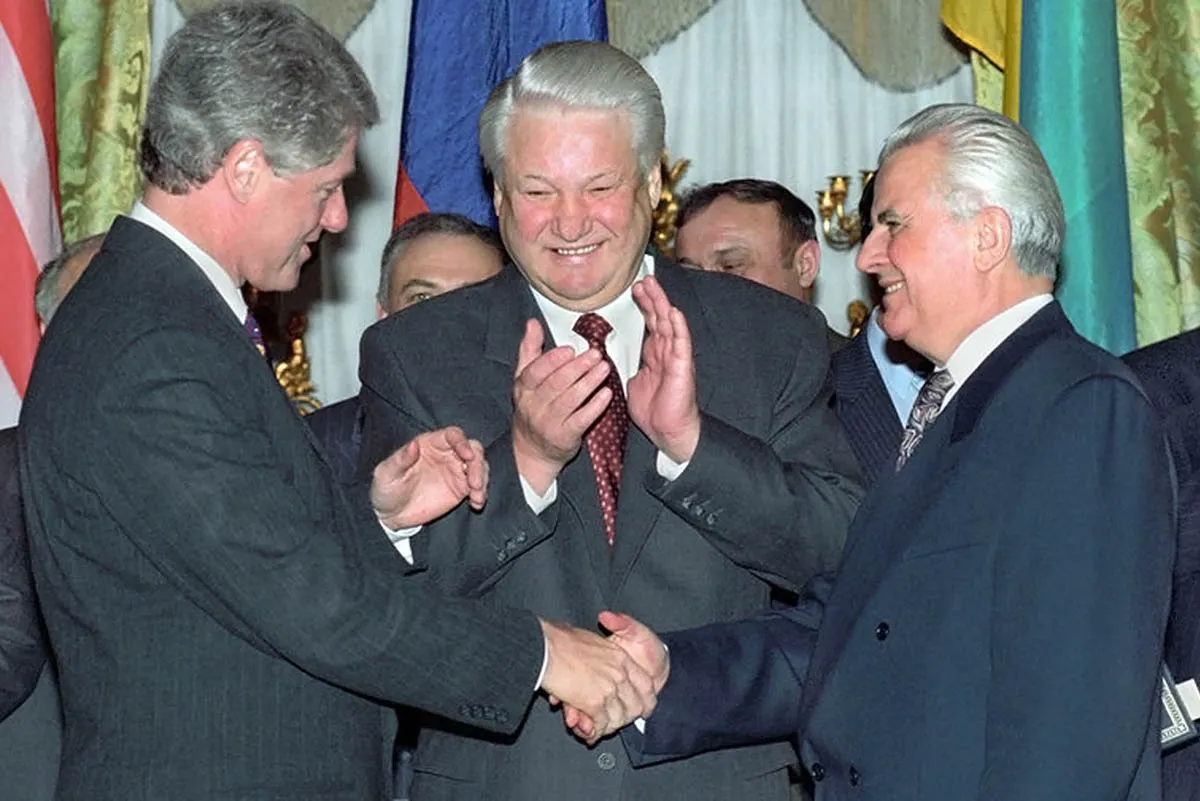
“On December 5, 1994, the infamous Budapest Memorandum was signed, designed to guarantee security for Ukraine in exchange for giving up nuclear weapons. This document failed twice: in 2014 and in 2022. On the 31st anniversary of the signing, UA.News turned to well-known political experts to hear their opinion on the lessons to be learned from those events. Political scientist”, — write on: ua.news
On December 5, 1994, the infamous Budapest Memorandum was signed, designed to guarantee security for Ukraine in exchange for giving up nuclear weapons. This document failed twice: in 2014 and in 2022.
On the 31st anniversary of the signing, UA.News turned to well-known political experts to hear their opinion on the lessons to be learned from those events.
Political scientist, director of the sociological service “Ukrainian Barometer” Viktor Nebozhenko is sure: it is not us who should learn the lessons from the Budapest Memorandum. And to those who signed it: Russia, the USA and Britain.
“If they don’t learn their lessons, then later they will push us some kind of “doll” again. A beautiful document signed by random politicians without any responsibility. Here’s a look: every new administration in the US changes international politics. And everyone will later be able to say: we did not sign anything, we will not bear obligations for some previous presidents. Therefore, the main conclusion is that the signatory countries of Budapest should change their attitude towards Ukraine and their signatures. Yes, we are, unfortunately, secondary here. And if this change of approach does not take place, we will eventually receive another exactly the same document without any real content.” Viktor Nebozhenko thinks.
Political scientist, director of the Center for Applied Political Research “Penta” Volodymyr Fesenko Fesenko notes: we have all learned the lessons from the Budapest Memorandum a long time ago. And the main lesson is that you can’t rely on empty promises, words and good intentions.
“Everything can change: the political situation and conjuncture, the leaders of the states. If it is about security guarantees, concrete actions are needed, which are fixed in treaties, in concrete political, military, financial and organizational decisions. It is more reliable. Even partners cannot be taken at their word. This is the lesson we learned a long time ago. That is why now the issue of security guarantees is one of the main and most difficult in the negotiations, in particular with the USA. We have many illusions and fantasies about security guarantees. Absolutely one hundred percent guarantees do not exist in nature, they simply do not exist, this must be understood. Neither NATO membership nor even nuclear weapons are 100% guarantees, unfortunately.
Currently, Ukraine is negotiating with both the EU and the US on specific security guarantees. They will not be absolute safeguards against aggression, it is all relative and this should also be realized. But they must be specific and legally binding. This could reduce the likelihood of another invasion by Russia or someone else. However, it is our army and our weapons that are the main guarantee of security – this is the lesson of the Budapest Memorandum. You have to rely on yourself.” Volodymyr Fesenko is confident.
According to the political scientist, we have already learned all the lessons. And let’s not repeat those mistakes, like then, 31 years ago, during the signing of the Budapest memorandum.
Read also:
Non-existent guarantees: the main lessons of the Budapest Memorandum
Read us on Telegram and Sends