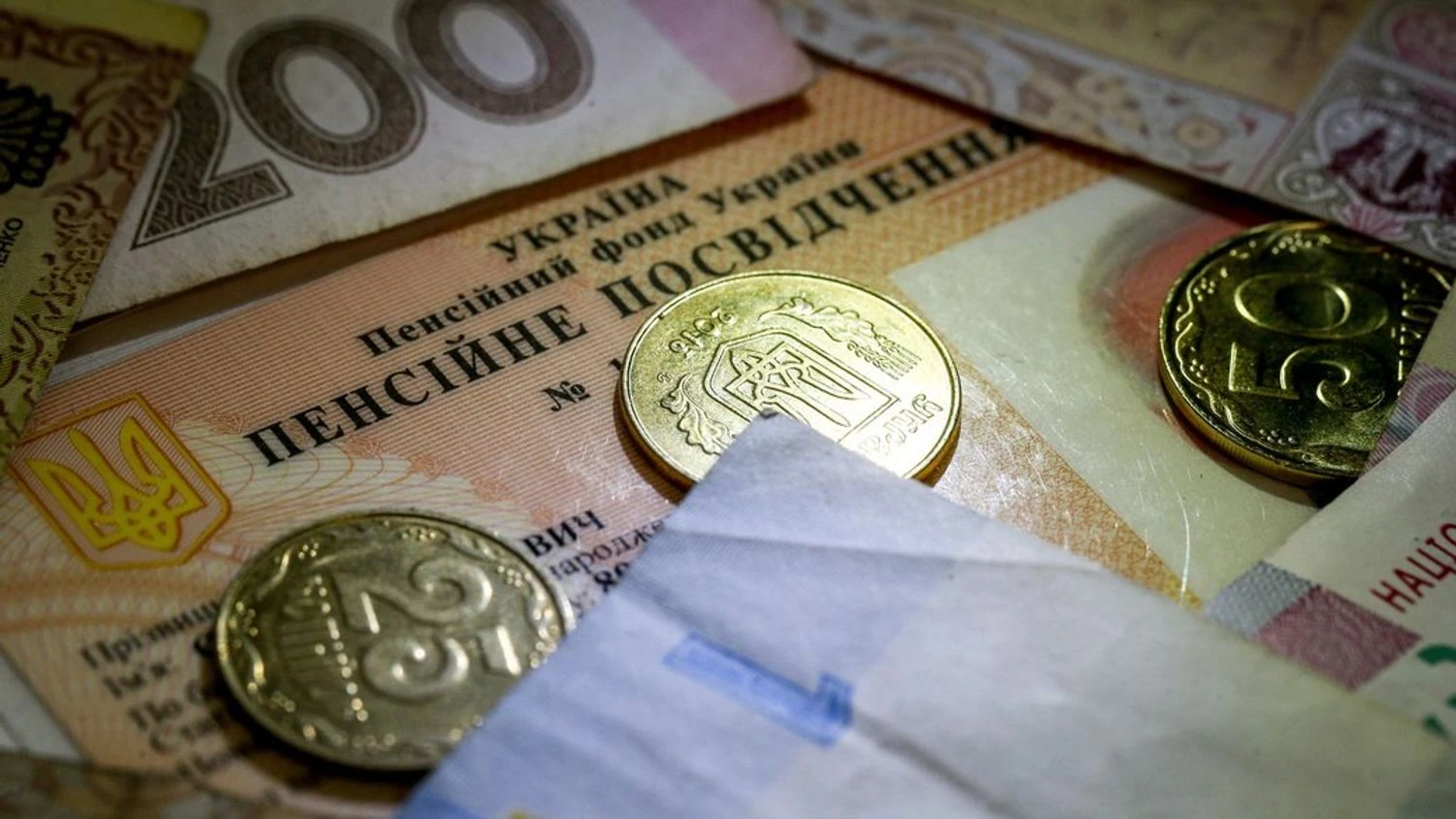
“Three levels of pensions instead of one: how the state wants to change the system and who will pay for itThe pension reform proposed by government officials in Ukraine envisages a transition to a point-based system, separate budget
financing for special pensions, and the launch of a funded tier, but its success depends on realistic calculations, the budget’s
ability to cover increased expenditures, and public trust amid demographic and wartime risks.
”, — write: unn.ua
To understand the topic, UNN journalists spoke with Volodymyr Dubrovsky, Senior Economist at the CASE Ukraine Center for Social and Economic Research.
Pension Reform 2026: What exactly do they want to change in Ukraine?The Ukrainian pension system is once again approaching a reboot point, but this time it’s not just about another indexation or “pulling up” the minimum payment. The model being discussed in the relevant ministry simultaneously changes the calculation mechanism, the logic of incentives for single social contribution payers, and the configuration of the state’s role as a guarantor.
As Volodymyr Dubrovsky explains, “quite a lot is changing, including the formula that currently exists, and indexations with inflation. A point system is being introduced.”
The key idea is to make the link between contributions and future pensions more “readable” and predictable, and to move some of the state’s current obligations outside the solidarity system.
Point system: an attempt to link pensions to the economy, not to politicsIn a conversation with UNN, the expert explains: the proposed transition to points is an attempt to rewrite the pension formula so that it does not depend on manual decisions and constant budget “patching.”
For each contribution, a person receives a certain number of points, which accumulate, and upon retirement, they are filled depending on the average salary.
This is an important nuance, because the average salary in a stable economy can grow faster than inflation, so the system tries to “tie” pensions to productivity and the legal wage fund. But here, dependence immediately arises on two factors that are not guaranteed in a wartime economy: the pace of recovery and the level of shadow economy.
Special pensions as a separate budget program: separation of flows and political conflictThe second major block, which is being discussed in connection with the introduction of a three-component pension, is the removal of special pensions from the solidarity system.
The Senior Economist at the CASE Ukraine Center for Social and Economic Research states directly:
“State programs of so-called special pensions work as a deferred bonus for prosecutors, judges.”
The argument “for” is that special pensions and military pensions should be financed as a separate state program, where money comes from the budget through the funds of relevant ministries, and not from the Pension Fund. That is, it is not about canceling obligations, but about changing the source of financing and more transparent political responsibility.
The argument “against” is that it creates a conflict of interest with influential groups and the risk that transferring expenditures to the budget will not reduce costs, but simply change the “pocket” from which they are taken. For Ukrainians, the key question here is whether such budgeting of special pensions will lead to real savings for the solidarity system, or merely be an accounting rearrangement.
Minimum pension of UAH 6,000: what are the calculations based on?Volodymyr Dubrovsky, answering the question about the calculation of the “minimum wage” and its costs, honestly replies: he did not make targeted calculations, but fears that state budget expenditures will still be higher than the amounts currently expected by the Government.
The expert suggests that part of the effect may come from changes in special pensions, but also notes that they are already partially financed through state transfers.
For the budget, this means one thing: the current question is not whether a budget deficit will arise at all, but how much the need for subsidies to the Pension Fund will increase.
Average pension in Ukraine increased to UAH 6,544, but not everyone receives this amount – infographic28.01.26, 10:05 • 4003 views
Sources of funding: betting on growth or larger subsidiesSpeaking about pension reform in Ukraine, economist Volodymyr Dubrovsky names several scenarios.
The optimistic one involves rapid economic growth combined with de-shadowing. Then, theoretically, subsidies could even be reduced. But the basic expectation of the UNN interlocutor is different.
It is most likely about increasing budget subsidies, including subsidies for the funded system.
This is a key fork in the road. If the budget is already operating with a significant deficit due to the war, any additional burden creates competition between social expenditures and defense and recovery needs. And it is here that the reform must either demonstrate economic logic (incentives for payers, expansion of the single social contribution base) or turn into another bill “for all good things” for Ukrainians.
Funded pension tier: investments or hidden state financing?The government presents the funded component as the third element that should provide a so-called “additional pension.” At the same time, Volodymyr Dubrovsky, commenting on this point, warns:
“If the funded tier is actually concentrated in a state fund, the funds may primarily go into government bonds, and then the interest on these instruments will become an indirect source of financing for payments.”
This is also not a trifle for the capital market. If accumulated money is “cycled” into public debt, the system becomes less like long-term investment in the economy and more like a mechanism of budget support through the debt market. Formally, this can act as financial discipline, but strategically, it substitutes the purpose of savings.
Pension Fund: Ukrainians abroad can undergo identification at any service center without returning to their place of registration28.10.25, 16:16 • 12398 views
Will pension reform motivate people to work “officially”?One of the stated motives of the reform is to restore a sense of justice: those who pay contributions receive significantly more. And here, the UNN interlocutor directly compares the new logic with previous increases in the “minimum wage,” which, according to him, “only led to equalization.”
However, he also points out a problem that can “eat up” half of the incentive for a person not to receive a “salary in an envelope”: self-employed individuals and sole proprietors who pay single social contribution from the minimum wage risk receiving almost the same as those who did not pay at all. This is a crucial point.
That is, the reform may strengthen incentives for employees with “white” salaries, but leave a significant injustice in the segment of minimum contributions. For de-shadowing policy, this is a weak point: precisely where an incentive effect is needed, people may not see the benefits.
Demography and trust as the main risks for pension reformThe toughest part of the conversation with expert Volodymyr Dubrovsky concerned the fundamental problem of solidarity systems in a country with a shrinking population. The economist explains this through the internal rate of return (IRR).
IRR can be applied to a solidarity pension system as an “agreement” between a person and the state: you pay contributions now, and then you receive a pension. If demographics worsen (fewer payers per pensioner) or rules change frequently, the “internal profitability” of such contributions can be low, and sometimes even negative in terms of real purchasing power.
Here, Dubrovsky specifically emphasizes: IRR in certain scenarios in Ukraine was negative or lower than deposits even before the full-scale invasion.
After the war, the situation was complicated by migration and demographic losses. And how this will work, no one can say.
The second systemic risk is trust in the state as a guarantor. Here, the economist talks about reputation and the experience of devaluation of savings, as well as the need for macroeconomic stability and stability of the rules of the game. Without this, any reform with points and funds will be perceived as another paper construct that will later be rewritten under budget pressure.
The military factor, or why the current balance of the Pension Fund is partially artificialSeparately, the expert highlights an explanation that often falls out of public discussions: currently, the balance of the Pension Fund is largely supported by contributions paid from military benefits, and this is called an implicit subsidy.
This effect is temporary. After the war, the number of military personnel and the structure of payments will change, and the system will have to withstand a transitional period without this support. That is why the reform cannot be reduced only to a new formula: it must foresee how to cover the future gap in revenues without endlessly increasing budget transfers.
In conclusion, Volodymyr Dubrovsky says that there is a rational kernel in the current logic of the reform: the point system can increase transparency, the separation of special pensions can make financing fairer, and the funded tier theoretically adds a long planning horizon. But critical risks are also obvious: fiscal burden without disclosed mathematics, the threat of turning savings into an instrument for financing public debt, demographic contraction, and weak trust in state guarantees.
Economically, this reform will be justified only when it simultaneously answers two questions: who and how much will actually pay in the next 3-5 years, and why citizens should believe that the rules will not change after the first budget storm. People notice when they are fed promises instead of calculations.
Pension reform in Ukraine: what will really change and will minimum payments be increased to UAH 6,000?02.02.26, 20:37 • 25901 view