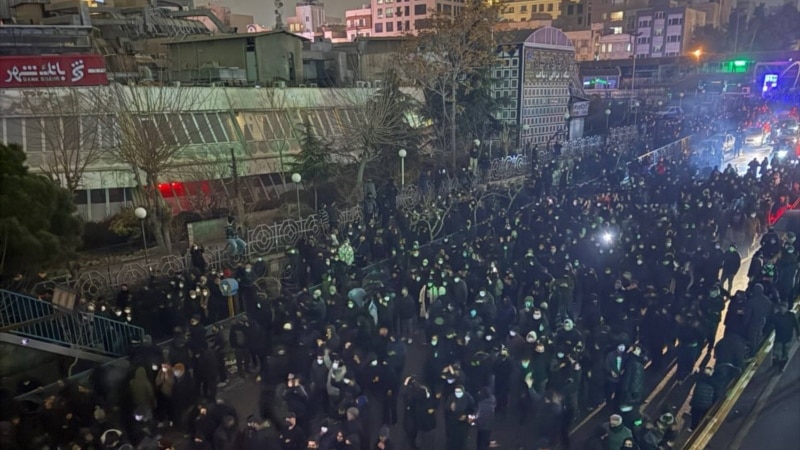
“The Embassy of Ukraine in Iran has temporarily suspended its work. As reported in the representative office, additional information will be provided on the resumption of the embassy’s activities, as well as on further actions and possible changes. The day before, the UN Security Council held an emergency meeting regarding the situation in Iran, where brutal suppression of anti-government protests continues. The representative of the United States at the UN, Mike Waltz, in particular, emphasized that “the international community should not tolerate the current situation in Iran.” The protests, which began on December 28, 2025, took place in 187 cities and covered all provinces of Iran. The current protests are one of the biggest challenges to Iran’s clerical rule since the 1979 Islamic Revolution. The protests were sparked by rising inflation and a falling currency, but later turned into a broader anti-government protest. The Iranian authorities resorted to harsh repression. The United States and other Western countries have condemned the Iranian government’s crackdown on protesters. Due to the blackout of the Internet and the information blockade, the exact number of people who died during the protests is still unknown. On January 14, the Norway-based Iran Human Rights organization said that at least 3,428 protesters had died and thousands had been injured since the protests began. Other human rights organizations said the number of victims could reach thousands. On January 3, Iran’s Supreme Leader Ayatollah Ali Khamenei commented on the mass protests for the first time, saying that tough measures should be taken against the “rebels”. At the same time, Khamenei, like other representatives of the Iranian leadership, called the fears of street traders in connection with the devaluation of the national currency well-founded.”, — write: www.radiosvoboda.org
As reported in the representative office, additional information will be provided on the resumption of the embassy’s activities, as well as on further actions and possible changes.
The day before, the UN Security Council held an emergency meeting regarding the situation in Iran, where brutal suppression of anti-government protests continues. The representative of the United States at the UN, Mike Waltz, in particular, emphasized that “the international community should not tolerate the current situation in Iran.”
The protests, which began on December 28, 2025, took place in 187 cities and covered all provinces of Iran. The current protests are one of the biggest challenges to Iran’s clerical rule since the 1979 Islamic Revolution.
The protests were sparked by rising inflation and a falling currency, but later turned into a broader anti-government protest.
The Iranian authorities resorted to harsh repression. The United States and other Western countries have condemned the Iranian government’s crackdown on protesters.
Due to the blackout of the Internet and the information blockade, the exact number of people who died during the protests is still unknown. On January 14, the Norway-based Iran Human Rights organization said that at least 3,428 protesters had died and thousands had been injured since the protests began. Other human rights organizations said the number of victims could reach thousands.
On January 3, Iran’s Supreme Leader Ayatollah Ali Khamenei commented on the mass protests for the first time, saying that tough measures should be taken against the “rebels”. At the same time, Khamenei, like other representatives of the Iranian leadership, called the fears of street traders in connection with the devaluation of the national currency well-founded.