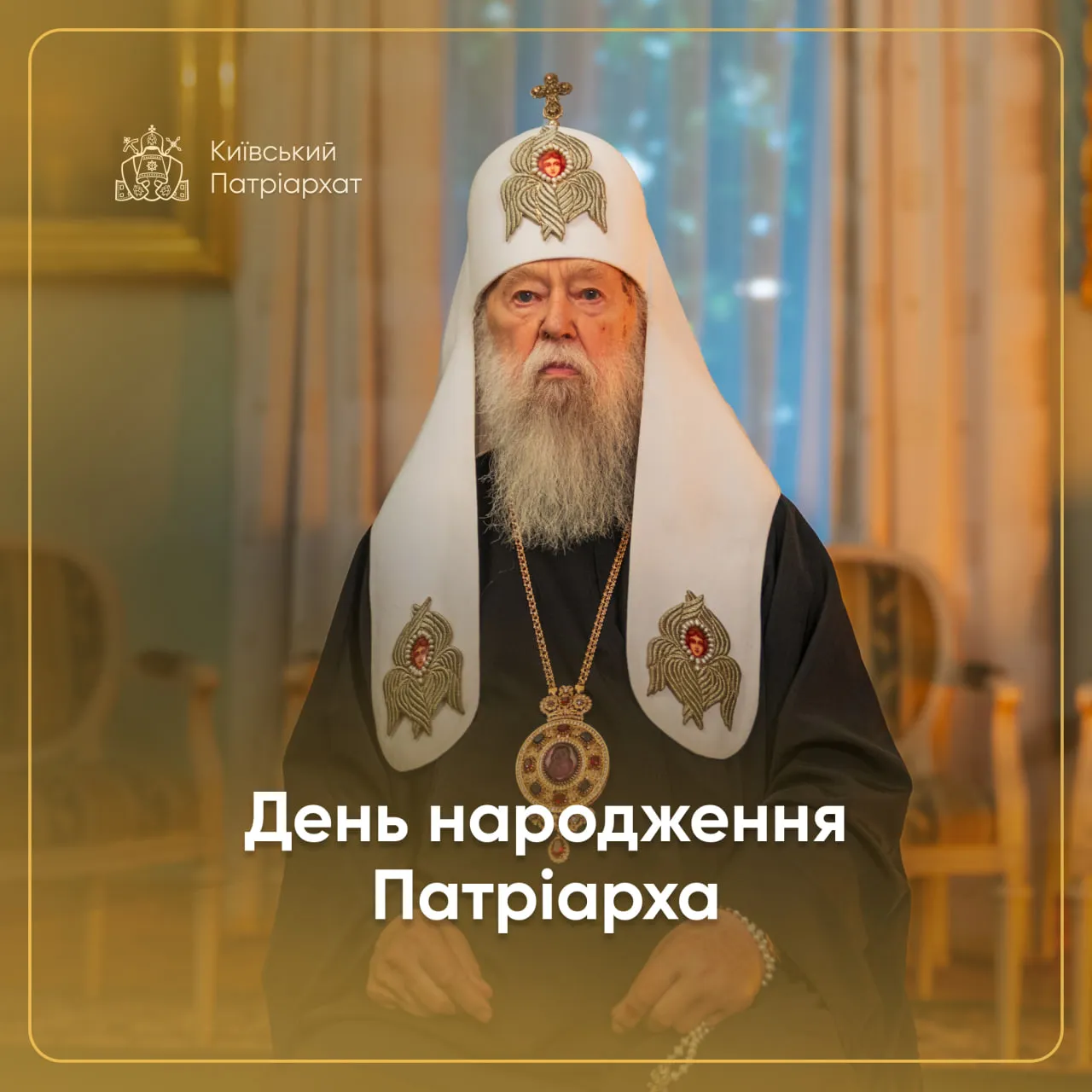
“Patriarch Filaret was born on January 23, 1929 in the village of Blagodatne of the Amvrosiiv district in Donetsk region in the family of a miner. On Friday, January 23, he celebrates his 97th birthday. This was reported by the Ukrainian Orthodox Church, Kyiv Patriarchate. Biography Mykhailo Antonovych Denysenko (the secular name of the patriarch) was born on January 23, 1929 in the village of Blagodatne, Amvrosiivsky district, Donetsk region in”, — write on: ua.news
Patriarch Filaret was born on January 23, 1929 in the village of Blagodatne of the Amvrosiiv district in Donetsk region in the family of a miner. On Friday, January 23, he celebrates his 97th birthday.
This was reported by the Ukrainian Orthodox Church, Kyiv Patriarchate.
Biography
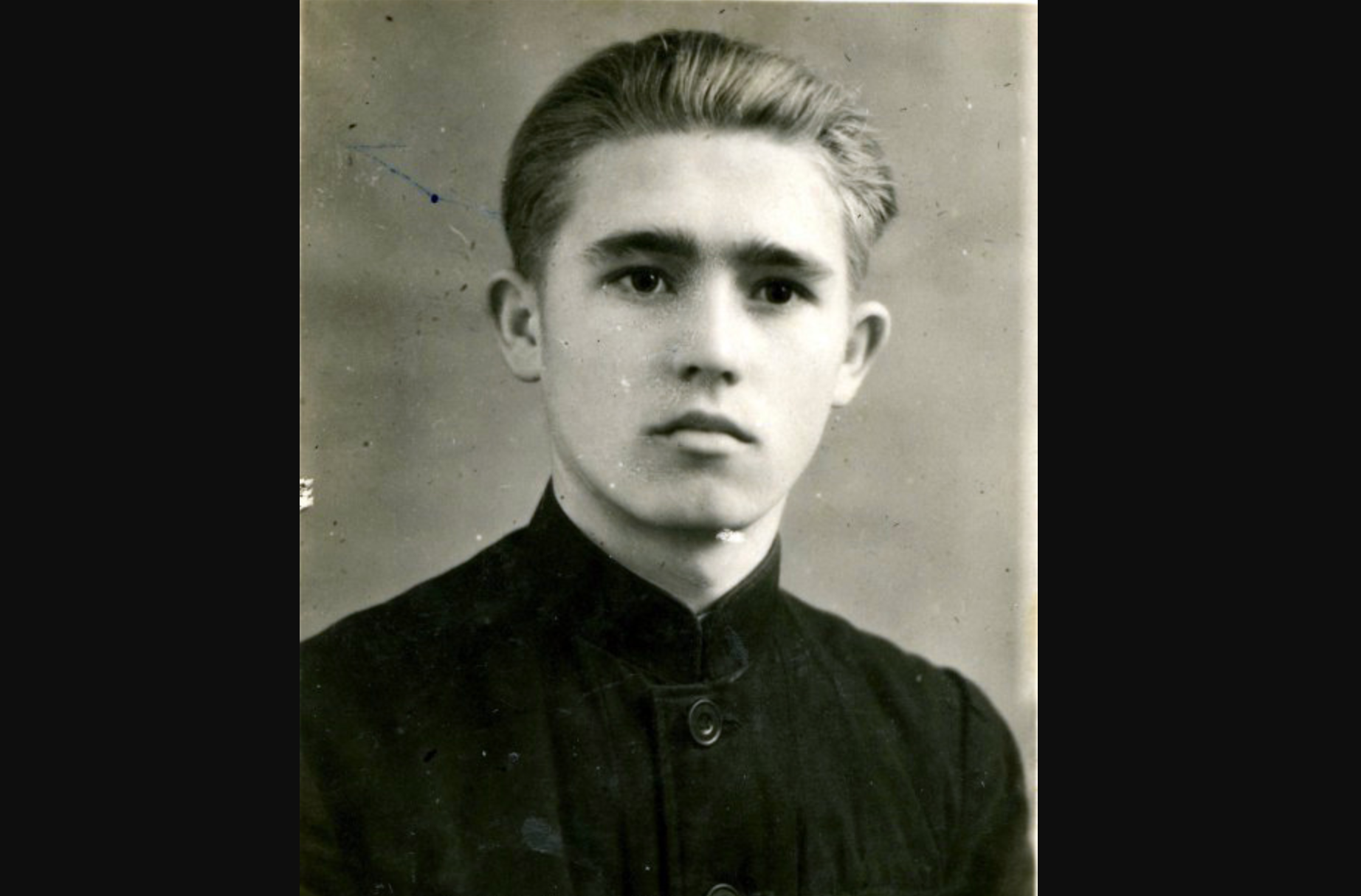
Mykhailo Antonovych Denysenko (the secular name of the patriarch) was born on January 23, 1929 in the village of Blagodatne, Amvrosiivsky district, Donetsk region, in the family of a miner, Anton Denysenko, and his wife, Melania Kyrylivna.
Donetsk land is Ukrainian. If you want to learn about Donbas, you need to drive not through cities or mines, but through villages – and you will hear the Ukrainian language. It has been there since time immemorial – from the time when people settled there.
Patriarch Filaret
The patriarch’s grandfather died during the Holodomor, and his father, Anton Denisenko, served in the 103rd Guards Rifle Regiment of the 34th Guards Rifle Division and was killed on September 24, 1943 during the battle for the village of Konovalova in the Battle of the Dnipro, where he was buried. The loss of his father had a profound effect on Mikhail’s outlook and contributed to his decision to become a priest.
I remember well what war is like. The war is still going on there, in Donbas, where my Motherland is. My native village is occupied by Russia. I know how precious peace is.
Patriarch Filaret
“I converted to God because of the death of my father. The death of the father was the impetus for the question – whether God exists or not. If he does not exist, as we were taught then in school, then with death a person turns into nothingness, simply disappears. Therefore, if it is true that a person turns into nothingness, then my father is gone. And how is he not there when I love him? Is it possible to love something that does not exist? You can’t. And if I love, then love proves that the father must exist even after death. So there is eternal life. And if there is eternal life, then there is also God, whom I must serve first of all… And this conviction led me to the fact that I entered the seminary, then the academy and became a clergyman – the desire to serve God,” said the hierarch.
In 1946, Mykhailo Denysenko entered the Odessa Theological Seminary. Also in 1952, he completed his studies at the Moscow Theological Academy.
Career of a clergyman
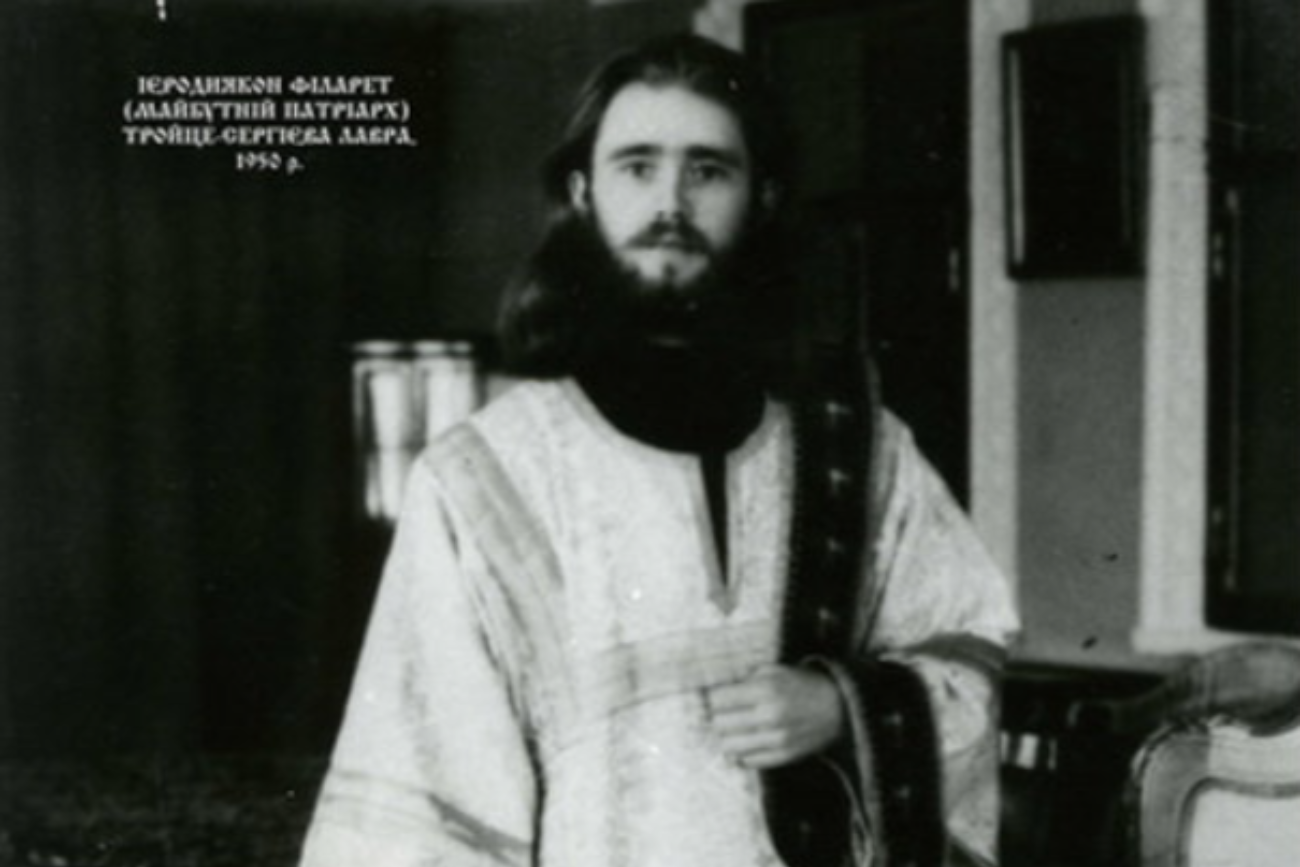
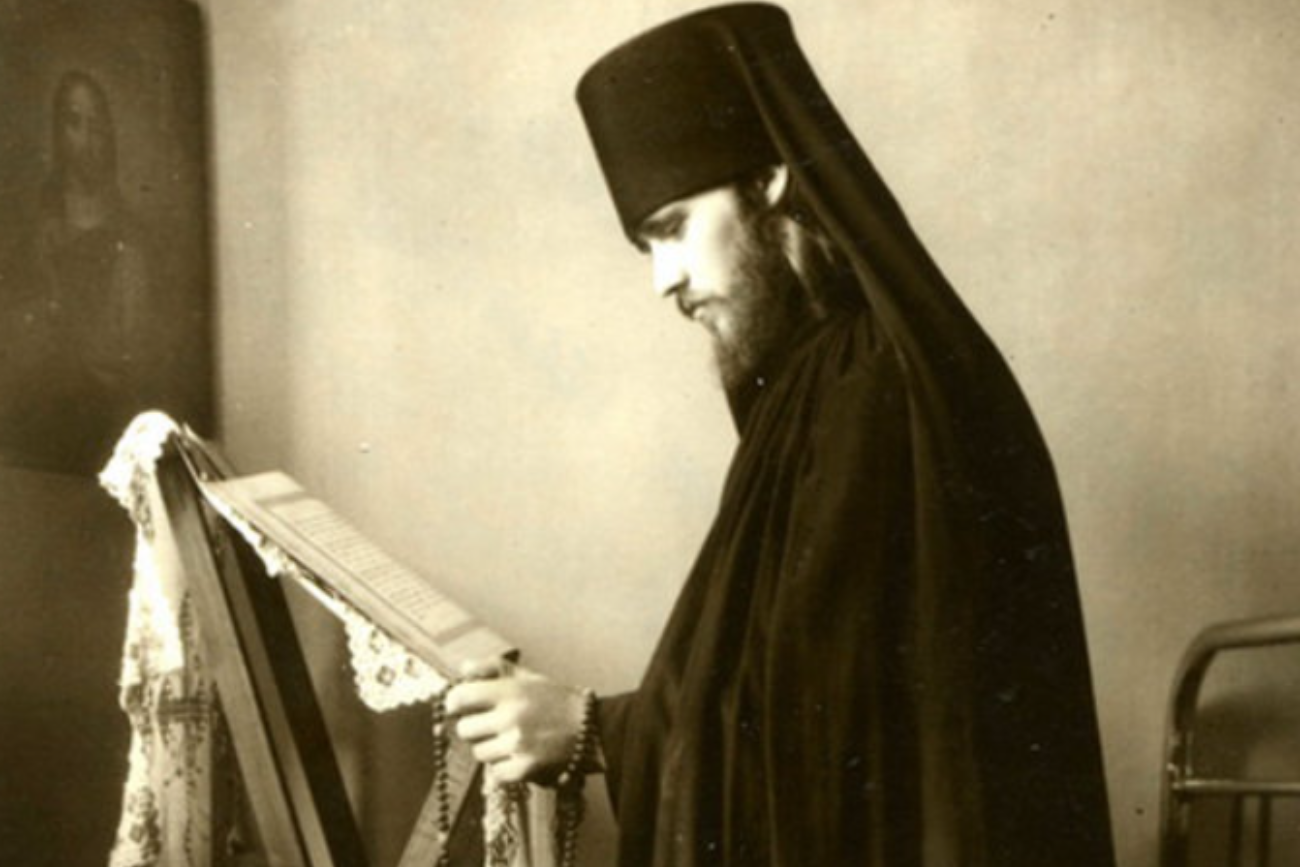
On January 1, 1950, he took monastic vows, receiving the name Filaret. During the same year, he was ordained to the rank of hierodeacon, and the following year, in 1951, to the rank of hieromonk.
In 1953, Filaret began teaching at the Moscow Theological Academy. Three years later, he was appointed inspector of the Saratov Theological Seminary and at the same time was honored with the rank of hegumen. In 1957, he took the position of inspector of the Kyiv Theological Seminary, and the following year he became an archimandrite and at the same time headed the seminary as rector.
In 1960, Filaret received the position of manager of affairs of the Ukrainian Exarchate and the appointment of rector of the St. Volodymyr Cathedral.
In the period from 1961 to 1962, he was the rector of the courtyard of the Russian Orthodox Church under the Patriarchate of Alexandria. After that, he received the rank of bishop of Luszka, became the vicar of the Leningrad diocese and the head of the Riga diocese. From June to October 1962, he was the Exarch of Central Europe. Subsequently, he was appointed to the post of bishop of Vienna and Austria, and in 1964 he became bishop of Dmitrovsk, vicar of the Moscow diocese, and rector of the Moscow Theological Academy and Seminary.
In the spring of 1966, Filaret was elevated to the rank of archbishop. At the same time, he was appointed to the post of Exarch of Ukraine, became Archbishop of Kyiv and Galicia, and also became a member of the Holy Synod on a permanent basis.
Two years later, Filaret was elevated to the rank of metropolitan. In the spring of 1990, after the death of Patriarch Pymen of Moscow and All Russia, he became the vicar of the patriarchal throne. Already in June of the same year, he headed the Local Council of the Russian Orthodox Church.
In October, Filaret became head of the Ukrainian Orthodox Church, receiving the title of Metropolitan of Kyiv and All Ukraine.
After the declaration of Ukraine’s independence in 1991, he initiated the holding of the All-Ukrainian local council of the UOC, where a decision was made on the full autocephaly of the church. The Russian Orthodox Church refused to recognize this independence and soon another Metropolitan of Kyiv was elected in Kharkiv. Filaret sharply called these actions uncanonical and illegal.
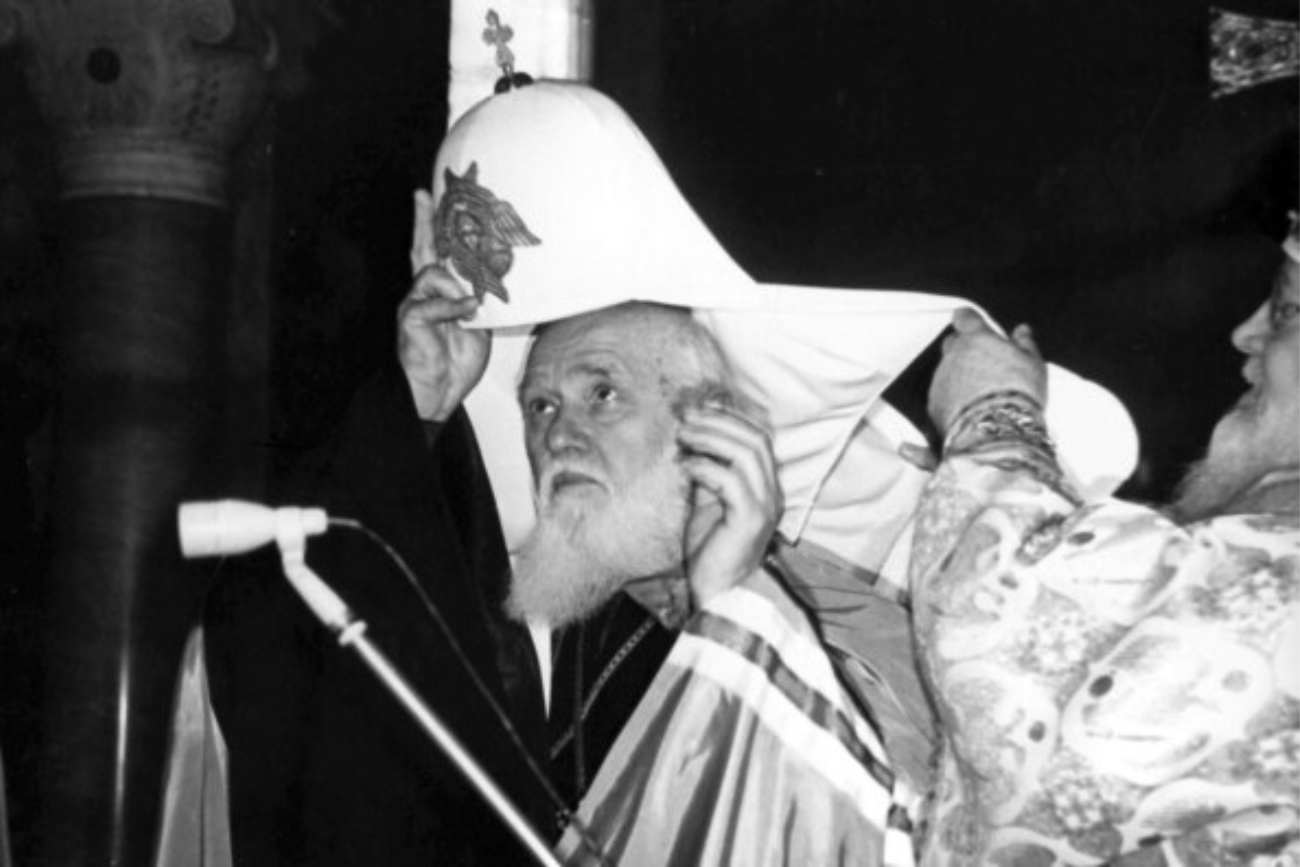
In 1992, a unification council was held, at which the Ukrainian Orthodox Church of the Kyiv Patriarchate was founded. It was headed by Metropolitan Mstislav (Skrypnyk), who received the title of Patriarch of Kyiv and All Russia-Ukraine. After his death in 1995, Filaret became the patriarch. In 2018, when the Orthodox Church of Ukraine was established with the support of the Ecumenical Patriarchate, Filaret received the honorary title of patriarch, and Epiphany (Dumenko) became the new head, Metropolitan of Kyiv and All Ukraine.
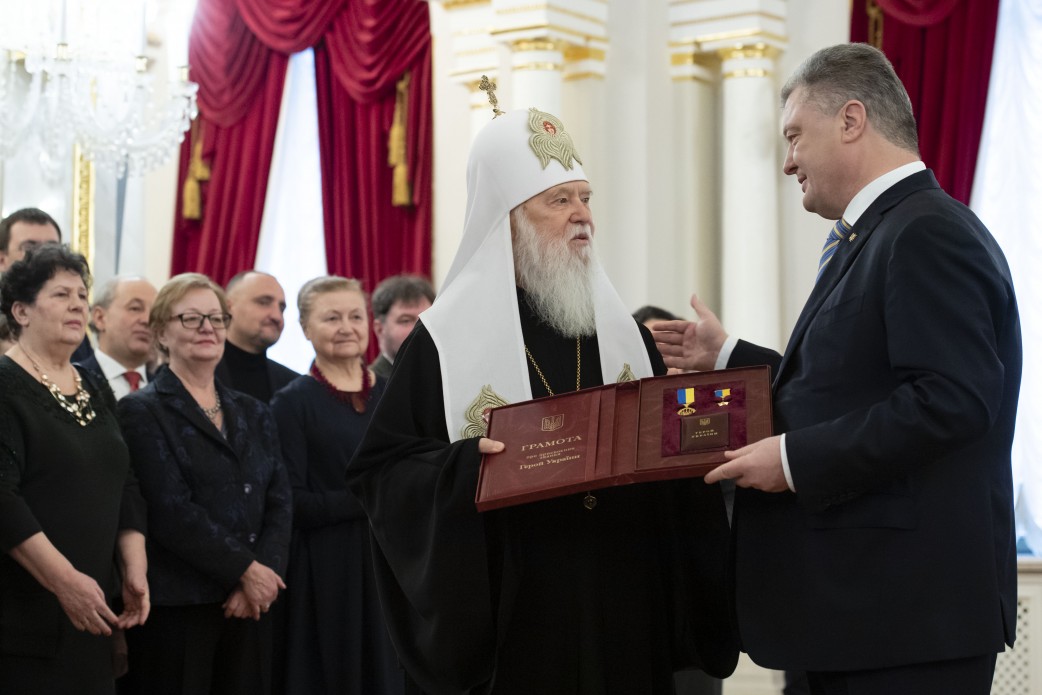
In January 2019, Filaret was awarded the title of Hero of Ukraine
How will the war end? Our victory. You have to firmly believe in this. There is no doubt. Because the truth is with us. And where there is truth, there is God. And where God is, there is victory. Always.
Patriarch Filaret
Scandals
At the end of 2018, when the local Orthodox Church of Ukraine was being created, the new head, Metropolitan Epiphanius, was initially called a protégé of Patriarch Filaret. Philaret himself made every effort to have Epiphanius head the newly created church. However, within a few months, a conflict arose between the former mentor and the young superior.
The first disagreements appeared immediately after the Unification Council, and later intensified after receiving the Tomos on autocephaly. Philaret considered it inadmissible to commemorate the head of the Russian Orthodox Church Cyril in the diptych of local churches, while Epiphanius, following the instructions of the Ecumenical Patriarch, commemorated Cyril during the first service together with heads of other local churches.
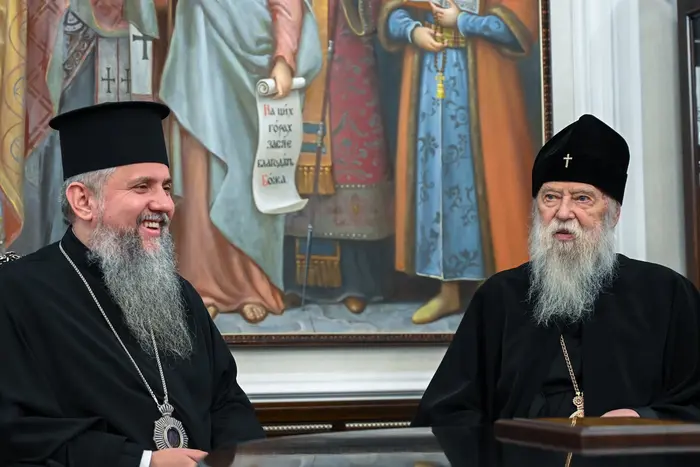
During the first five months, Metropolitan Epiphany pursued a rather independent policy. In May 2019, after the presidential elections, the conflict between the Honorable Patriarch Filaret and Metropolitan Epiphanius spilled into the public sphere.
In the first half of May 2019, Filaret sent the bishops of the former UOC KP an invitation to Kyiv on May 13-14 for a “solemn prayer communication” in memory of the holy martyr Macarius on UOC KP letterheads. And already on May 9, the patriarch himself declared that the Ukrainian Orthodox Church The Kyiv Patriarchate still exists. Instead, on the evening of May 10, 2019, the Ministry of Culture of Ukraine denied a statement about the alleged resumption of activities in Ukraine by such a religious association as the Ukrainian Orthodox Church of the Kyiv Patriarchate.
At a press conference on May 15, Filaret accused President Poroshenko and Metropolitan Epiphany of not fulfilling their promises, which, according to him, they gave him on the eve of the December 15 Unification Council in Kyiv.
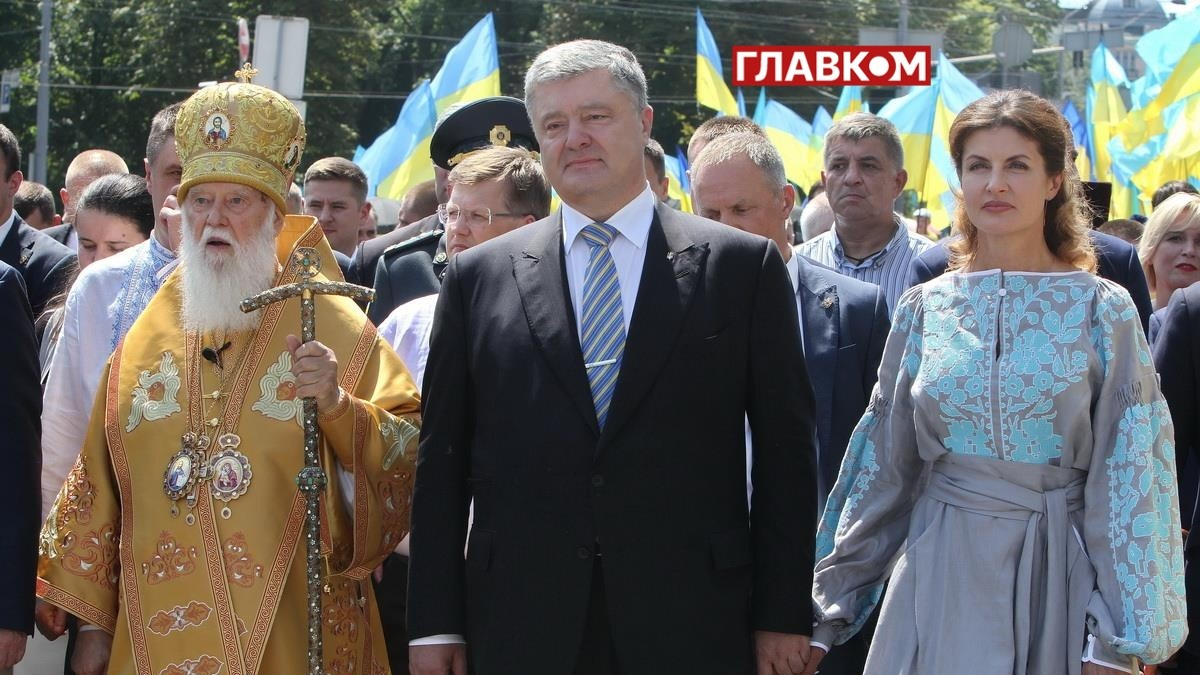
On May 16, the Orthodox Church of Ukraine officially confirmed the liquidation of the UOC-KP at the Unification Cathedral on December 15, 2018, publishing the corresponding resolution signed by Patriarch Filaret. On May 23, the honorary patriarch of the Orthodox Church of Ukraine, former head of the UOC KP Filaret stated that he will not fulfill the conditions of the provisions of Tomos regarding the transition of foreign parishes of the former UOC of the Kyiv Patriarchate to the Ecumenical Patriarchate, refuses the ban on cooking myrrh, and refuses to resolve conflict situations of an internal nature only in agreement with Phanar.
Filaret said that during the negotiations on the creation of the United Local Orthodox Church, President Petro Poroshenko persuaded him to withdraw his candidacy, but promised him tacit leadership. According to him, it was decided at the Synod of Bishops that he will lead the OCU exclusively internally, and Epiphanius will represent it on the international stage.
Later, Filaret stated that he did not support some of the provisions of Tomos, in particular, that the Ukrainian Church should govern only Orthodox Ukrainians who are on the territory of Ukraine.
In the summer of 2019, Honorary Patriarch Filaret convened a forum of Ukrainian intelligentsia in Kyiv “For the Ukrainian Orthodox Church! For the Kyiv Patriarchate!”, at which he announced the decision to convene the Local Council of the Kyiv Patriarchate on June 20. At the forum, Filaret stated that Tomos destroyed the Kyiv Patriarchate and that Tomos is not the same as other Orthodox churches have.
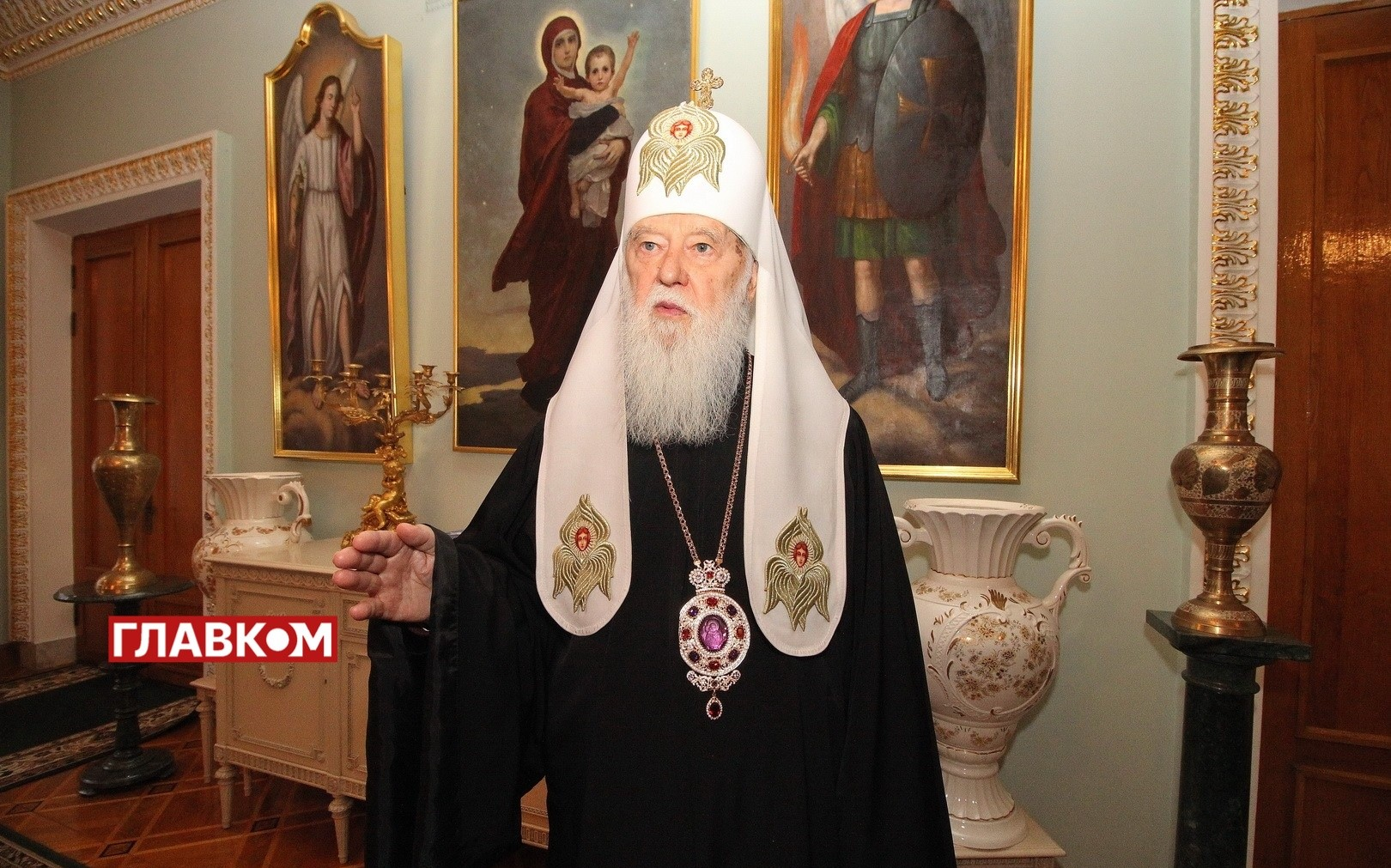
Apart from Filaret, only two bishops out of more than 40 who previously belonged to the UOC-KP came to the “local Council” of the UOC-KP. Metropolitan Ioasaf (Shybaev) of Belgorod and Oboyan and his vicar bishop Peter (Moskalev) came from Russia. Later, the metropolitan ordained new bishops for the UOC-KP, thereby confirming his break with the OCU. In response, the OCU Synod decided to deprive Filaret of the right to manage the Kyiv diocese and to control local churches and monasteries. In early July 2019, the patriarch gave an interview to the propaganda channel “Russia 24”, where he criticized Tomos and the OCU.
At the end of 2019, the OCU Synod allowed Honorable Patriarch Filaret to serve in the Volodymyr Cathedral for life. Filaret responded to this with a sarcastic “thank you” for not being “thrown out into the street as they were going to do.”
After that, the Synod of the OCU suspended Filaret’s authority in this body of the OCU, and Epiphanius stated that Filaret may not realize it, but pro-Russian forces are behind him.
Philaret, patriot and Hero of Ukraine
It should be noted that Filaret supported the first and second Maidans in every possible way, and since the beginning of the war, the chaplains of the UOC KP have been taking care of the Ukrainian army. According to the head, only a pro-European democratic Ukraine is able to ensure freedom of religion not only for Orthodox, but also for representatives of all faiths.
Why did Crimea fall away? Temporarily, but fell away. And because the church there was Moscow, and the Ukrainian church of the Kyiv Patriarchate in Crimea is weak. Why is there a war in Donbas and not in Galicia? And because in Galicia both the Orthodox Church and the Greek Catholic Church stand on patriotic positions. And the aggressor has nothing to do there. But in the east, where the Moscow Patriarchate rules, that is, a foreign church, there are favorable conditions for an attack on this part of Ukraine.
Patriarch Filaret
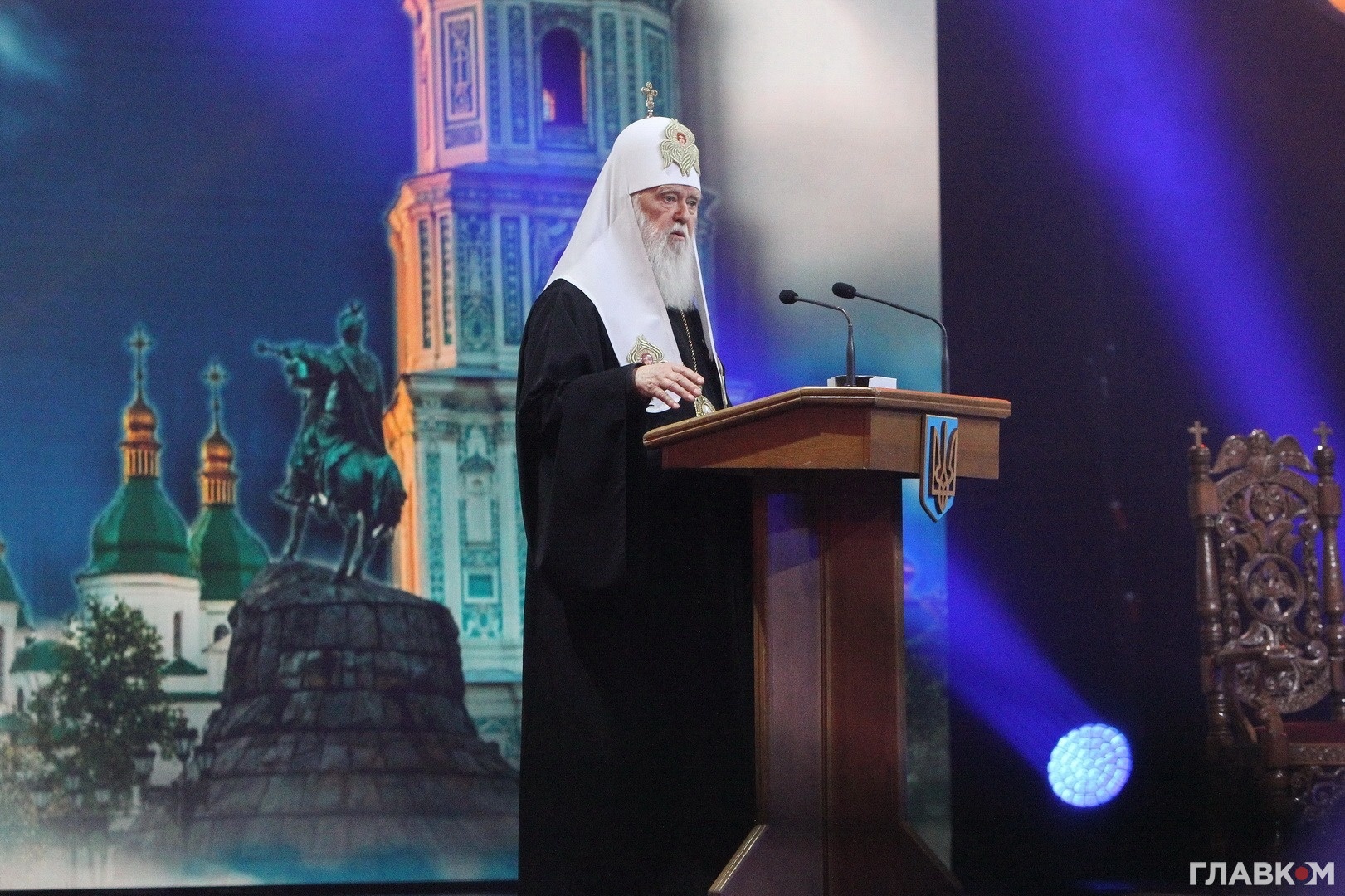
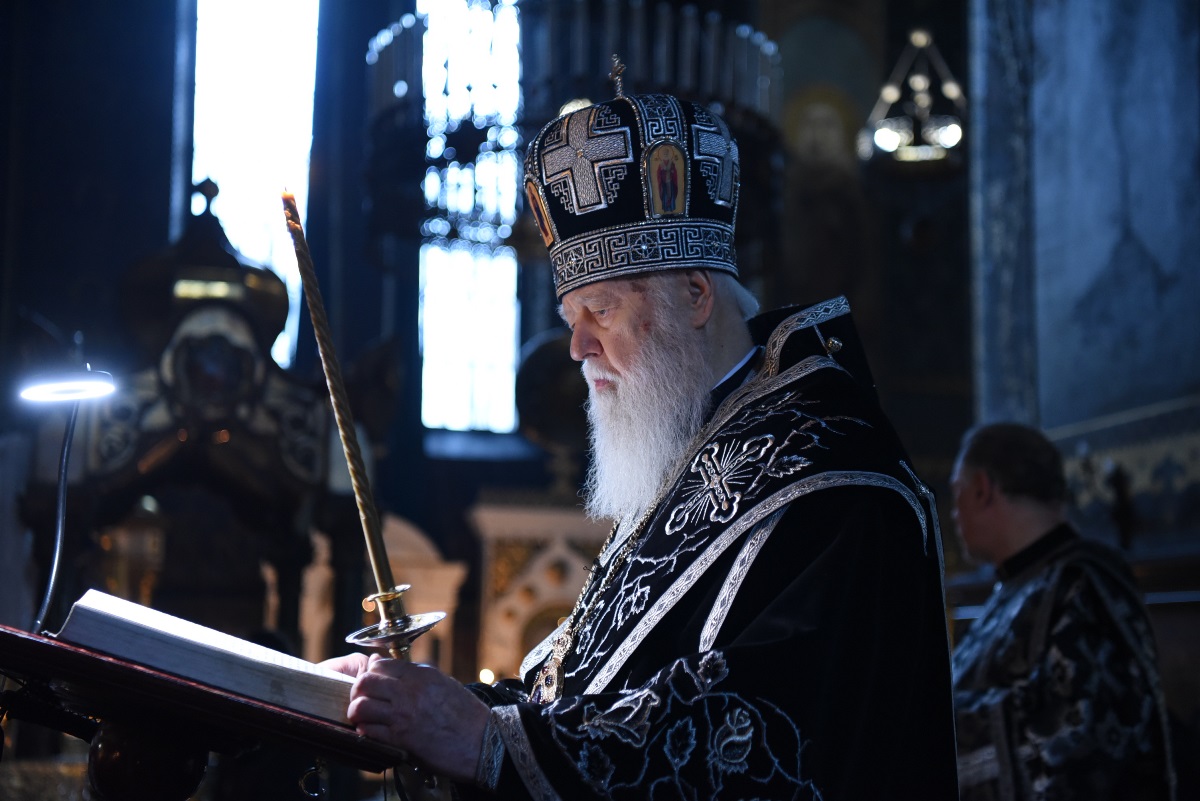
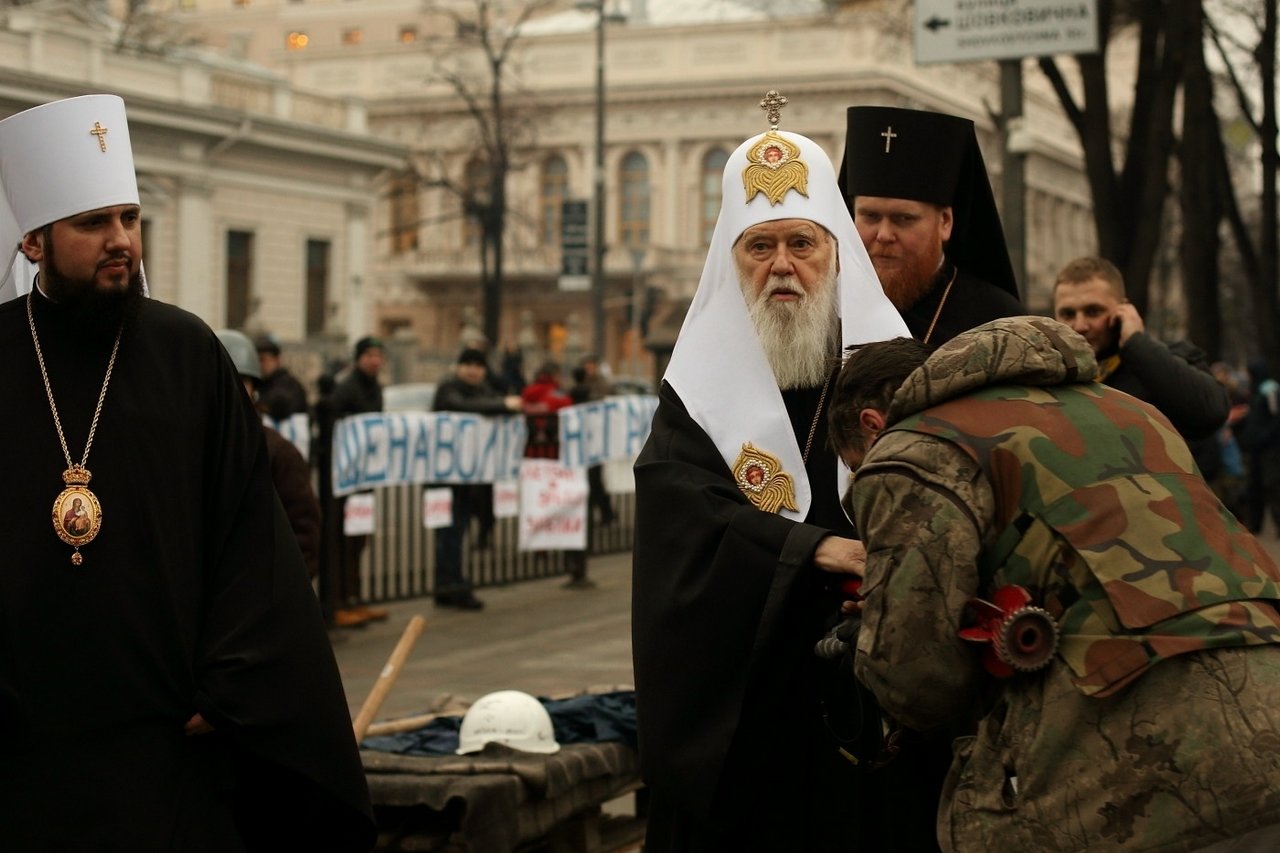
By the way, at the beginning of 2019, Filaret received the title of Hero of Ukraine for his outstanding historical role in the formation of the independent Orthodox Church of Ukraine, activities aimed at reviving the spirituality of the Ukrainian people, raising the authority of Orthodoxy, and establishing the ideals of mercy and interfaith harmony.
Read us on Telegram and Sends
