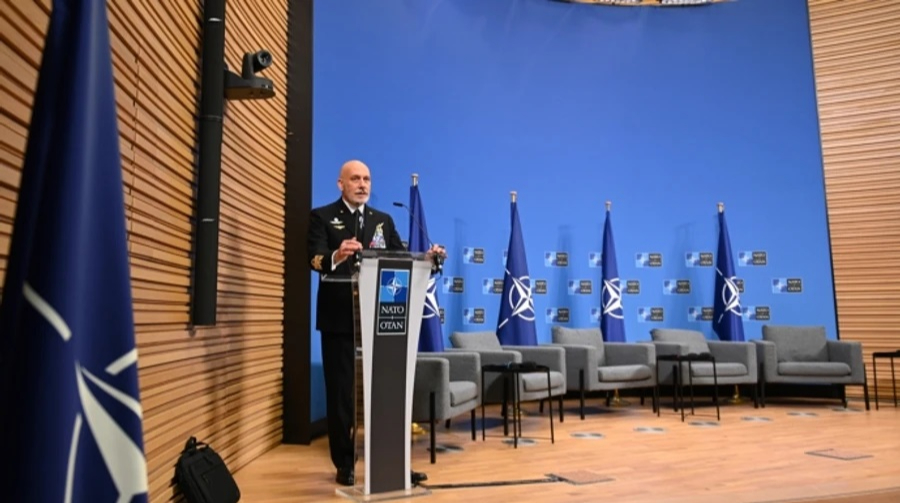
“The head of the NATO Military Committee, Admiral Giuseppe Cavo Dragone, said that the Alliance is considering a “more aggressive” response to Russian cyberattacks, sabotage and airspace violations.”, — write: www.pravda.com.ua
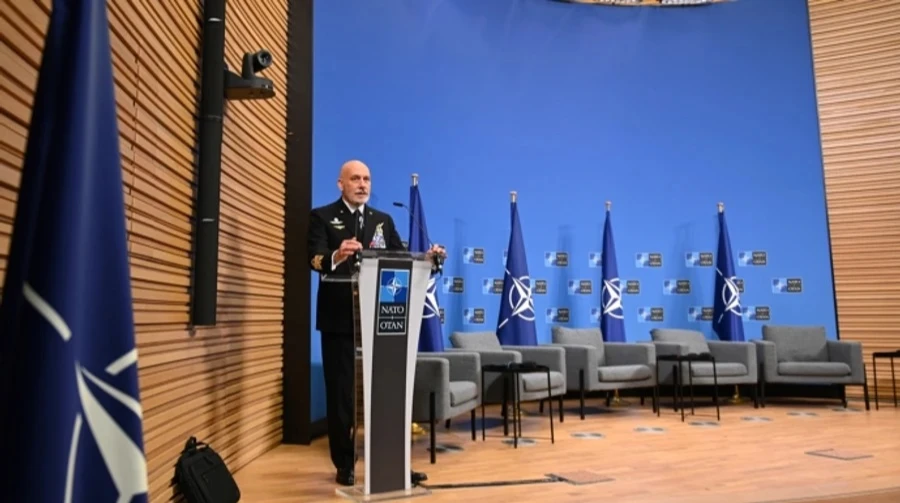 Giuseppe Cavo Dragone. Photo: Twitter (X)
 Source: Dragone in the Financial Times commentary
Admiral Giuseppe Cavo Dragone told the Financial Times that the Western military alliance is considering stepping up its response to Moscow’s hybrid warfare.
Advertising:
Direct speech Dragone: “We’re studying everything… In cyberspace, we’re reacting… We’re thinking about being more aggressive or proactive…”
Details: The FT recalls that Europe has experienced numerous hybrid warfare incidents – some attributed to Russia and others unspecified – from damage to cables in the Baltic Sea to cyber attacks.
Some diplomats, especially from Eastern European countries, called on NATO not to limit itself to reactive actions and to switch to active ones.
The publication notes that active actions are more realistic in the case of cyber attacks, where many countries have the tools to act in response. It is more difficult in the case of sabotage or drone invasions.
Dragone said a “preemptive strike” could be considered a “defensive action” but added: “It is further from our normal way of thinking and behaving. “A more aggressive stance compared to the aggressiveness of our opponents could be one option. (However, there is a question regarding – ed.) the legal basis, jurisdiction, who will do it?”
According to Dragone, “since the beginning of the Baltic Sentry mission, nothing has happened.” Therefore, in his opinion, “this means of deterrence works.”
At the same time, the FT writes, concern among NATO members remains, especially after a Finnish court closed the case against the crew of the Eagle S vessel, linked to the Russian “shadow fleet”, which damaged several underwater cables while in international waters.
Asked if this gives Russian vessels carte blanche, Finland’s foreign minister Elina Valtonen told the FT: “Yes, and that’s a problem.”
Direct speech Valtonen: “So far there has been no need for this. We also have to take a step back and analyze what the aggressor wants… we must not be hysterical. We have our own reliable plan of action and we must trust it.”
Details: Dragone acknowledged that one of the problems is that NATO and its members are “many more constrained than our adversaries, through ethics, through legislation, through jurisdiction. That’s a problem. I don’t want to say it’s a losing position, but it’s a more difficult position than our opponents.”
According to Dragone, the most important thing is to prevent future aggression.
Direct speech Dragone: “How to achieve deterrence – through a response, through a pre-emptive strike – is something that we have to deeply analyze, because in the future the pressure in this direction may increase even more.”
We will remind: The American edition of The Wall Street Journal, citing representatives of Western intelligence, wrote that the Russian spy services have a new shadow unit that targets the West and conducts secret attacks throughout Europe and other countries.