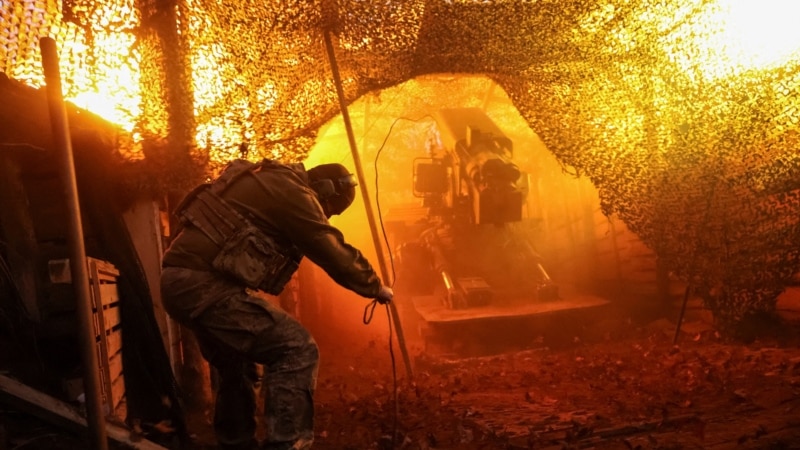
“According to the report, the largest number of Russian attacks – 51 – were in the Pokrovsky direction”, — write: www.radiosvoboda.org
According to the report, the largest number of Russian attacks – 51 – were in the Pokrovsky direction in the areas of Mayak, Volodymyrivka, Rodynske, Chervyn Liman, Myrnograd, Pokrovsk, Kotline, Udachne, Novosergiivka, Molodetske, Kotlyarivka, Yalta and Dachne settlements.
“In the direction of Kostyantynivsk, the enemy carried out 27 attacks in the areas of Oleksandro-Shultine, Shcherbynivka, Kleban-Bik, Pleshchiivka, Yablunivka, and Rusyn Yar settlements,” the message says.
Fighting also continued in the North-Slobozhansk and Kursk, South-Slobozhansk, Kupyansk, Lymansk, Slovyansk, Kramatorsk, Oleksandrivsk, Gulyaipilsk, Orihiv, Prydniprovsk directions.
Read also: “Now the threat to Gulyaipol is greater than it has been all this time.” What’s going on?
At the end of November, the American Institute for the Study of War (ISW) noted in its report that Russian propaganda is spreading the statements of Russian President Vladimir Putin, trying to create the impression that the Ukrainian front line will allegedly “collapse soon.” But, according to analysts, these statements have no basis and are aimed at forcing Ukraine and its Western allies to agree to the Kremlin’s terms, which Russia is unable to achieve militarily.
On December 1, the Ministry of Defense of the Russian Federation announced on its resources the alleged capture of Pokrovsk. Donbas Realiy (a Radio Liberty project) has collected statements and data refuting the occupation of the city.
Pokrovsk – a city with a population of about 1,250 people (estimated by the local authorities at the end of October, before the start of the full-scale invasion of the Russian Federation – more than 60,000) – is an important road and railway junction and was under threat of encirclement by Russian troops for most of the year.