
“January 14, 2026 is on the calendar, and Kyiv is going through one of the most severe trials during the entire time of the great war. The capital of Ukraine, which for a long period was considered a relatively stable rear, found itself at the epicenter of a humanitarian and infrastructural crisis. The last days have turned the life of the metropolis into a continuous marathon of survival, where every hour of light and warmth is perceived as real”, — write on: ua.news
January 14, 2026 is on the calendar, and Kyiv is going through one of the most severe trials during the entire time of the great war. The capital of Ukraine, which for a long period was considered a relatively stable rear, found itself at the epicenter of a humanitarian and infrastructural crisis. The last few days have turned the life of the metropolis into a continuous marathon of survival, where every hour of light and warmth is perceived as a real “gift”.
After a series of massages combined strikes which lasted several days in a row from January 9 (and even in the morning of the 14th), the city actually plunged into a state of “semi-blackout”: when the energy system still shows signs of life, but is no longer able to provide even the basic needs of the population and critical infrastructure.
Against the backdrop of lingering frosts and critical damage to heat generation facilities, Kyiv Mayor Vitaliy Klitschko even made an alarming statement the other day: he urged all Kyiv residents who have this opportunity to temporarily leave the city or to other regions where the situation with heating and electricity is less critical.
Kyiv has not seen problems of such a scale with heating and electricity since the most difficult times of the first year of a full-scale invasion. But if there was hope for a quick recovery then, now, in January 2026, the awareness of the depth of energy damage forces residents to prepare for a long period of cold and darkness — if it is possible to prepare for it at all.
What is really happening in Kyiv and how is the capital trying to stay on the verge of collapse? More details – in the material UA.News.
“Ice blow” on the capital
The devastating wave of shelling that led to the current catastrophic situation began with renewed vigor on January 9, 2026. The main target of the strikes were critical infrastructure facilities, in particular, key CHP plants and local boiler houses, which ensured the daily life of the city of several million people in conditions of peak winter loads. Serious hits were recorded in CHP-4, CHP-5 and CHP-6, and at least five local boiler houses were also attacked. Such a concentration of fire on objects of heat supply indicates a conscious effort freeze the city using the natural factor of severe frosts by Ukrainian standards as an additional weapon.
As a result of these strikes, the situation in the city became extremely difficult. In the first hours after the attacks, half (!) of Kyiv residents — that’s several million people — lost virtually everything: heating, hot water, and electricity. As of the morning of January 10, 50% of the entire housing stock of Kyiv remained without heat . Utilities and energy companies were forced to work in an extreme mode.
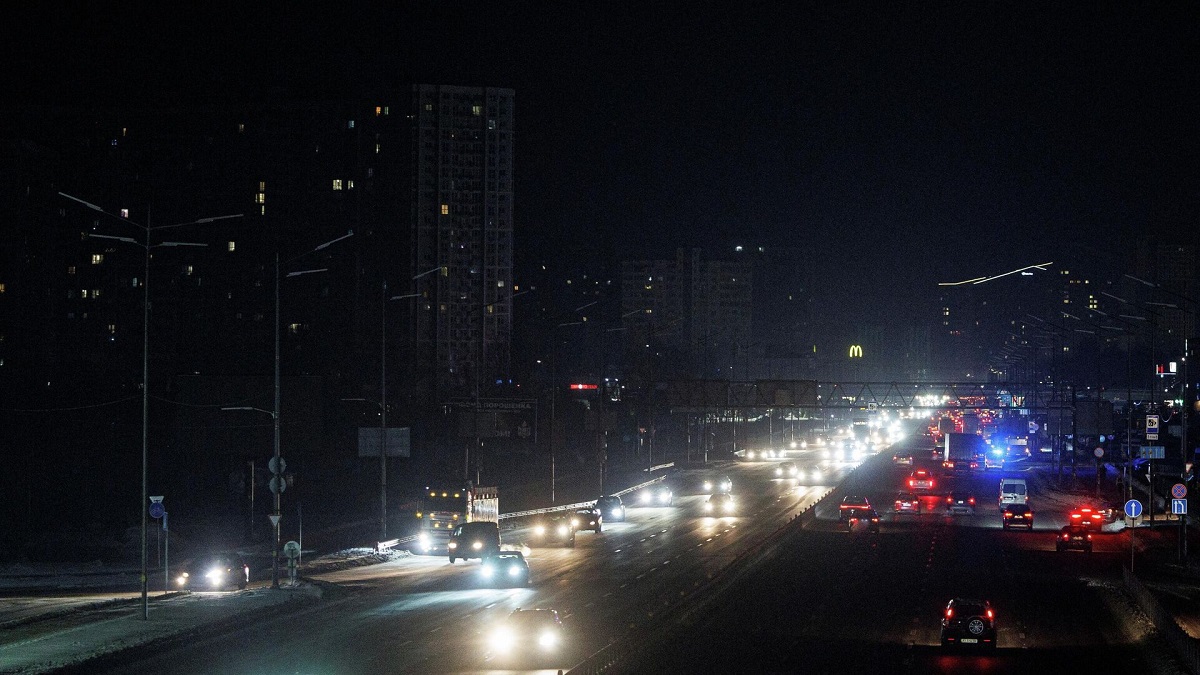
In order to save home heating systems from freezing and pipe bursts at temperatures of minus 15-20 degrees, thousands of homes were promptly drained of water from the systems. This procedure, while leaving people out in the cold, was necessary to avoid the complete destruction of the internal infrastructure, which would have taken months to repair. However, in some houses, they didn’t have time to drain the water or forgot – and the pipes, after all, simply burst.
Later, thanks to the titanic efforts of repair crews, many houses began to recover at least with cold water supply and partial heating. However, as of January 14, the situation remains far from stabilization. About 500 high-rise buildings in the capital still remain without any heating . The most critical situation is observed in the Pechersk, Shevchenkiv, and Holosiiv districts, as well as on the left bank. “Kyivteploenergo” deployed 18 mobile mobile boiler rooms to heat critical facilities. They also promise to launch programs provision of hot lunches people with reduced mobility and pensioners who are on special registration.
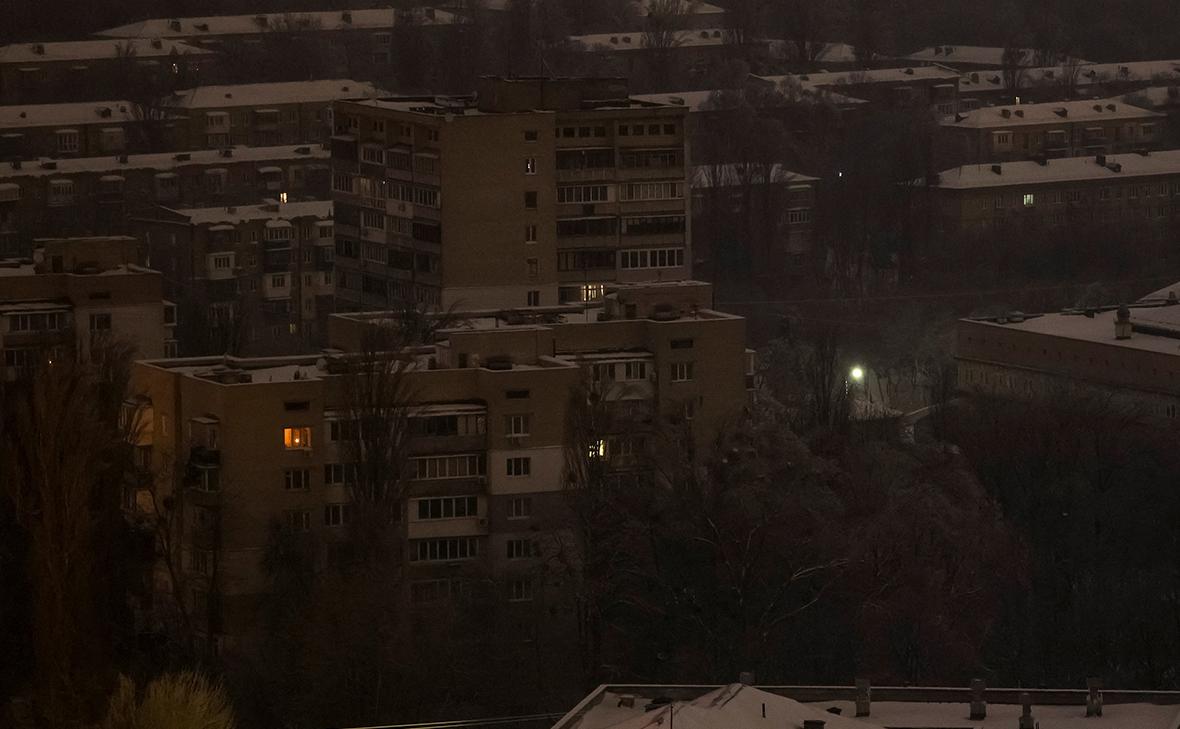
The situation with electricity supply is no less dramatic. A regime has been introduced in Kyiv and the region emergency shutdowns which means the complete absence of any graphs. The city is divided into two unequal parts: the absolute minority of Kyivans, whose houses are connected to the lines feeding critical objects, hardly experience outages, while the majority lives in conditions of constant, long and completely unpredictable periods of darkness.
There are cases when there is no light in certain residential areas for 3-5 days (!) in a row. Such a state of affairs provokes not only obvious everyday difficulties, but also very serious psychological exhaustion, since the inability to plan even the simplest actions, such as washing, undermines the remnants of inner peace.
Closed supermarkets and queues for water: how Kyiv survives
Today, the capital is actually teetering on the verge of collapse. In some areas of the city, the closing of not only small coffee shops and small shops, but also large supermarkets and catering establishments is already recorded. It is impossible to work on generators all day, because the equipment simply cannot withstand continuous operation in conditions of voltage drops and frost. Big chains like Novus or Silpo are forced to to close individual stores where it is impossible to maintain the temperature regime for products or where the resource of autonomous power systems is running out.
In some places in the city, there are problems with the availability of drinking water and bread. People, feeling the threat of a complete blackout, start buying up long-term storage products and water, which leads to empty shelves in some points of sale. Pharmacies are also experiencing shortages of some medicines, as logistics chains are slowed down due to power outages at warehouses and order reception points.
However, it should be noted that this phenomenon has not yet become total, and the situation is extremely uneven. If in one store there may be no water and bread, then in another the situation will look quite normal. This unpredictability, however, only increases anxiety among the population and provokes unreliable news headlines about “lack of food and water”, which scare people even more.
In social networks, Kyiv residents are increasingly sharing the feeling that the atmosphere in the city has begun to resemble the “vibe of February 24, 2022.” Certain migration flows are already being recorded: people who have this opportunity are really starting to leave Kyiv for the western regions or outside the city. So far, this process has not acquired the character of a mass evacuation, but the tendency to leave is clearly visible.
The difficult situation persists in the Kyiv region, where the infrastructure has suffered no less significantly. In Irpen, Buchi and Gostomel there is no electricity supply in some places 2-3 days in a row. Due to the blackout of the pumping stations, there are problems with water, which were even promised to be supplied according to the schedules – but so far this has been avoided. Huge queues formed at gas stations for fuel, which is needed both for cars and for numerous generators, which have become the only source of energy for private households and small businesses.

Opinions of Kyivans
This time, UA.News did not contact experts for comments. None of them can really say anything specific in this situation. So we decided to talk to ordinary Kyivans about how they live and survive in today’s Kyiv.
Student Denys, who lives in the Lisova metro area, says that his situation has improved in the last few days. However, this is rather an exception to the rules.
“After the shelling on the 9th, there was no light, heat and water for more than 33 hours – this is an anti-record. This has never happened before in my life. It’s better now. The batteries are warm, there is water, the lights were not turned off for the second day in a row, only then they were turned off. But this is also very strange, because all the neighboring streets were in darkness all the time. Apparently, somehow we have been lucky so far, compared to others, that’s for sure.” said the boy.
Olena, a teacher at one of the capital’s universities, lives near the main train station. Her situation is radically different – for the worse.
“The fourth day without electricity. The heating was also turned off today. I live with a laptop in a coffee shop, eat well, work hard, listen to pleasant music. My students have exams tomorrow. You need to wash your head somehow, but how to dry it? Today, I asked the girls in the coffee shop to turn off the music for half an hour in order to conduct counseling for the students. If it weren’t for work, you can go crazy, but yes – never! To the question “how are you doing” I answer “can’t wait!” – shares Olena.
Journalist Nikita from Troeshchyna says that his situation is ambivalent. On the one hand, it could be worse, on the other hand, even as it is, you can forget about normal life.
“Now they give light, well, maybe 8 hours a day. And not in a row. Tonight I woke up at the beginning of three, put everything to charge. Already at six o’clock they turned it off again. It was turned on 7 times during the morning — and each time it was turned off after 10-20 seconds. Everything was given for 20 minutes and cut down again. The situation is guarded, because it is impossible to plan anything, it is impossible to put laundry, of course, there are no schedules. Thank God that at least I have a gas stove, I can cook. As for those who have an electric one, I can’t imagine. Water is always cold, hot – only with light. The batteries seem to be warm, but the apartment is still very cold.” Nikita said.
Energy engineer Serhiy lives near the Livoberezhna metro station and is currently working on the restoration of one of the Kyiv thermal power stations. He shares technical details about the repair of the station.
“There is almost no light at home, but I’m still at work all day. The situation at the station is very bad. One block was broken, we were just about to fix it. While they were gathering, they broke the second one. The station supplies heat and water, but not electricity. The work here is months ahead. Perhaps, in a month or two, one unit will somehow be launched, but the other will be until the summer, at best. Therefore, I cannot give any good forecasts, sorry.” Serhiy comments.

From conditional comfort to strict survival: the end of metropolitan illusions
During most of the full-scale war, Kyiv was considered a conditionally safe and relatively comfortable city. The period from the spring-summer of 2022 to the middle of 2024 can be called the time of adaptation, when the capital lived an almost full life. People from frontline and near-frontline regions went here, looking for security and some sort of stability.
However, current events put an end to this period of “conditional comfort”. There is no comfort in the capital anymore, and this is a key socio-political conclusion from the situation. Mass shelling, which absolutely every time leads to hits in residential buildings, the death of civilians and terrible destruction of the energy system, has changed the very essence of life in the capital. Kyiv has ceased to be a place where you can simply live, “waiting out” the war.
The enemy clearly focused all his efforts on the complete paralysis of the capital’s life support during the winter period. It is about a purposeful campaign to push the population out of the city due to unbearable living conditions. The lack of heat in apartments in minus 20 degrees of frost makes living in high-rise buildings not just uncomfortable, but dangerous for life.
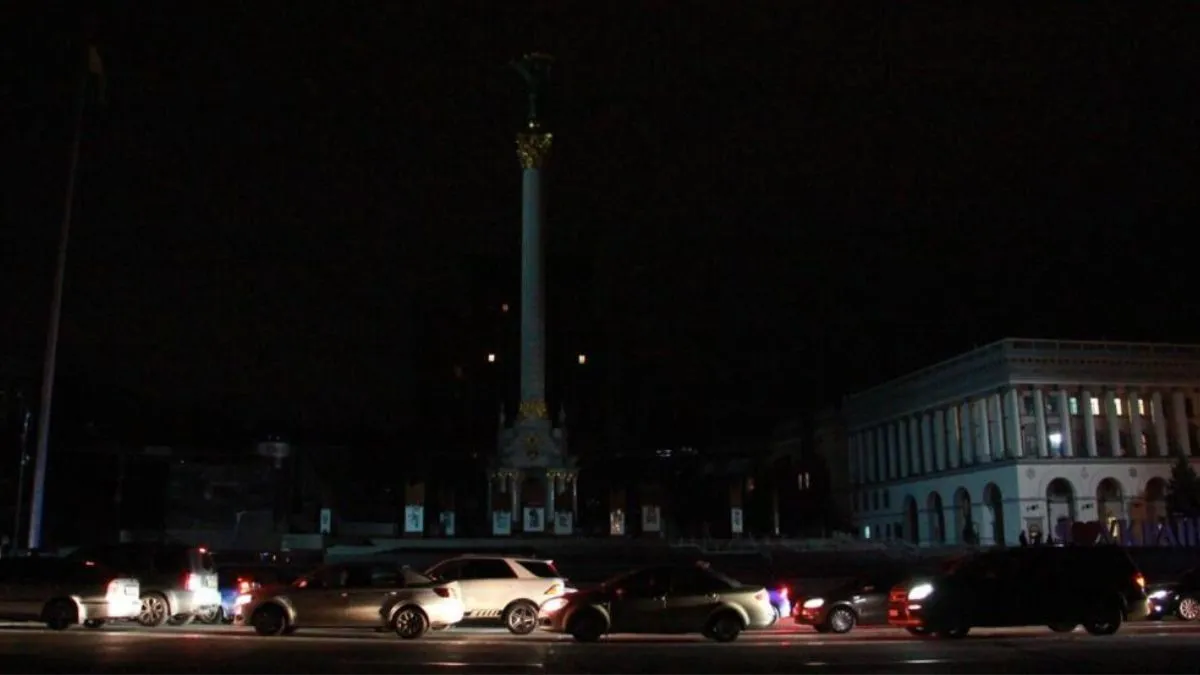
Today’s Kyiv is a city where the former luster and rhythm of a great European capital have given way to the harsh life of war. People sleep in jackets, cook on tourist stoves, and plan their day around short bursts of electricity—wherever it does.
The transformation of the city into the epicenter of survival for millions of people is the most painful consequence of the recent shelling. This is the new reality in which the capital is forced to exist, and how it copes with this challenge will determine not only the course of this winter, but also the future fate of the people for whom Kyiv remains home, despite all the enemy’s efforts to turn it into an icy wasteland.
Read us on Telegram and Sends