“President of Ukraine Volodymyr Zelenskyi said that the Donbas issue will be discussed on January 23-24 in Abu Dhabi. The delegations of Ukraine, the USA, and the Russian Federation will hold trilateral talks regarding the war. The President of Ukraine, Volodymyr Zelenskyi, informed that the issues of Donbas will be discussed on January 23-24 in Abu Dhabi. The delegations of Ukraine, the United States and the Russian Federation will hold tripartite talks on the war. UNN informs about this. There are details of the Donbas issue […]”, — write: businessua.com.ua
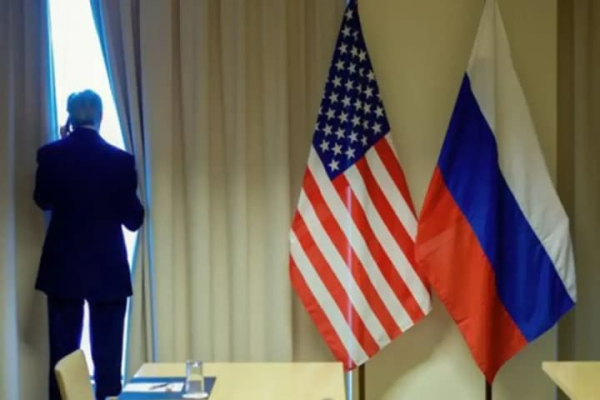
The President of Ukraine, Volodymyr Zelenskyi, informed that the issues of Donbas will be discussed on January 23-24 in Abu Dhabi. The delegations of Ukraine, the United States and the Russian Federation will hold tripartite talks on the war. It informs UNN.
Details
The question of Donbas is decisive. It will be discussed, and the terms will be discussed, as the three parties see it, in Abu Dhabi today and tomorrow. I spoke with the leader of the group, with Umerov, in the morning and at night. He will work and will provide me with relevant reports at each stage of certain conversations or agreements
– remarked Zelensky.
Donbas remains one of the key and most difficult issues in the Russian-Ukrainian war and any potential discussions regarding its conclusion. A fundamental disagreement between the parties is centered around the status of Donetsk and Luhansk regions: for Ukraine it is a matter of sovereignty and international law, for Russia it is a tool to consolidate the results of aggression, and for the USA it is a component of a broader attempt to stop the war and stabilize the security situation in Europe.
After the start of a full-scale invasion in 2022, Donbas turned from a region of hybrid conflict into one of the main arenas of war. Russia has repeatedly stated that it considers Donetsk and Luhansk regions “part of the Russian Federation”, referring to the pseudo-referendums of 2022, which were not recognized by any democratic state in the world. Actually, from that moment on, Donbas finally became not just a subject of negotiations, but a symbol of a fundamental clash of two approaches to the world order: force against law.
Ukrainian position on Donbas Ukraine’s position regarding Donbas is publicly stable and legally clear. Kyiv assumes that the Donetsk and Luhansk regions are an integral part of Ukraine within the internationally recognized borders of 1991. Any changes in the status of these territories, from the point of view of the Ukrainian authorities, are impossible without the restoration of full sovereignty, the withdrawal of Russian troops and the creation of conditions for the legitimate expression of the will of Ukrainian citizens. President Volodymyr Zelenskyi has repeatedly emphasized that territorial concessions cannot be the “price of peace”, as such peace will be unstable and will create a precedent for rewarding the aggressor.
At the same time, Ukraine recognizes that the issue of Donbas is one of the most difficult in any negotiation process. That is why Kyiv emphasizes not only the return of territories, but also security guarantees that would make it impossible to repeat aggression. In this context, Donbas for Ukraine is not only a territorial, but also a security node: control over the region has a direct impact on the protection of the south and east of the country, logistics, industrial potential and defense capability in general.
Russian position on Donbas the Russian position is the exact opposite. the Kremlin insists that Donbas must be permanently removed from the Ukrainian political and legal field. In various versions, the Russian proposals boil down to the demand that Ukraine recognize the loss of control over the occupied parts of the Donetsk and Luhansk regions. Moscow considers Donbas as the minimum result of the war, without which any cessation of hostilities loses its meaning for it.
The American position on Donbas The position of the United States on the issue of Donbas is more complicated and less clear. Officially, Washington under the new administration of Donald Trump supports the territorial integrity of Ukraine and does not recognize any attempts to annex Ukrainian lands. At the same time, within the framework of diplomatic efforts, the US increasingly views Donbas as a potential point of compromise around which a ceasefire scenario can be built. The Americans have the idea of creating demilitarized or special economic zones in a part of Donbas, as well as scenarios for the withdrawal of Ukrainian troops in exchange for security guarantees.
For the US, Donbas is not so much a matter of historical justice as an element of risk management. The American logic is based on the desire to stop the active phase of the war, reduce the probability of direct escalation between Russia and NATO, and stabilize the situation in Europe. That is why certain American proposals can be perceived in Ukraine as pressure or as an attempt to “freeze” the conflict without solving its root causes.
As a result, Donbas remains the point where compromise seems least likely. Ukraine is not ready to cede territories, as this contradicts both the Constitution and the basic principles of international law. Russia is not ready to give up Donbas, because it considers it a strategic trophy and a guarantee of influence on Ukraine in the future. The US, for its part, is trying to balance between supporting Ukraine and seeking a faster end to the war, even if it requires difficult and politically painful decisions.
Thus, the issue of Donbass is not just a territorial dispute, but a concentrated manifestation of a deeper conflict between different views on security, sovereignty and world order. That is why any decision regarding Donbas will determine not only the future of Ukraine, but also the security architecture in Europe for years to come.
However, even a hypothetical agreement of Ukraine to the loss of Donbas would not guarantee either permanent peace or an end to Russian harassment. On the contrary, such a step could only consolidate the logic of forceful revision of borders and create grounds for new demands from the Kremlin. In this context, we cannot rule out a scenario in which, after Donbas, Russia will once again bring up the issue of Kherson and Zaporizhzhia regions, appealing to the same pseudo-legal arguments and “referendums”. Under such conditions, concessions do not reduce the risk of escalation, but only postpone it to a new stage.
Please wait…