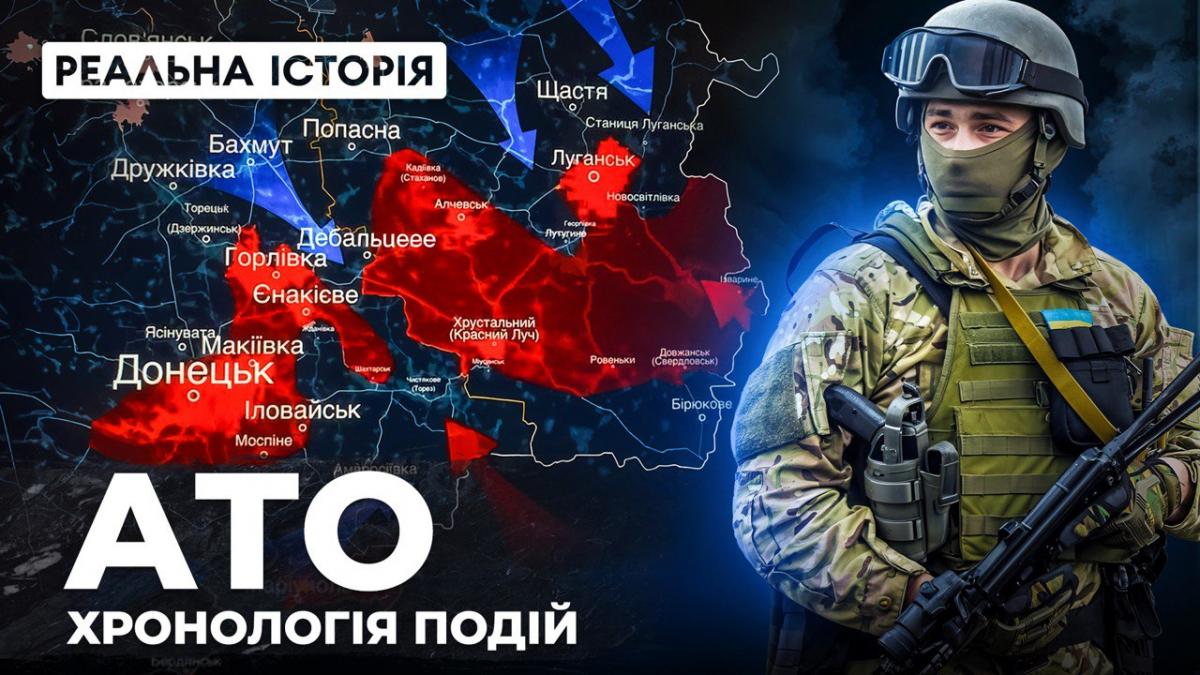
“The documentary “ATO Chronology” about the beginning of the Russian-Ukrainian war, in particular about the period of the anti-terrorist operation, was released on the “Real History” YouTube channel.”, — write: www.unian.ua
The documentary “ATO Chronology” about the beginning of the Russian-Ukrainian war, in particular about the period of the anti-terrorist operation, was released on the “Real History” YouTube channel.
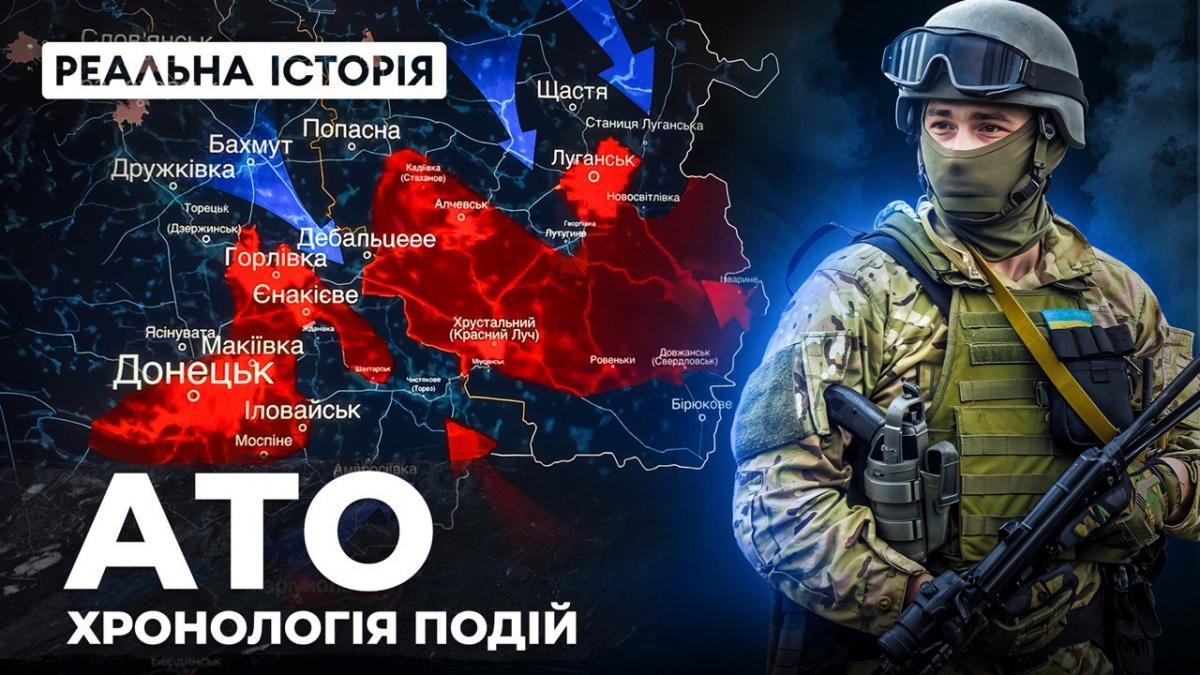 Akim Galimov’s “Real History” released the largest episode in the entire history of the project – the two-hour documentary “ATO Chronology”. It was created with the assistance of the Ministry of Culture of Ukraine and is dedicated to the Russian-Ukrainian war from 2014 to 2022.
The documentary tape reproduces step by step the events from the occupation of Crimea and the first seizure of administrative buildings by pro-Russian forces in the east of Ukraine to the large-scale battles for Slovyansk, Ilovaisk and Donetsk airport. All this to recall in detail how the Russian-Ukrainian war began in 2014. For this episode, “Real History” recorded detailed interviews with Major General of the Armed Forces of Ukraine Serhiy Kryvonos, former fighter of the Aidar volunteer battalion Yevhen Dyky, and candidate of historical sciences, political scientist Pavel Gai-Nizhnyk.
Major General Krivonos noted that long before 2014, the General Staff had scenarios for repelling a possible enemy attack from the Russian Federation.
“Even before 2014, there were plans of action of the Armed Forces of Ukraine in various variants, including if Russia tries to seize the territories of Ukraine without an open declaration of war. Military units were identified that could repel this attack. These are highly mobile landing troops, certain parts of the ground forces, air forces. And all this was worked out taking into account their combat capabilities… Why at one time General Zamana, who was the chief of the general staff at that time, did not sign a combat the order is a rather difficult issue,” Kryvonos said.
Let’s recall what happened in February 2014 in Ukraine. On February 20, the first Russian troops landed in the Ukrainian Crimea and began an operation to capture the peninsula. In Kyiv, at this moment, security forces are shooting Maidan activists on Instytutska Street. The whole world sees it virtually live.
On the night of February 21, the then President of Ukraine, Viktor Yanukovych, fled from his residence in Mezhyhirya. On the same day, it became clear that not only the head of state had fled, but also the entire government and the leadership of the security forces. On February 22, the chairman of the Verkhovna Rada, a close ally of Yanukovych, Volodymyr Rybak, will resign. Ukraine remains without a legitimate leadership. There is simply no one to react to the events in Crimea. What is called a power vacuum has arisen, that is, there is a state, but there are no legitimate, elected and appointed leaders and government officials. Legitimacy remained only with people’s deputies. It is they who elect Oleksandr Turchynov as the head of the parliament, and on February 23 he is appointed acting president of Ukraine and the formation of the government begins.
Historian Pavlo Gai-Nyzhnyk noted that despite all the complexity of the situation, in his opinion, Ukraine still had a chance to stop Russia in Crimea at that time.
“At the beginning of February 2014, there were chances and there was an opportunity to curb the first attack of the Russian Federation. These were small unmarked detachments, that is, if they were shot, it would not provoke an escalation – what Kyiv was afraid of. This was not done and this was the first mistake,” Gai-Nizhnyk shared.
This period in our history still has many white spots. For example, why weren’t Luhansk and Donetsk, which were actually surrounded by Ukrainian troops at the time, not liberated? How did the boilers in Ilovaisk and Debaltseve come to be? Could we have defended Crimea and thus prevented hostilities in the East and full-scale war? What would be the reaction of the Russian Federation if Ukraine’s response at the time had been tougher and more decisive? You will find the answers to these questions in the film “ATO Chronology”.
You may also be interested in news:
- Most of Kupyansk is under the control of the Armed Forces, Russia has no chance to influence it, the expert said
- The analyst explained the essence of the submarine detonation in Novorossiysk
- The enemy has not been able to break the defense of Chasiv Yar for almost a year: the expert explained the importance of the direction