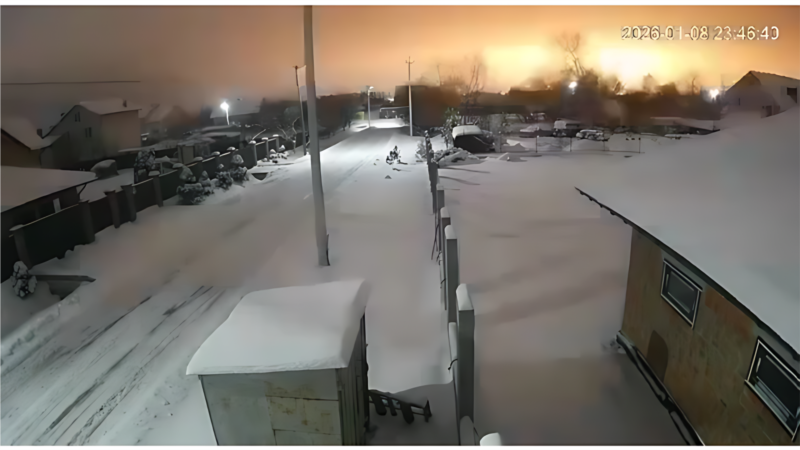
“British intelligence reports that Russia used a rare and expensive Oreshnyk missile for the second time to strike Lviv region, probably as a signal”, — write: www.radiosvoboda.org
“The use of this experimental system against Ukraine was almost certainly a strategic message following Russia’s inaccurate public claims that Ukraine had launched an attack on Russian President Putin’s residence in Novgorod, Russia on December 29, 2025. Russia most likely only has a few Oreshnik missiles. This missile is probably much more expensive than other missiles that Russia is currently using against Ukraine,” the message reads.
On the night of January 9, Russian troops launched a massive attack on Ukraine. The Air Force of the Ukrainian Armed Forces reported that the Russian military used 36 missiles and 242 unmanned aerial vehicles (about 150 of them – Shahedi) to attack Ukraine. In particular, the Armed Forces confirmed the use of a medium-range ballistic missile by the Russian Federation from the Kapustyn Yar range in the Astrakhan region of the Russian Federation. Despite the fact that, as the military reported, 244 targets were neutralized by air defense, 18 missiles and 16 strike UAVs were hit at 19 locations.
British intelligence notes that Russian forces have carried out the second operational use of the Oreshnyk medium-range ballistic missile, which traveled approximately 1,622 km to its target.
In 2019, Russia announced its withdrawal from the Treaty on the Elimination of Intermediate-Range and Shorter-Range Missiles, which prohibited the development and production of intermediate-range missiles.
However, according to British intelligence, the development of Oreshnyk almost certainly took place before this – the system is most likely a variant of the Rubezh RS-26 ballistic missile, which was first tested in 2011.
Read also: Kallas: Russia’s use of “Oreshnik” is a warning for Europe and the USA
In the morning, the Ministry of Defense of Russia admitted that it had used an Oreshnik medium-range ballistic missile to strike Lviv region, calling it a response to the alleged Ukrainian strike on the residence of Russian leader Vladimir Putin in the Novgorod region. Ukraine and its Western partners deny that such a strike took place, saying that Russia is thus trying to justify new attacks and delay peace talks.
RFE/RL also asked residents of the village of Rudne, which is the closest to the site of the rocket’s impact, as well as Lviv, what they thought about the attack: