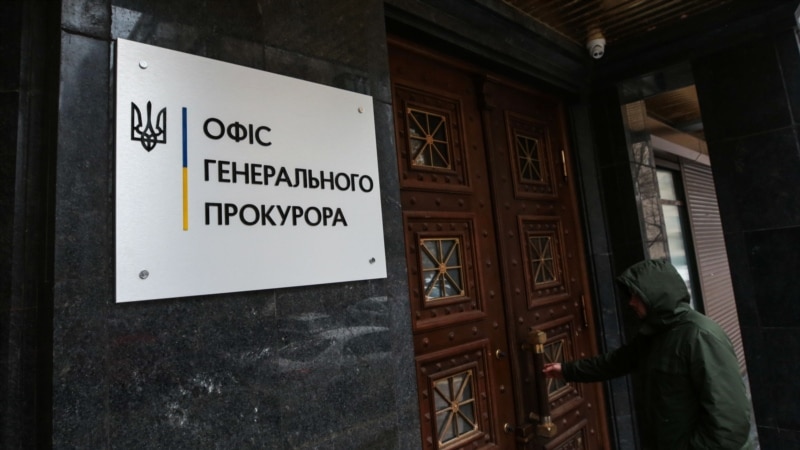
“The OGP explains that information on military criminal offenses belongs to official information and is not subject to publication”, — write: www.radiosvoboda.org
“Information on criminal offenses against the established order of military service (military criminal offences), as well as on the persons who committed them, belong to official information and are not subject to public disclosure,” says the response of the Prosecutor General’s Office to RFE/RL’s request.
In addition, as stated in the OGP, the provision and publication of information about such criminal offenses in the conditions of martial law can “discredit the defense forces and be used to the detriment of state interests, in particular to assess the moral and psychological state of servicemen, the level of discipline, the combat effectiveness of military formations, and can also become a tool of IPSO aimed at undermining trust in the military leadership and the system of mobilization training.”
And this creates risks for defense activities and information security of the state, negatively affects the maintenance of the country’s defense capabilities, added the Prosecutor General’s Office.
Read also: New data on the scale of the SZH: “Every two minutes a person escapes.” Is it really possible to stop it?
Military serviceman of the Armed Forces of Ukraine and former People’s Deputy Ihor Lutsenko, referring to official data, stated that 21,602 cases of SZH were recorded in October. He is sure that the SZH and desertion are the main problem of the Ukrainian army.
Earlier, the Prosecutor General’s Office reported that during the full-scale war in Ukraine, almost 300,000 cases were initiated for the SZH and desertion. Most of the cases were initiated during the last year.