“Over 3,000 road deaths each year. A new bill on increasing fines could save lives.”, — write: www.pravda.com.ua
In the news about road accidents, they often write “failed to control” or “did not choose a safe speed.” Although in reality other culprits of these catastrophic realities remain behind the scenes — not specific drivers, but the state, in particular the parliament. Because fines for speeding in Ukraine — completely inadequate. And that is why they are fictitious: they formally exist, but do not work.
So no changes for the better yet: in 2025, there were 25,934 road accidents with injuries and deaths, which took the lives of 3,249 people (which is 1.5% more than the previous year). Over 52% of these deaths were caused by excessive speed. Also, 31,898 of our fellow citizens were injured in these road accidents. Not only adults die: in 2025, 202 children lost their lives on Ukrainian roads.
Advertising:
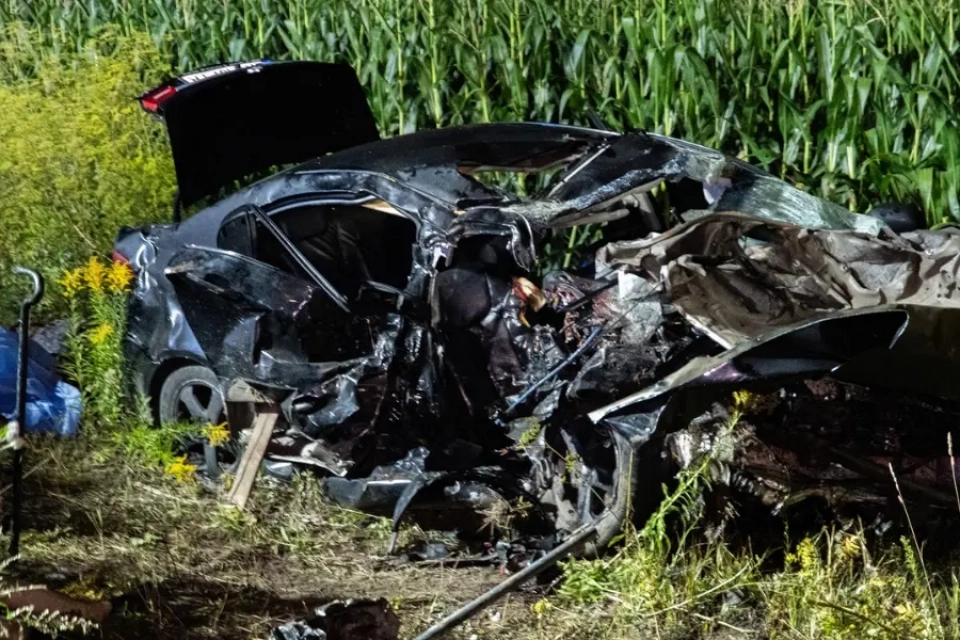
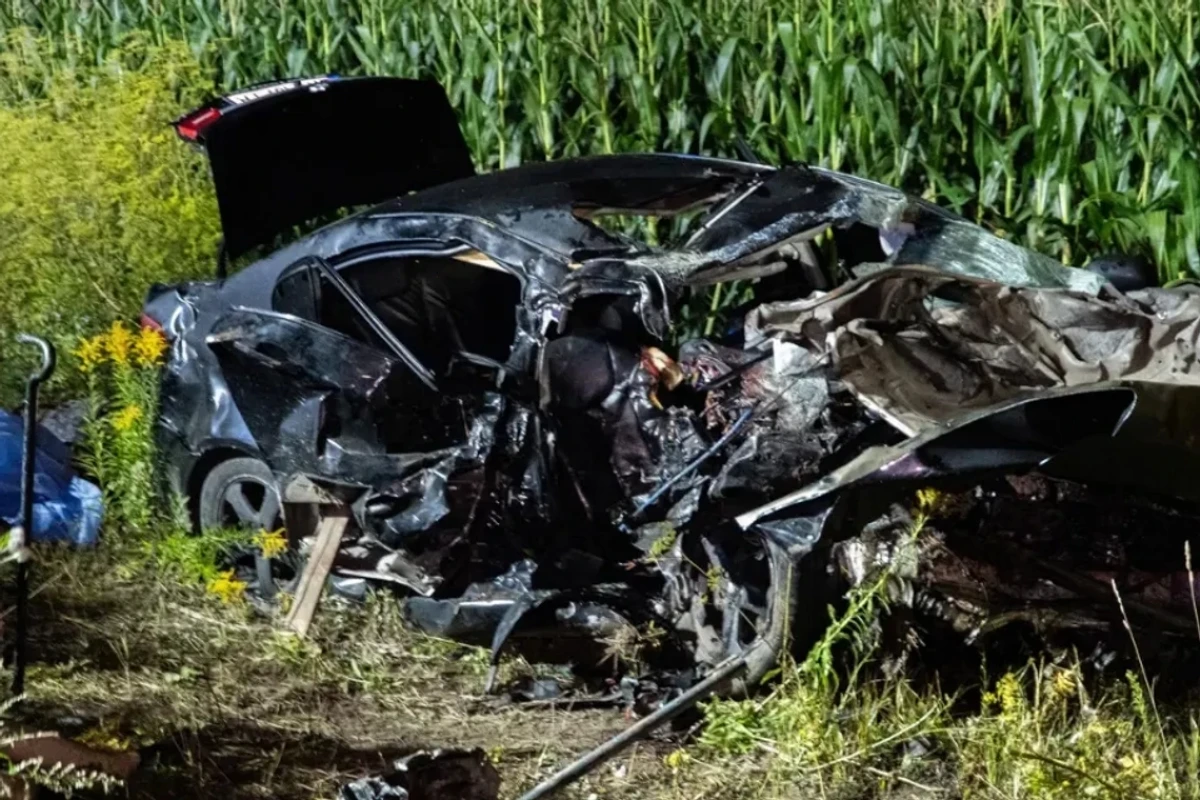 In August 2025, 5 people died in Khmelnytskyi
Source: vsim.ua
Function instead of fiction The fine for speeding from 20 to 50 km/h in Ukraine formally amounts to UAH 340. However, the absolute majority of resolutions today are formed automatically — by auto-fixation cameras. And for such cases, the “grace period” rule applies: if you pay quickly, the amount is divided in half. So in reality, the violator is fined 170 hryvnias. Let’s be honest: this is a ridiculously low price that almost every driver will pay without thinking, perceiving it as a small “commission” for fast driving.
International scientific research and successful practices, summarized in the authoritative report Global Road Safety Partnershipclearly define: the rules and sanctions for their violation are not intended to collect money, but to achieve the effect of deterring undesirable behavior. The principle of deterrence works through a combination of four factors:
Today’s Ukrainian fines do not perform a deterrent function precisely because of the failure of point number three. There is no point in quick and inevitable punishment as long as it looks like a wagging index finger.
Spam instead of containment The speed control system in Ukraine includes 340 stationary auto-fixing cameras and manual TruCam radars. By these means, police officers record about 480,000 violations per month or 16,000 violations per day. It is hard to imagine what a huge amount of data, work, issued resolutions, tons of paper is. The number of issued fines increases every year. But the number of dead and injured is also increasing, instead of decreasing.
The explanation for this is simple: with ridiculously low amounts of fines, the control system works at full strength, but does not give the desired result. Huge taxpayer dollars go into installing and maintaining cameras, maintaining servers, paying police patrols, reviewing and signing millions of ordinances, paper, electricity, and postage. And all this without the main result for society – fewer serious road accidents, more safety. Because there is no deterrent effect.
It’s a vicious cycle: fines get bigger precisely because they don’t work. And the driver pays the change and presses the gas further.
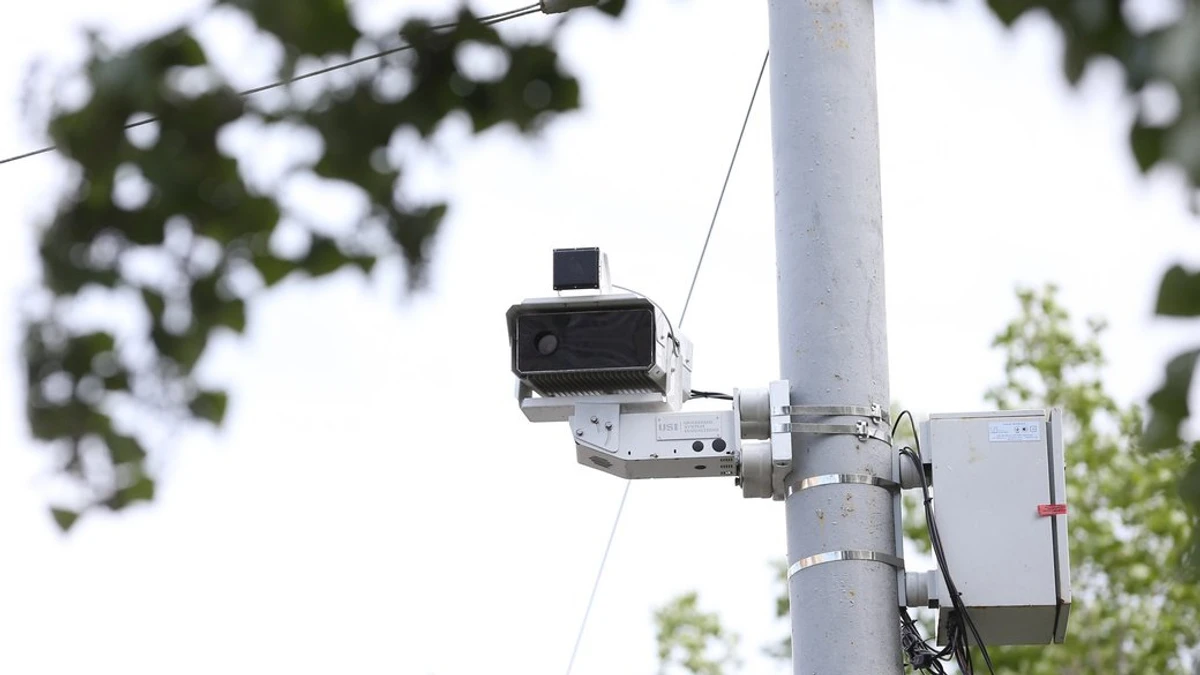 Complex of automatic recording of traffic violations
Photo: UNIAN
The price of indifference The size of the fine is not only deterrence, but also communication between the state and the citizen. By setting small amounts of fines, the state sends a message to citizens that this violation is not serious. In the end, the driver will pay the same 340/170 hryvnias for parking in an unauthorized place. In our reality, this message is superimposed on people’s opinion that driving 50 or even 70 km/h in the city is somehow frivolous.
Let’s recall the story with seat belts. For a long time, the fine for not wearing a seat belt was 51 hryvnias. And what did we have? Seat belt use was around 15% in 2017, and in many cities less than 10%. The drivers openly laughed at such a “punishment”. A low fine created a false belief that the violation was trivial and the rule a formality.
When the Verkhovna Rada only registered a draft law on increasing fines, it already had a positive effect on the level of seat belt use. After 2021, when the fine was finally increased 10 times (to UAH 510), the level of use of seat belts increased to more than 40%, and the last result is 48%. Huge positive behavioral change: 3 times higher adherence than before. In many cities, wearing a seat belt has become the social norm of the majority, not the choice of the minority. This change in legislation and the resulting behavioral change have already saved thousands of lives.
The same thing happens with excessive speed. As long as the state’s assessment of the violation remains ridiculous, the state sends a message that it doesn’t matter. And massive disregard for speed limits is becoming a social norm.
What’s next? Of course, fines alone will not solve the problem. A safe and well-thought-out infrastructure, rational placement of road signs and markings, and well-designed means of traffic calming are needed. But without adequate, tangible responsibility, all these measures will be half-hearted.
The penalty should “bite”. It should encourage the driver to think twice before exceeding the speed (and to refuse, because the risk of losing 1000+ hryvnias is not worth the saved minutes).
The thesis that fines or traffic safety are “out of date” is a criminal myth. Bringing fines to adequate levels is more necessary and urgent than ever.
The fourth year of the war, the economic and demographic crisis. Under such conditions, Ukraine makes daily efforts to preserve human lives, the government adopts strategic plans to preserve human capital — and at the same time, we thoughtlessly lose more than 3,000 killed every year. But these are not the only losses, because more than 30 thousand people receive injuries, often severe (among the victims of them – 5000 children).
We should stop playing populism and “out of time” when the most valuable thing is at stake – the lives of our people. Therefore, people’s deputies must act immediately and finally implement legislative changes that will protect Ukrainians from death and injuries on the roads. And the first step should be the adoption of the draft law, which has long been ready for consideration in the Council – and gained support more than 75% of citizens.
We are talking about draft law No. 13314 “On Amendments to the Code of Ukraine on Administrative Offenses Regarding the Introduction of Proportionality of Liability for Exceeding the Set Speed Limits of Vehicles”, registered in the Verkhovna Rada of Ukraine on May 26, 2025. Its aim is to reduce road deaths and injuries caused by excessive speed and to bring liability mechanisms for drivers closer to EU practices.
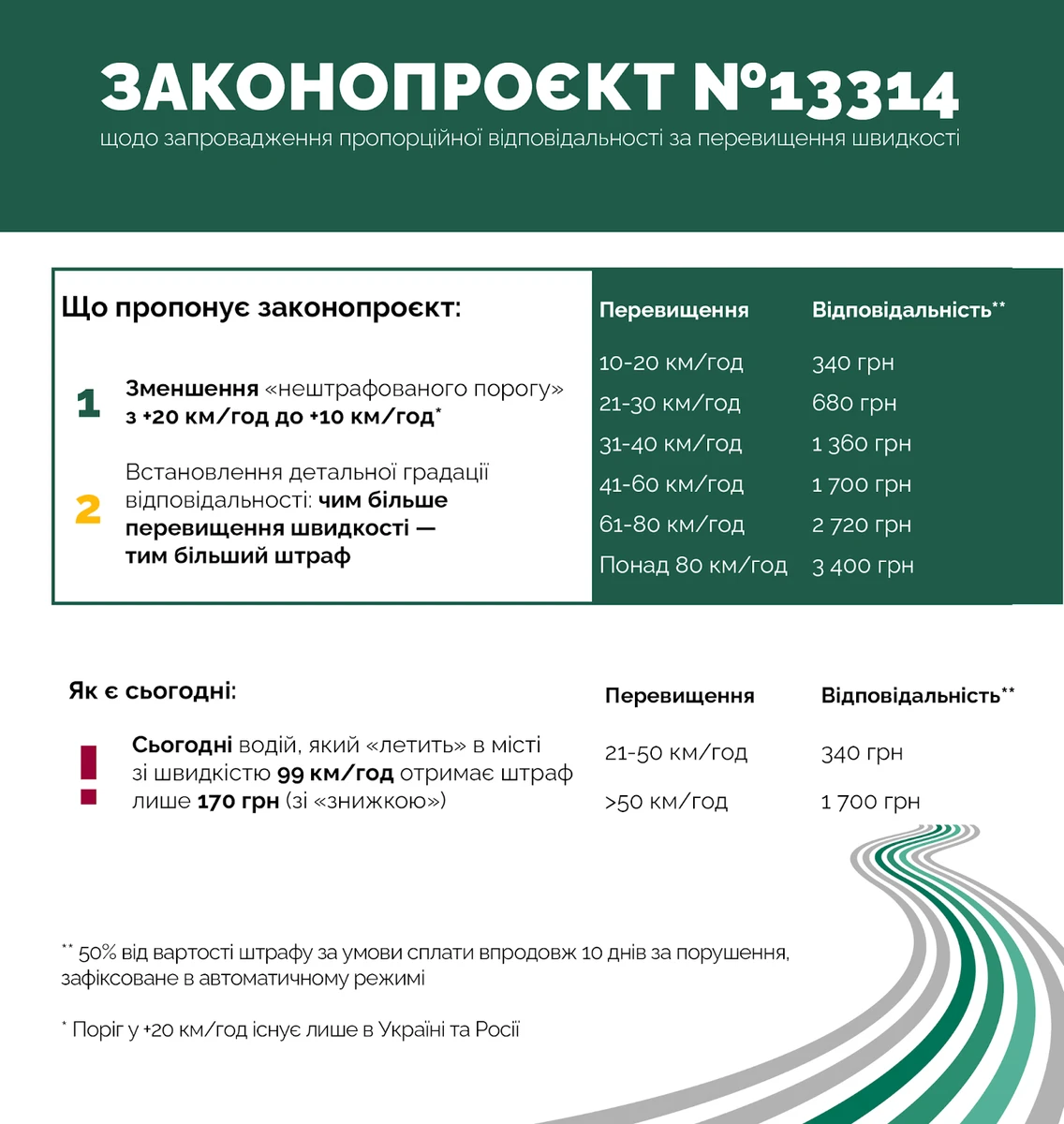
The main problems solved by the draft law:
Consideration and adoption of draft law No. 13314 is an opportunity for the parliament to demonstrate that people’s safety is an absolute priority. This is a choice in favor of responsible changes that can actually save thousands of citizens, instead of maintaining a dangerous status quo.
We don’t have the right to wait for a “better time”, because for someone this time may come today at the nearest crossroads.
Security is not a limitation of freedom, it is a condition for the survival of the nation in the conditions of the demographic crisis. Deputies should press the “yes” button not to fill the budget, but to ensure that Ukrainians stop dying where they should be able to get home safely. Fines must work, and people must live.
Olesya Holopik
A column is a type of material that reflects exclusively the point of view of the author. It does not claim objectivity and comprehensive coverage of the topic in question. The point of view of the editors of “Economic Pravda” and “Ukrainian Pravda” may not coincide with the author’s point of view. The editors are not responsible for the reliability and interpretation of the given information and perform exclusively the role of a carrier.