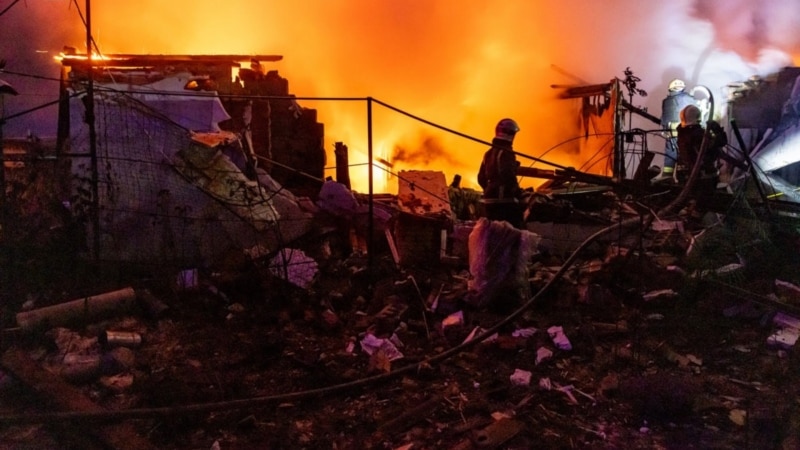
“Terekhov added that critical infrastructure is “constantly working at the limit, and any further blow could mean that maintaining a stable supply will become even more difficult.””, — write: www.radiosvoboda.org
“The enemy drone “Molniya” hit a non-residential building in the Slobid district. So far, there have been no deaths or injuries,” the mayor said.
Later, Terekhov specified that another “arrival” happened in the Slobid district – the drone hit a critical infrastructure facility.
After the attack by the Russian military in the afternoon of January 17 on a critical infrastructure object in the Industrial district of Kharkiv, “the damage is very significant,” reported the mayor of the front-line city, Igor Terekhov.
“This is not a case of “patched up a little and moved on.” We are talking about serious blows to the system that keeps the city warm and with light. With each such shelling, the centralized supply of heat and electricity becomes more and more difficult. Because the energy industry is in a very difficult state right now: the reserves are not infinite, the load is at its peak, and any new damage immediately “eats up” opportunities for stabilization,” wrote the mayor of Kharkiv.
Terekhov added that critical infrastructure is “constantly running on the edge, and any further hit could mean that maintaining a stable supply will become even more difficult.”
The Russian military regularly attacks Ukrainian regions with various types of weapons – attack UAVs, rockets, anti-aircraft missiles, and anti-aircraft missiles.
The leadership of Russia denies that the Russian army during a full-scale war inflicts targeted strikes on the civilian infrastructure of the cities and villages of Ukraine, killing the civilian population and destroying hospitals, schools, kindergartens, energy and water supply facilities.
The Ukrainian authorities and international organizations qualify these strikes as war crimes of the Russian Federation and emphasize that they are purposeful in nature.