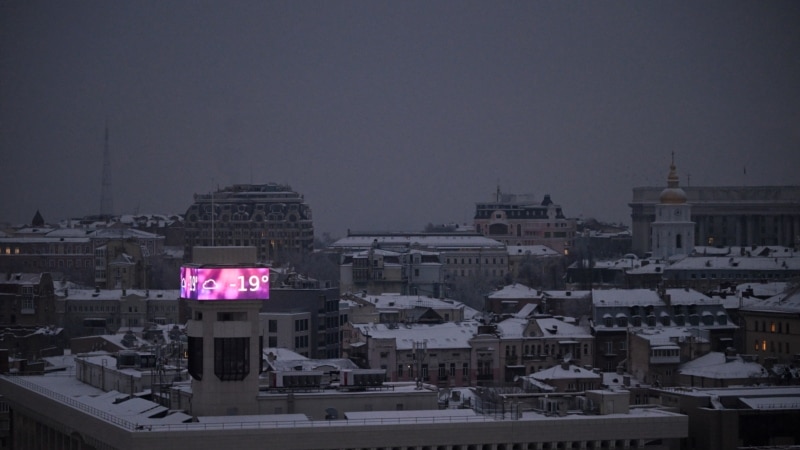
“In Kyiv, decorative lighting will not be turned on, and the intensity of street lighting will be reduced to 20% of power”, — write: www.radiosvoboda.org
In accordance with the decision of the Kyiv Defense Council, architectural and decorative lighting will not be turned on, the intensity of street lighting will be reduced to 20% of the power, where it is technically impossible to make the light dimmer, 50% of the lanterns will be turned on.
Decorative lighting of houses, buildings and structures, advertising media and informational signs will also be limited, adds the KMDA.
The city authorities urged local residents to consume electricity sparingly – this helps to avoid network overload and speed up their recovery.
The authorities of the Lviv region also announced that they will limit the external lighting of buildings and structures in Lviv, and they will not turn on illuminated advertising and signboards.
On January 15, Prime Minister Yuliya Svyridenko stated that all OVA and Kyiv city military administrations should reduce electricity consumption during the day, in particular, limit external lighting of buildings and territories, advertising lighting, excess street lighting.
Read also: Backup generation: the government announces simplification of connections
In December, the local authorities reported that in Kyiv, the capital’s outdoor lighting system operates with an energy-saving mode – street lighting is not turned off completely: in some areas, its intensity is reduced to 30%. At the same time, according to “Kyivmisksvitlo”, the street lighting system occupies a very small share (less than 1%) of the capital’s total energy consumption.
In December, the government reviewed the lists of critical infrastructure facilities. As reported, 911 MW of electric power was released and added to the general network. This decision is expected to have the effect of reducing the duration of blackout schedules for people and industry.
The Cabinet of Ministers reported that two categories were removed from the lists – consumers with a capacity of less than 100 kW and objects to which a number of other consumers were connected, but this revision did not apply to base hospitals, life support facilities and enterprises of the defense-industrial complex.
Since the beginning of the full-scale invasion in February 2022, Russia has been striking Ukraine’s energy infrastructure. Since the beginning of the fall of 2025, Russian forces have intensified their attacks on the Ukrainian energy sector.