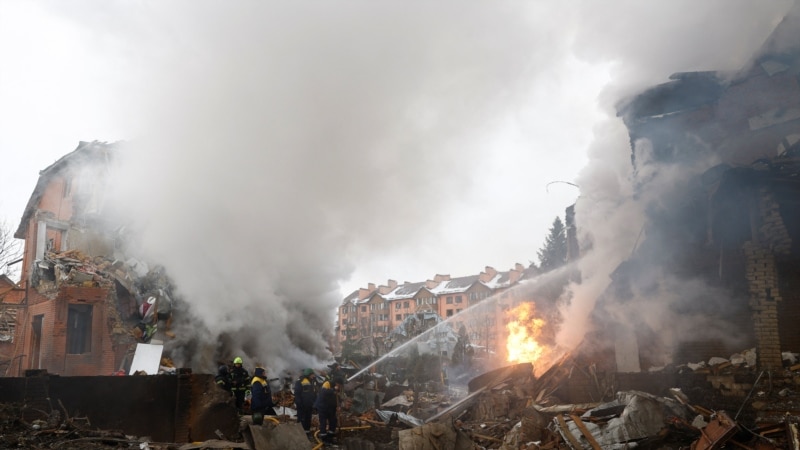
In the early hours of February 22, Russian military forces executed a combined assault on critical infrastructure across Ukraine, deploying 297 drones, including 200 Shahed models, alongside 50 various types of missiles, according to reports from the Ukrainian Air Force.
The primary targets of the Russian offensive included regions such as Kyiv, Odesa, Kirovohrad, and Poltava. By 10:00 AM, Ukrainian air defense systems had intercepted 33 missiles and 274 drones of different varieties.
- 2 anti-ship Zircon missiles;
- 8 ballistic missiles from the Iskander-M/S-400 systems;
- 17 cruise missiles of the Kh-101 type;
- 2 Iskander-K cruise missiles;
- 4 guided aviation missiles of the Kh-59/69 series;
- 274 drones of various types.
Ukrainian forces reported that 14 missiles and 23 drones struck 14 locations, with debris from intercepted drones landing in five areas. As the situation developed, further information regarding several Russian missiles was still being clarified, and the assault was ongoing with Russian drones remaining active in Ukrainian airspace.
Russian military operations have consistently targeted Ukrainian cities and civilian infrastructure using an array of weaponry, including drones, missiles, and other munitions. Ukrainian authorities and international organizations categorize these attacks as war crimes, emphasizing their deliberate nature.
Strikes on essential services and healthcare facilities aim to deprive civilians of electricity, heating, water supply, communication, medical assistance, and other vital resources, which has been characterized by some legal experts and human rights advocates as indicative of genocidal actions.
During the ongoing conflict, Russian actions against Ukrainian citizens encompass a range of offenses that may fall under the definition of genocide. Legal scholars and researchers point to several indicators, including:
- Public declarations by Russian officials asserting the non-existence of Ukrainians as an ethnic group and calls for their elimination;
- Targeted attacks on essential services and healthcare facilities;
- Persecution and elimination of pro-Ukrainian individuals in occupied territories;
- Destruction of the intelligentsia, including educators and cultural figures;
- Imposition of educational systems in occupied areas aimed at altering children’s identities;
- Deportation of children without parental consent to Russia for identity alteration;
- Removal and destruction of Ukrainian literature from libraries and looting of museums.
The Convention on the Prevention and Punishment of the Crime of Genocide, adopted by the United Nations General Assembly in 1948, obligates its 149 signatory nations to prevent and punish acts of genocide during both wartime and peacetime.
This convention defines genocide as actions intended to fully or partially destroy a national, ethnic, racial, or religious group. Key indicators of genocide include the killing of group members, infliction of serious bodily or mental harm, deliberate creation of living conditions aimed at destruction, prevention of births, and forcible transfer of children.
Russian leadership has consistently denied that its military is deliberately targeting civilian infrastructure, asserting that such claims are unfounded and that the military operations are aimed at legitimate military objectives.
The recent coordinated strikes by Russian forces on Ukrainian infrastructure highlight ongoing tensions and the targeting of civilian facilities. These actions have drawn international condemnation and are viewed as potential war crimes under international law.