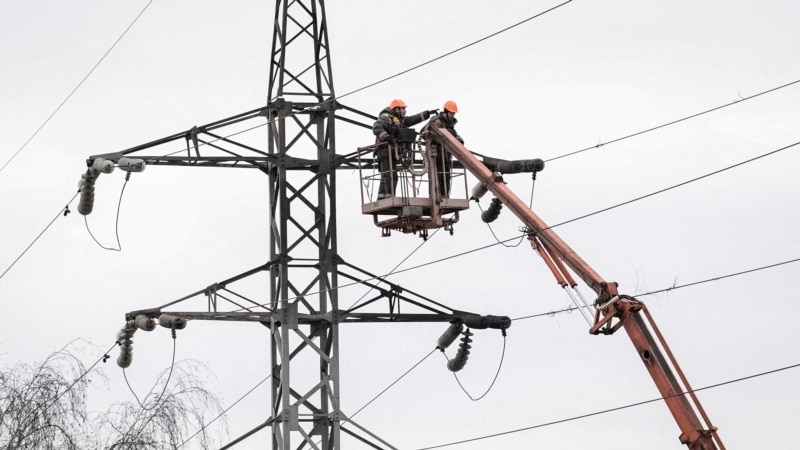
“According to the Ministry of Energy, emergency shutdown schedules have been introduced in several regions to stabilize the operation of the power system”, — write: www.radiosvoboda.org
“Slavutich We continue to restore energy facilities damaged by the enemy. As of this morning, household customers have partially recovered. Power outage schedules are not in effect. All critical infrastructure is transferred to backup sources. Water supply and heat supply to people are provided. Shops, pharmacies, gas stations and social institutions work thanks to generators and batteries,” he wrote in a telegram.
Meanwhile, the Ministry of Energy reported that during the last day, Russian troops again attacked energy infrastructure facilities in a number of regions, as a result of which consumers in the Kharkiv and Donetsk regions are without power this morning.
“Approximately 1,500 subscribers were cut off in an emergency in the Boryspil district of Kyiv region,” Deputy Minister of Energy Roman Andarak said at the briefing.
According to him, emergency shutdown schedules have been introduced in several regions to stabilize the power system.
Read also – Air Force: the Russian army attacked Ukraine at night with 61 drones, 8 of them were hit
Since the beginning of the full-scale invasion in February 2022, Russia has been striking Ukraine’s energy infrastructure. Since the beginning of the fall of 2025, the Russian military has increased its shelling of the Ukrainian energy and gas infrastructure, which supplies people with gas during the heating season.
According to the Ministry of Energy, as of December, since the beginning of 2025, the Russian military has attacked Ukraine’s energy infrastructure 4,500 times.
On October 30, the UN Human Rights Monitoring Mission in Ukraine stated that due to Russian attacks, there is a serious risk of dangerous consequences for civilians this winter, including prolonged interruptions in heating, electricity and water supply. According to the UN, such interruptions will have a particularly painful effect on vulnerable groups of the population, such as the elderly, persons with disabilities and families with small children.