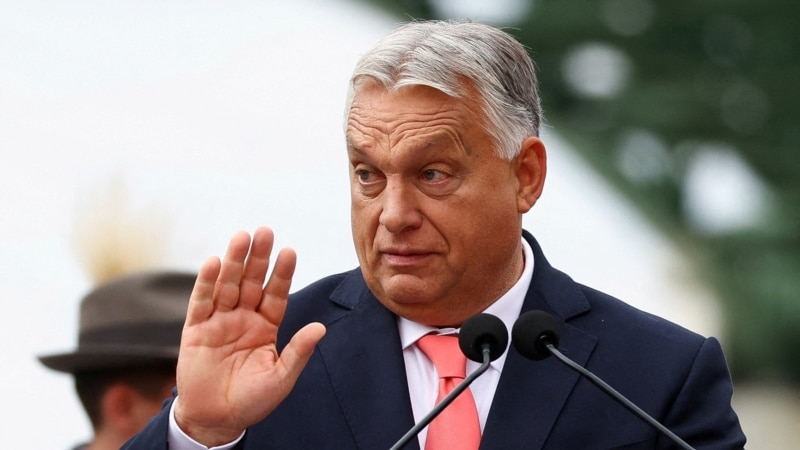
“Hungarian Prime Minister Viktor Orbán said at the EU summit that the plan to use frozen Russian assets to finance Ukraine has reached a dead end”, — write: www.radiosvoboda.org
“I think it’s obvious: it’s a dead end, it’s all over. There is not a sufficient level of high-level support behind this,” Orbán told reporters in Brussels.
According to him, there are already enough opponents among the member states to form a blocking minority.
“I saw last night that there are enough opposing countries to gather the necessary number of votes to form a blocking minority. Therefore, I believe that this case is hopeless,” said the Hungarian Prime Minister.
Orbán also reiterated Budapest’s position that Hungary will not support any mechanisms that involve joint financial guarantees or commitments without parliamentary approval.
The Hungarian Prime Minister also opposed the very logic of financing Ukraine.
“This whole idea is stupid – to take money from someone. There are two countries at war, Russia and Ukraine. This is not the European Union. And the European Union wants to take money from one side of the war and give it to the other. This means direct involvement in the war, so the Belgian prime minister is right – we should not do this,” Orban said.
Orban’s comments came against the background of intense negotiations between EU countries regarding the financing mechanism for Ukraine for 2026-2027.
On December 18, the leaders of 27 EU member states will gather for a summit in Brussels.
According to the document, which is at the disposal of Radio Svobolas, in the new draft of the conclusions of the summit of the European Union, a separate expanded item appeared dedicated to the launch of a reparation loan for Ukraine based on frozen Russian assets. At the same time, this item is enclosed in brackets, which means that it has not yet been finally agreed upon and must be approved directly by the leaders of the EU states and governments at the summit on December 18.
European Commission President Ursula von der Leyen, arriving at the summit, said that EU leaders “will not leave the European Council without a decision on the financing of Ukraine for the next two years”, but diplomats admit that the agreement remains difficult and not guaranteed.
The reparation loan is considered as a mechanism of financial support for Ukraine in the amount of up to 90 billion euros for the next two years at the expense of revenues and cash balances of frozen Russian assets, the total amount of which in Europe is estimated at about 210 billion euros.