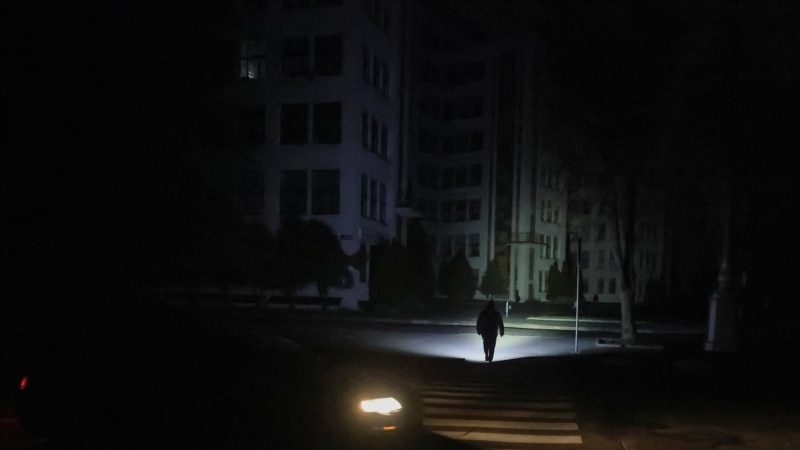
“According to the OVA, as a result of the Russian attack, a critical infrastructure object that provided electricity to most of the districts of the Dnipropetrovsk region was damaged”, — write: www.radiosvoboda.org
He recalled that as a result of the Russian attack, a critical infrastructure object that provided electricity to most of the regions of the region was damaged.
“The position is difficult,” Hayvanenko wrote in a telegram on the night of January 8.
In the morning, he added that air defense forces shot down 31 drones in the region. “Despite this, the attack of the Russian army led to damage to the infrastructure in Kryvorizky, Dnipro, and Pavlograd districts. There were fires. Part of the region remains without light. All necessary measures are being taken to restore energy supply to consumers,” the message reads.
The mayor of Dnipro, Borys Filatov, announced that on the morning of January 8, electric transport in Dnipro will be replaced by buses as much as possible.
Power outages were also reported in the Zaporizhzhia region. As of the morning of January 8, the head of OVA, Ivan Fedorov, stated that “all boiler rooms are supplied with electricity and are working normally…, the supply of heat to the home continues.” The correspondent of Radio Svoboda reports that around 3 am in Zaporizhzhia, the electricity supply was almost completely restored.
Since the beginning of the full-scale invasion in February 2022, Russia has been striking Ukraine’s energy infrastructure. Since the beginning of the fall of 2025, the Russian military has increased its shelling of the Ukrainian energy and gas infrastructure, which supplies people with gas during the heating season.
According to the Ministry of Energy, as of December 12, the Russian military has attacked Ukraine’s energy infrastructure 4,500 times since the beginning of this year.
On October 30, the UN Human Rights Monitoring Mission in Ukraine stated that due to Russian attacks there is a serious risk of dangerous consequences for civilians this winter, including long interruptions in heating, electricity and water supply. According to the UN, such interruptions will have a particularly painful effect on vulnerable groups of the population, such as the elderly, persons with disabilities and families with small children.