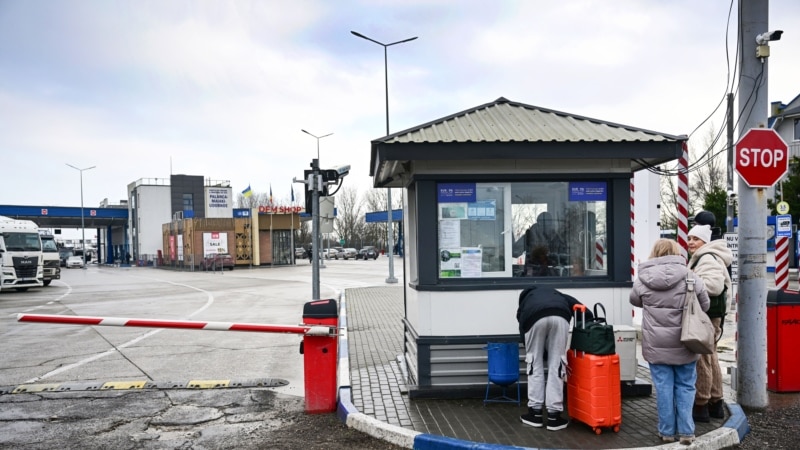
““On the Ukrainian-Moldovan border, the passage of vehicles and goods is temporarily not carried out in connection with the failure of the central databases of the customs authorities of Moldova,” the customs service reported.”, — write: www.radiosvoboda.org
“To the attention of citizens and international carriers who plan to cross the border with the Republic of Moldova! We inform you that on the Ukrainian-Moldovan border, the passage of vehicles and goods is temporarily not carried out in connection with the failure of the central databases of the customs authorities of the Republic of Moldova,” the message reads.
Earlier today, the Ministry of Energy of Moldova announced an emergency shutdown in the country’s power system due to problems in the Ukrainian power grid. A number of cities in Moldova, in particular the capital Chisinau, remained without electricity.
First Deputy Prime Minister, Minister of Energy Denys Shmyhal announced that electricity supply, which was stopped on January 31 in a number of regions of Ukraine due to an accident in the power system, is planned to be restored within the next few hours.
“Today at 10:42 a.m. there was a technological violation with the simultaneous disconnection of the 400 kV line between the energy systems of Romania and Moldova and the 750 kV line between the western and central parts of Ukraine. What caused the cascading shutdown in the electricity network of Ukraine and the triggering of automatic protection at substations. Blocks of nuclear power plants were unloaded. Currently, the dispatcher has applied special schedules of emergency shutdowns in Kyiv, Kyiv, Zhytomyr, and Kharkiv regions,” Shmyhal wrote in a telegram.
In addition, blackouts were reported in Chernihiv Oblast, Odesa Oblast, and Dnipropetrovsk Oblast.
The authorities of Kyiv reported that the metro stopped in the capital of Ukraine due to an emergency shutdown. There is also no water supply in the city.
After the last massive attacks by the Russian Federation, the power system of Ukraine is under a state of emergency. In particular, the difficult situation remains in Kyiv, where several hundred high-rise buildings out of six thousand that were left without heating as a result of the Russian strike on January 24 (many of them again after previous shelling on January 9 and 20) are still without heat.
On January 29, US President Donald Trump said that he asked Russian leader Vladimir Putin not to attack Ukrainian cities for a week from an unspecified date, and he allegedly agreed. The Kremlin said they had agreed not to strike until February 1.