
“The American professor paid special attention to the return of the United States to the “Monroe doctrine”.”, — write: www.unian.ua
The American professor paid special attention to the return of the United States to the “Monroe doctrine”.
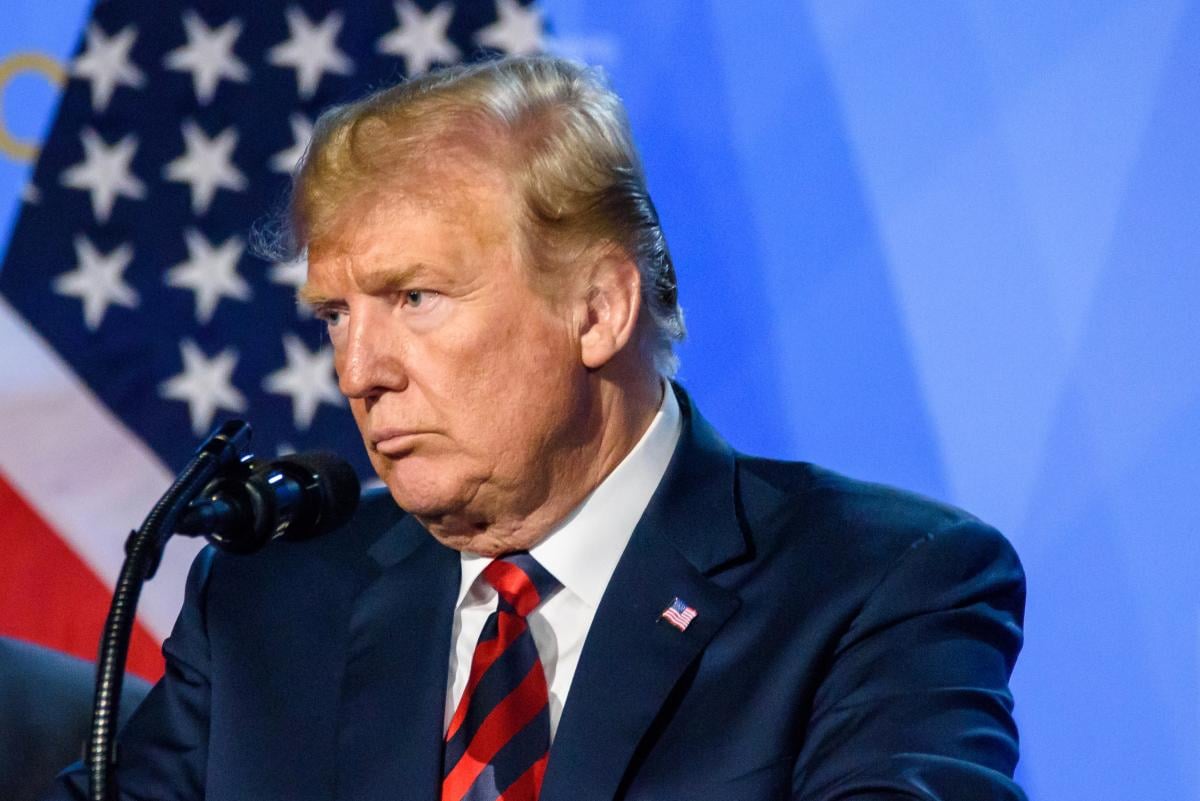 Trump’s strategy pushes the world to a large-scale military confrontation, the historian believes / photo ua.depositphotos.comThe foreign policy strategy of the US President Donald Trump carries serious risks for global security and may push the world to a large-scale military confrontation. This opinion was expressed by Yale University history professor Greg Grandin in the columns of The New York Times.
According to the historian, both during his first term and now, Trump “has made it clear that the post-Cold War bipartisan consensus that the United States governed an economically integrated world order based on ‘common rules governing property, trade and conflict’ has exhausted itself. Instead, he writes, the White House offers a vision of a world divided into entrenched spheres of competing influence.”
The professor recalled that this month the White House released its National Security Strategy report, which he says aims to codify that transition.
“The report conforms to all aspects of the offensive ‘America First’ nationalism: it condemns globalism, free trade and foreign aid, rejects nation-building, and calls on NATO members to spend most of their GDP on defense spending. The United States, the report warns, will no longer ‘shoulder forever a global burden’ that has no direct connection to its ‘national interests,'” writes Grandin.
The professor pays special attention to the return to the “Monroe doctrine”, which for the Trump administration is one of the key principles of policy: in the new national security strategy, the US declares its intention to “restore and ensure compliance” with this doctrine in order to preserve American primacy.
“The Monroe Doctrine is neither a treaty nor a law. It began as a simple statement issued by President James Monroe in 1823 that recognized the independence of the Spanish-American republics and warned Europe that the Western Hemisphere was off-limits to ‘future colonization,'” the historian explained.
In his opinion, such a policy fits into the global trends of forming hard spheres of influence: Russia is trying to gain a foothold in the post-Soviet space, China – in the South China Sea, and the USA – in the Western Hemisphere. At the same time, according to Grandin, Washington does not renounce the role of world leader and actually tries to spread the logic of the “Monroe doctrine” to the whole world, reserving the right to unilateral force actions.
Grandin believes that the ideal of the world that the United States is currently shaping, in which it pressures China, Russia, sows discord in Europe and threatens Latin America, and all states everywhere seek benefits, “almost certainly means more confrontation, more border games and more wars.”
In this regard, he considers appropriate the recent words of General Secretary Mark Rutte, who called on us to be ready “for the scale of the war that our fathers and great-grandfathers experienced.”
US foreign policyAs UNIAN previously reported, according to analyst John Avlon, Trump shares the views of Russia. According to him, this is evidenced at least by the fact that the “peace plan” of the current US administration was based on Russian documents. The author believes that the United States continues to encourage “autocratic adversaries” and push away “democratic allies”, and this is now officially set out in the form of the National Security Strategy.
Axios also wrote that Trump offers Russia and China to divide the world into spheres of influence. It was noted that the US president is going against the years of his country’s policy to contain Beijing and instead of a strategy of confrontation, he chooses a strategy of distributing spheres of influence. The same is happening in the strategy towards Moscow: the transition from confrontation to compromises and readiness to accept Russia’s military conquests in Ukraine.
You may also be interested in news:
- “We are closer to peace than ever”: Trump made statements about the war in Ukraine
- The Chancellor of Germany proposed the idea of a Christmas truce, – Zelensky
- Peace talks in Berlin will not lead to a quick end to the war, – The Telegraph