
“He is admired by the best, but he loves Naples.”, — write: football.ua
He is admired by the best, but he loves Naples.
Stanislav Lobotka knows this feeling very well. He goes through it every time he steps on the pitch in a Napoli shirt. For many players, this density and responsibility can become a trap: to get the ball in the crowd, to take control of the game, to find a way out of the chaos. But not for Lobotka.
“I’m never afraid to play football”– he says in an interview with The Athletic. Just when others try to hide from the ball, he, on the contrary, looks for it. Opponents get closer, protect each other, build the game in such a way as to block his space – and Lobotka slips away again. “I always try not to lose the ball, find a solution, give the best pass and move the game forward”he explains.
For several years now, the short Slovak has consistently been among the most pressure-resistant midfielders in Europe. When reporters show him SkillCorner data on how he keeps the ball under pressure, Lobotka is embarrassed and smiles: he says he had no idea he was so good at it.
It echoes the ancient Spanish influence on Naples. When Barcelona played Napoli recently, Xavi was asked which opponent he would like to see at his former club. “I would call Lobotka, he answered. — I really like the way he plays in midfield. He almost never loses the ball. I would love to see him at a club of Barcelona’s level. He really stands out.”
For those who understand football. For those who can read it.
And yet, even as part of a small circle of players who won the championship twice with Napoli, Lobotka never received the mass attention that players from the “golden” squad of 2023 – Khvichi Kvaratchelia and Viktor Osymgen, or Scott McTominay got last season. Following Napoli’s 3-1 win over Como at the Stadio Maradona, Cesc Fabregas said: “I am crazy about such players. If I could, I would release 11 Lobotoks on the field. He is a football player of the highest class”.
Another Catalan. Another compliment.
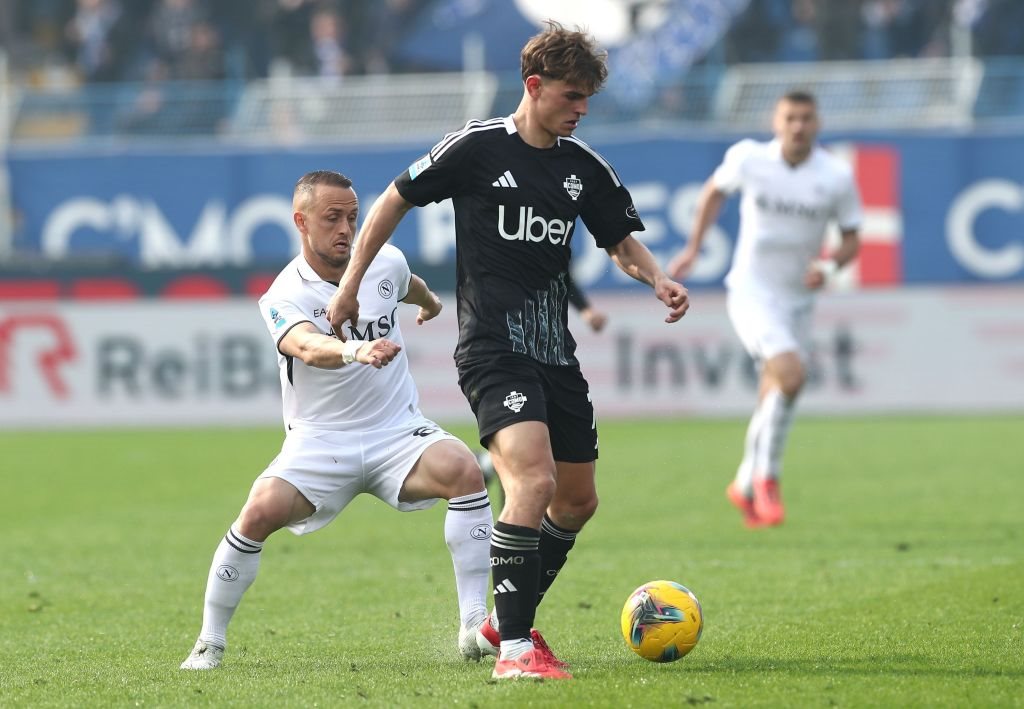
Fabregas built the most aggressive pressing in Italy in Como. Lobotka took it apart and impressed the coach.
“When I was growing up, I really liked Barcelona, Stanislav recalls. — It was the team of Ronaldinho and Samuel Eto’o. Deku played in the center, coached by Frank Rijkaard. I fell in love with the way they played and enjoyed football.”
This is clearly visible in his own game.
Lobotka became exactly the football player he wanted to be. And it didn’t matter that he grew up in Trencin and not in Barcelona. “It is difficult in Slovakia. We are not a football country like Spain. But I was lucky – in every club I had a good coach.”. He came through the Ajax youth system, then Norschelland, where he worked with Kasper Uhlmann, the current coach of Bayer Leverkusen. And then there was the transfer to Celta — a logical step for, perhaps, the most “Spanish” football player from Slovakia. “No coach has ever told me, ‘You’re not playing. You are too small. I need a bigger player in this position””.
This gave Lobotka the opportunity to build his game around Xavi, Andres Iniesta, Sergio Busquets, Luka Modric and Marco Verratti. “These are the players I liked because they look like me. Short, but very strong under pressure and in one-on-one situations.”
There are very few such “sixes” as Lobotka. Especially outside of Spain. They are the foundation for top teams, around them the game is built for years. So rare that they are almost never released. Suffice it to mention Vitinho’s influence at PSG, Manchester City’s problems after Rodri’s injuries, Real’s difficulties after the end of Toni Kroos’ career and the departure of Modric, as well as Xabi Alonso’s unsuccessful attempt to sign Martin Submendi from Real Sociedad.
Lobotka himself quite justifiably considers himself one of the best in the world at his position.
“I’m trying to read the game, he says. — I want to manage it. Sometimes I prefer to hold the ball, organize the team, give them a little rest and then try to create a chance. I look at where I am, what are the options for the pass. If I see a partner who is covered by two or three, I understand that this is a risk.”
Lobotka constantly processes information. It’s like chess. “Although chess is simpler, he smiles. — You just sit there and think. And in football you are always on the move.”
“The scapula moves incredibly well,” Luciano Spalletti said after beating Verona in his first league season with Napoli. “Today he was like Iniesta. He would turn his back to the direction of attack, giving the team the opportunity to attack space. He would let opponents go at him, run into the blind area and make incredible transitions from defense to attack. His style of play is like a little wild boar: sharp bursts and you just can’t keep up with him.”.
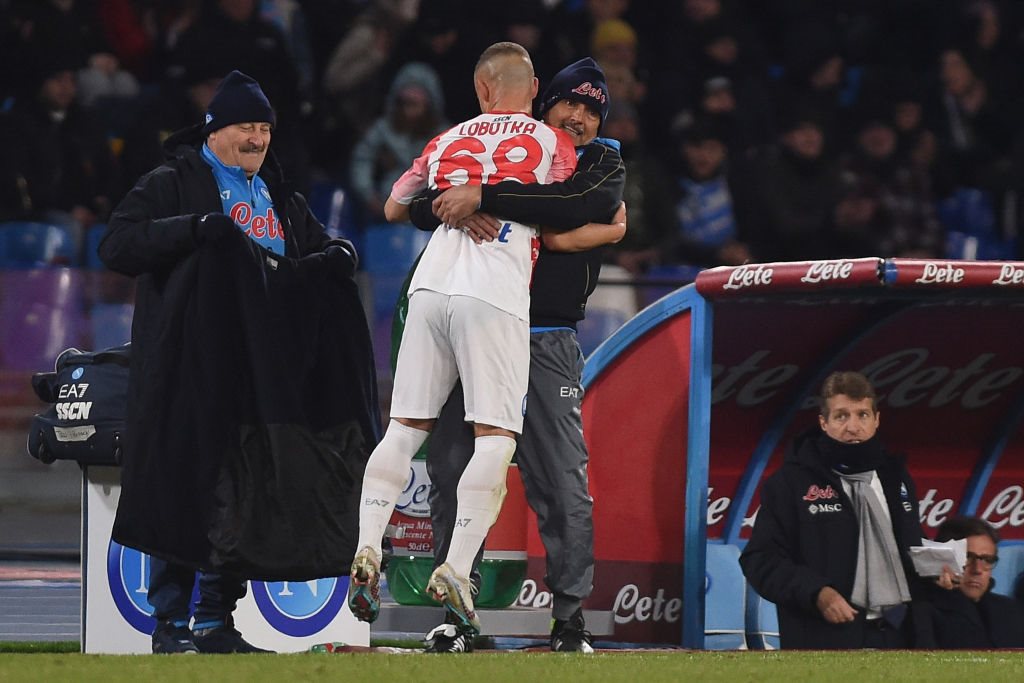
Spalletti is a gift from heaven for the “sixes”. It was he who made David Pizarro one of the best playmaking defensive midfielders in Serie A at Udinese and Roma. He later tried to sign Lobotka to Inter, but financial constraints prevented him from doing so, so he rethought the role of Marcelo Brozovich. In Naples, Lobotka became a registe — the Italian term for “six”, borrowed from the cinema. It literally means “director”. And in the championship teams of Spalletti and Antonio Conte, he was exactly that – Paolo Sorrentino in the middle of the field.
“I spoke to Milan Skriniar, my partner in the national team, who worked with Conte at Inter. He told me: ‘It will be very difficult, but if you do everything he demands, at the end of the season you will be successful’. It was the hardest pre-season of my life. I was completely exhausted. But I became stronger – physically and mentally. And now I understand: everything was not just like that.”
Napoli climbed from tenth place back to the top, the biggest leap from season to season since Milan, who went from middling to champions in 1999.
“The way he prepares us for every match… everything happens exactly as he says, Lobotka explains. — This makes life easier for players. Mister has improved me a lot – especially without the ball, but also with the ball. For example, how to open up when I’m alone, which way to turn. Small details that make you think. You practice it in training, and then the same situation occurs in a match. You see that the coach was right, and that gives you confidence.”
“They are very good with the ball, given their size, – says Lobotka. — Scott is more box-to-box. Frank is also strong in this. Both often break into the penalty area, both play well with the head. I know that I can give Frank the ball even under pressure – he will not lose it. And when I see that Scott is free, I try to quickly deliver the ball to him: he has a very good shot, and this is a real chance to score. When we interact, short transmissions between us open space for others as well.”
Take, for example, Rasmus Hoylund.
“I don’t think there are many strikers of the type like Rasmus Lobotka notes. — For a forward, he runs a lot and works a lot for the team. He is terribly inconvenient for defenders, because he is constantly pressing. When you play a long ball, it is very difficult for them. And at the same time, he is incredibly fast.”
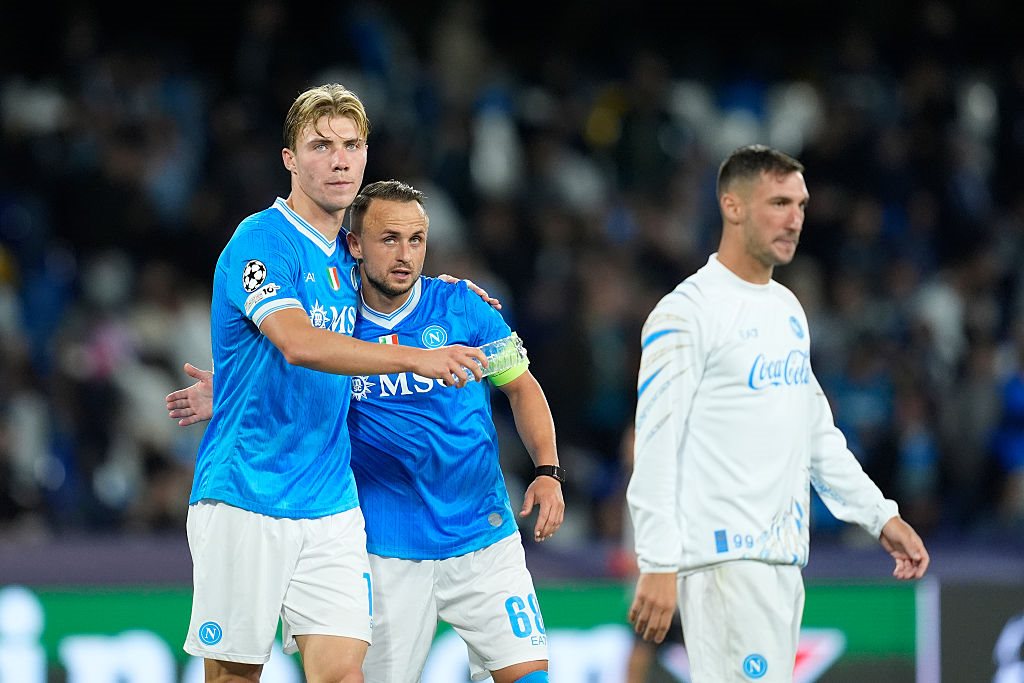
This season, ravaged by injuries, Napoli has often resembled the city’s hospital, symbolically called gli Incurabili – “The Incurables”. Romelu Lukaku only played his first minutes last weekend. Kevin De Bruyne was injured back in October and has not been on the field since then. Alex Meret, the goalkeeper of the championship seasons, received one injury after another — and was just returning when Vanja Milinković-Savych was already eliminated. David Neres and Billy Gilmore underwent surgeries. And summer newcomers Noah Lang and Lorenzo Lucca left the team in the winter.
After a 0-3 loss to Juventus, it’s hard not to wonder how long Napoli stayed afloat at all. If the team were still in the championship race, it would look like a minor miracle created by Antonio Conte. Lobotka himself also missed matches this season, but still remained one of those on whom the coach relied the most.
In rare free moments, Lobotka plays golf.
“Maybe I’ll be like Gareth Bale” he smiles. The 31-year-old midfielder dreams of playing a round with Scott McTominay at the Marco Simone course outside Rome, home of the 2023 Ryder Cup. “I don’t know what his handicap is. He’s Scottish, and if he plays golf as well as football, he’ll beat me for sure.”.
Golf helps Lobotka switch off from work — and at the same time makes him stronger on the soccer field. Calmness, sense of balance, precision. A bad shot doesn’t derail him, nor does an inaccurate pass. It instantly reboots and resumes the game. This is exactly the kind of cold concentration Napoli need in the tension of the championship fight.
Lobotka sincerely dreams of seeing the Neapolitans again on the streets and the tears of joy that the fifth Scudetto will bring. It would be the first time Napoli have defended the title. Only captain Giovanni Di Lorenzo spends more time at the club than him.
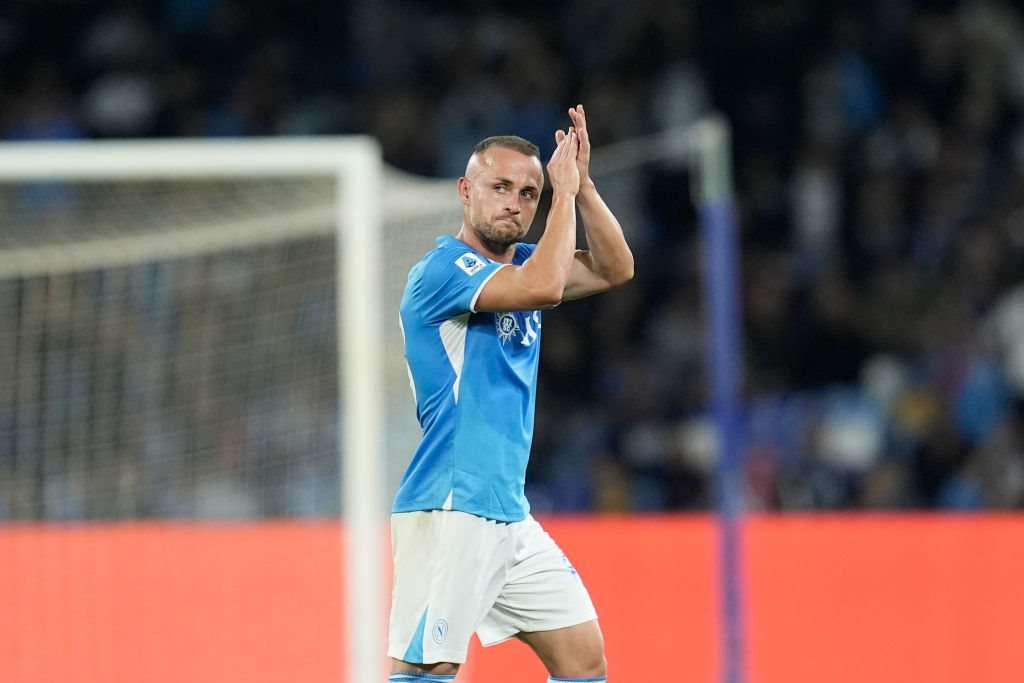
“For me, Naples is a second home— says Lobotka. — I feel like a Neapolitan because I have lived here for many years. The food is incredible. City, people, mentality. I’m really happy here.” The championship in Naples is not the same as in Turin or Milan. To break a 33-year wait. To do it without Maradona… “It was like someone saved the world, Lobotka recalls. – I saw how people celebrated every day. Everything was closed because we won. Wherever I went, I felt like the president of the country. “Thank you, Lobo!”
There are no Lobotka shrines in the city like those dedicated to Maradona. No strands of hair under the glass. No icons between burning candles. No street with his name. But on one of the peeling walls of the Spanish Quarter, next to a portrait of his compatriot Marek Hamsik, hangs a Subbuteo plaque with the team winning the championship for the first time since the Maradona era.
Lobotka is in the very center. Slovak and adopted Neapolitan who plays in Catalan. A silent legend that deserves much louder recognition.
The Athletic