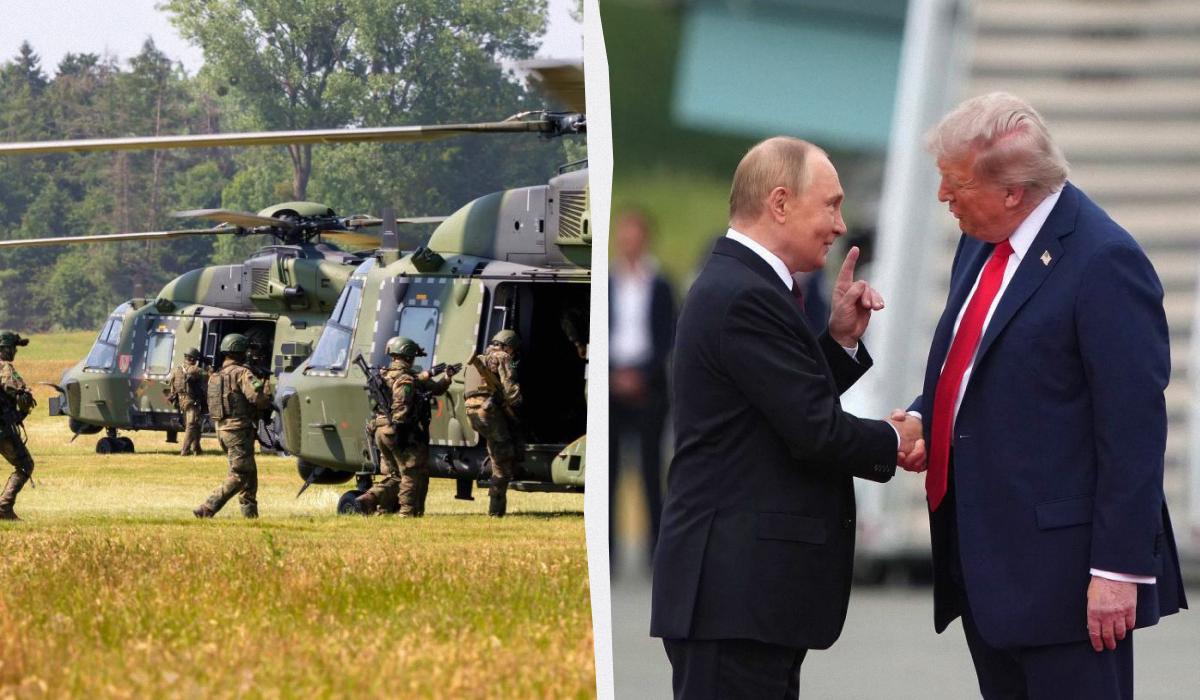
“The North Atlantic Alliance is hastily strengthening its presence in the Arctic, but the main goal of this activity is not the military deterrence of Russia.”, — write: www.unian.ua
The North Atlantic Alliance is hastily strengthening its presence in the Arctic, but the main goal of this activity is not the military deterrence of Russia.
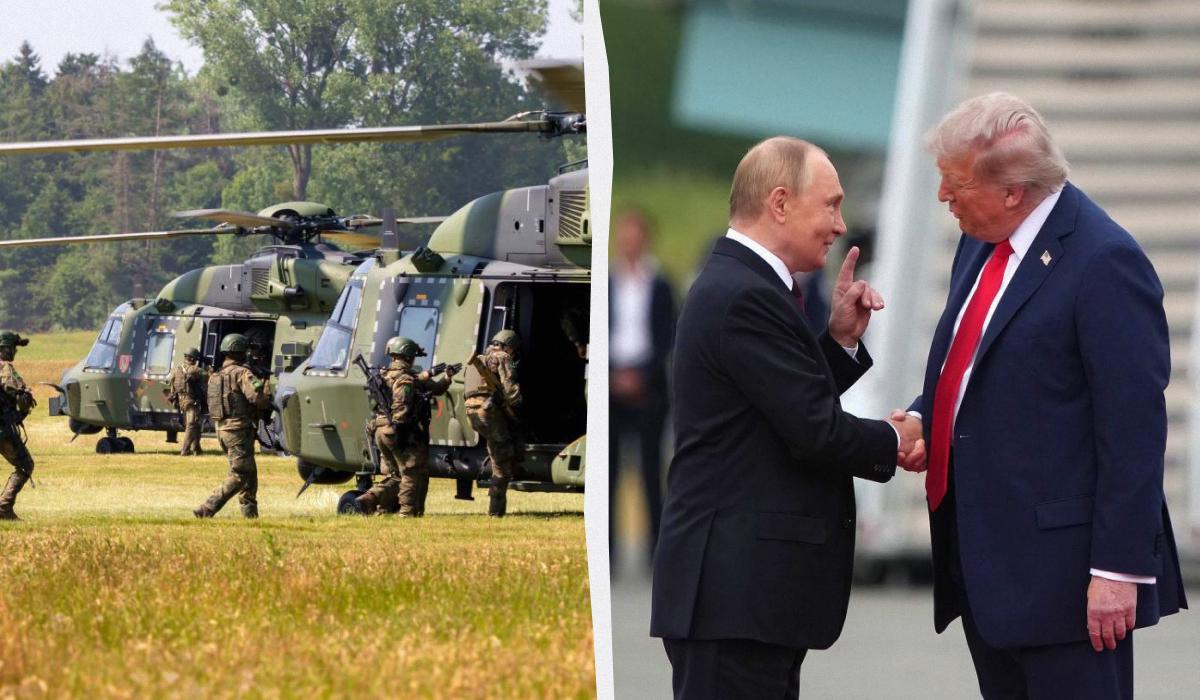 Is the threat of Russia exaggerated? / UNIAN collage, photo ua.depositphotos.com, Getty ImagesNATO is increasing its presence in the Arctic, a move designed not so much to deter Russia as to deter US President Donald Trump. Diplomats and experts claim that these efforts are mostly “rebranding”. Their goal is to appease the US president in response to a threat that is largely exaggerated.
The interlocutors of the publication, which included NATO diplomats, Alliance officials and military analysts, pointed to a significant shift in NATO’s attention to this region, caused by intense US pressure after Trump’s threats to annex Greenland. However, this shift is dictated primarily by politics, and not by urgent military necessity, writes Politico.
NATO officially positions its new Arctic Sentry mission as critically important. But the diplomatic effort shows the allies’ intent to keep Washington on their side amid fears that a refusal to pander to Trump on the Greenland issue could turn into a disaster.
“In the face of Russia’s growing military activity and China’s growing interest in the Far North, it was extremely important for us to do more,” NATO Secretary General Mark Rutte told reporters.
The Trump factor and the “hypothetical” threatTrump’s threat to Greenland in January was a watershed moment for many European countries, reinforcing their view of the US as a perennially unreliable ally. The issue looms large over the Munich Security Conference, where US Secretary of State Marco Rubio will meet with many allied leaders.
Experts say any security concerns are overblown, as NATO is more than capable of dealing with Russia in the Arctic.
“I hope they will just rebrand some current activity. If we are talking about a large number of manpower, especially in Greenland, then it will be expensive,” says Karsten Fries, a research professor and expert on security in the Arctic from the Norwegian Institute of International Affairs.
An empty threatAfter repeatedly refusing to rule out the use of force to seize Greenland, the US president finally abandoned his campaign to acquire the Danish territory last month. This retreat was facilitated by a promise by Rutte and allies that NATO would take security in the Arctic more seriously.
But experts, as before, are deeply skeptical about the military necessity of such an initiative.
“I don’t think NATO has a shortage of capabilities in the Arctic. The US is capable of moving its forces to Greenland to protect the Alliance,” said Matthew Hickey, an analyst at the Ted Stevens Center for Arctic Security Studies. According to him, given the ability of the US to transfer “thousands” of troops to Greenland from Alaska “within 12-24 hours” and the experience gained during the Ice Exercises, “it is more about a communication gap.”
Washington cites various future threats to the Arctic island: Moscow’s huge icebreaker fleet, hypersonic missiles that could one day fly over Greenland undetected, growing cooperation between the Russian Federation and the People’s Republic of China, as well as melting ice that opens the way for suspicious vessels.
But in practice, “the threat has not changed since the Cold War,” says Professor Fries. Cooperation between China and Russia in the Arctic will remain “largely symbolic”, says Mark Lantein, professor of political science at the Arctic University of Norway. Moscow is “nervous” about Beijing’s long-term plans for the region and is unlikely to grant it expanded access.
And Russia is still “significantly inferior” to NATO. Since the start of the full-scale war against Ukraine, Moscow has lost two of the three brigades stationed in the Far North. It will take “five years or more” to prepare their replacements. Meanwhile, Norway, Germany, Denmark and Great Britain are purchasing Boeing P-8 patrol aircraft to better monitor the region. Sweden and Finland joined NATO, further strengthening the “Arctic muscles” of the Alliance.
Polar problemsInitially, the Arctic Sentinel mission will bring existing exercises (such as Denmark’s Arctic Endurance in Greenland) under the auspices of NATO’s Joint Command in Virginia. In the future, this may mean sending aircraft and sea patrols or creating a permanent command, media reports.
In fact, some additional measures could actually be helpful, says Siddharth Kaushal, a senior fellow at the RUSI think tank: for example, deploying more unmanned surface vessels to track Russian submarines and fill the shortage of sonar operators. But a permanent naval presence in the Arctic would be “absolutely unnecessary” and even dangerous. “This potentially puts ships in very difficult climatic conditions near Russian-held territory, where the only support infrastructure is Russian.”
Currently, there are about 150 American servicemen at the Pituffick space base in northern Greenland. Both Denmark and Greenland have stressed that they are open to the deployment of additional US forces under existing arrangements.
However, deploying more troops would be a waste, the article says. However, for some allies, spending money and equipment is a fair trade to prevent the collapse of the Alliance.
Other news about GreenlandEarlier, UNIAN reported that Trump needs Greenland for several reasons. For example, the US anti-missile defense (BMD) system would be useless if Greenland were under the control of Russia or China. Therefore, the US president wants to do everything for the sake of US national security.
In addition, we also talked about the fact that Rutte saved NATO from the conflict with Trump in Greenland, but at an extremely high price. He supposedly fulfilled his task of keeping the alliance united, a task so complex that he cannot always guarantee the satisfaction of all 32 alliance members.
You may also be interested in news:
- Satellites recorded new equipment in Belarus for the deployment of “Oreshnyk”, – mass media
- Lukashenko refused to go to the first meeting of Trump’s Peace Council
- Zelensky commented on Macron’s idea of dialogue with Russia