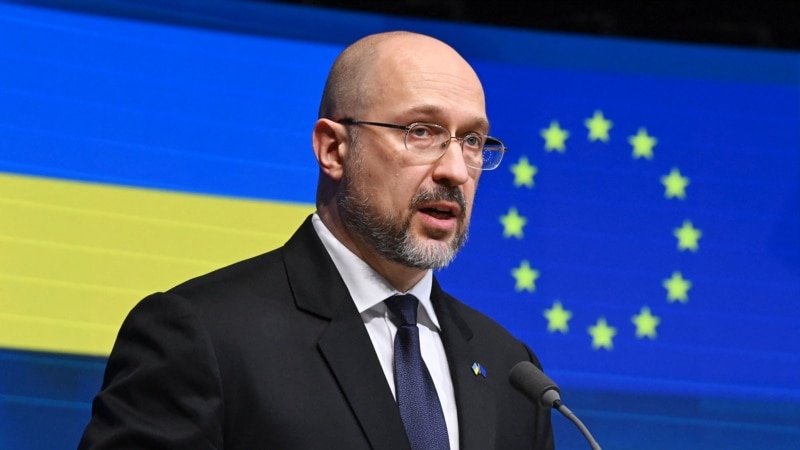
Ukraine’s Energy Minister, Denys Shmyhal, reported on March 13 that the country has endured its most challenging winter in history due to extensive damage to its energy infrastructure caused by the ongoing conflict with Russia. Since the onset of the heating season, more than 9 gigawatts of generation capacity and numerous distribution facilities have been affected.
Shmyhal outlined six critical challenges facing the energy sector, including fuel availability and the reconstruction of energy infrastructure. He highlighted the necessity for fuel supplies, particularly for military operations and agricultural planting, amid a global fuel crisis exacerbated by the war in the Middle East. In March alone, Ukraine imported nearly 250,000 tons of gasoline, diesel, and liquefied gas, while maintaining reserves of approximately 100,000 tons of each fuel type.
Currently, some regions are experiencing no power outages, while others face rolling blackouts lasting one to one and a half hours. The peak consumption deficit stands at about 1 gigawatt, with various types of power plants operational. Despite improvements, Shmyhal emphasized that the heating season is ongoing, along with continuous attempts by Russian forces to disrupt the energy system.
Regarding reconstruction efforts, Shmyhal noted that approximately 3.5 gigawatts of generation capacity from thermal and hydroelectric power plants have been restored. Plans are in place to recover an estimated 4 gigawatts, with over 2 gigawatts potentially restored by the end of May. Engineering delegations are currently working in the European Union to acquire equipment for decommissioned stations.
Since the beginning of the full-scale war, Ukraine has brought 1.5 gigawatts of distributed generation capacity online. Shmyhal also reported progress in integrating critical infrastructure enterprises into the air defense system and ongoing construction of shelters for energy facilities. Protective measures are being implemented at 84 substations and 134 critical elements.
To address the energy crisis, Ukraine aims to secure around 5 billion euros in energy assistance from international partners. A meeting is scheduled in Brussels next week to discuss increasing the capacity for electricity imports from Europe, targeting a goal of 3.5 gigawatts or more over the next two years.
On March 3, Shmyhal stated that the electricity deficit in Ukraine had decreased to 1 gigawatt, down from 5-6 gigawatts during the winter months. President Volodymyr Zelensky remarked on March 1 that the country had survived its most difficult winter of the war, expressing gratitude to military and energy personnel for their efforts, while cautioning that Russian attacks are likely to persist.
According to United Nations data, as of January 2026, Ukraine has lost over half of its electricity generation capacity due to occupation and damage from attacks, leaving only 11 gigawatts of generation, significantly below the 18 gigawatts needed during peak winter consumption. This gap between generation capacity and consumption needs has led to prolonged power outages.
Since the beginning of the full-scale invasion in February 2022, Russia has targeted Ukraine’s energy infrastructure. Attacks intensified in the fall of 2025, prompting Ukraine’s Prosecutor General, Ruslan Kravchenko, to submit materials to the International Criminal Court regarding Russian strikes on energy facilities from July 2025 to February 2026.
The Security Service of Ukraine has classified the Russian attacks on energy infrastructure as crimes against humanity, documenting at least 256 aerial assaults on energy facilities and heating systems since the start of the current heating season.
In early February 2026, Russian Foreign Minister Sergey Lavrov claimed that Russia had not initiated attacks on civilian infrastructure, asserting that Ukraine had first targeted its energy facilities.
Ukraine's energy sector faces severe challenges due to extensive damage from Russian attacks, with ongoing efforts to restore capacity and secure international support. Despite improvements in electricity supply, the country continues to grapple with a significant deficit and the threat of further assaults on its infrastructure.