“GDP holders of warrants worth $2.6 billion voted in favor of a resolution that provides for the full exchange of warrants for ordinary debt securities”, — write: www.radiosvoboda.org
According to the report, GDP holders of warrants worth $2.6 billion voted to approve the proposed extraordinary resolution, which provides for the full exchange of warrants for ordinary debt securities of Ukraine.
“This significant achievement is an important step towards strengthening Ukraine’s debt sustainability and increasing budget predictability thanks to the withdrawal from circulation of GDP warrants issued in 2015 within the framework of the previous restructuring of the state debt caused by the annexation of Crimea and Russia’s invasion of Donbas,” the message reads.
The ministry expects the transaction to strengthen macroeconomic stability and public debt sustainability, avoiding large payments during the post-war reconstruction period and preserving resources needed to finance the country’s defense in the face of a full-scale Russian invasion.
“After comprehensive negotiations with GDP warrant holders, 99.06% of them supported the restructuring agreement, which exceeds the required threshold of 75%. This means that Ukraine will convert almost the entire outstanding nominal volume of GDP warrants into a new class of C bonds maturing in 2032 in the amount of $3.497 billion. USA,” the department reports.
The Ministry of Finance clarifies that a small part of the warrants will be converted into B bonds maturing in 2030 and 2034 in the amount of about $34 million. Also, as part of this transaction, Ukraine cancels GDP warrants in the amount of 604 million dollars, which are owned by the state. Therefore, Ukraine is completely withdrawing this instrument from circulation.
According to the ministry, the restructuring significantly reduces the risks that the GDP warrants created for the public finances of Ukraine. Cumulative payouts from 2025 to 2041 could range from $6 billion to $20 billion, depending on the country’s economic growth rate during the recovery period.
This volatility is explained by the nature of the warrants: after 2025, payouts are “uncapped and tied to annual real GDP growth — with no protection against the risk of economic downturns that could be followed by sharp recoveries, leading to payouts that do not match economic reality.”
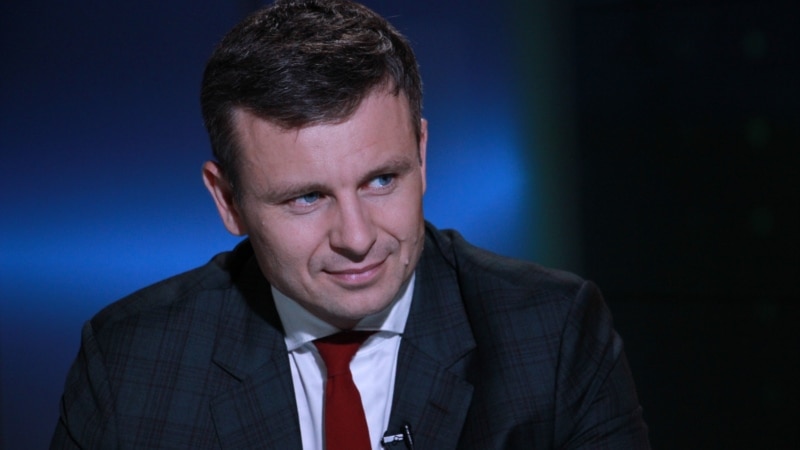
Finance Minister Serhii Marchenko expressed expectations that the restructuring will allow Ukraine to save billions of dollars in potential payments during the post-war recovery period.
“The conversion of GDP warrants into standard debt instruments with an aggregation mechanism ensures predictability and reduces the long-term volatility of public finances. We are withdrawing from circulation a toxic tool that posed a serious fiscal risk for Ukraine and could jeopardize our recovery and reconstruction,” he said.
In April 2025 it became known that the Ministry of Finance could not agree on the restructuring of the state debt with the owners of securities of Ukraine tied to its GDP (warrants). The Financial Times wrote that already in May, Kyiv must pay $600 million in debt obligations or declare default. Instead, the government agency reported that the exact amount of payments for GDP warrants had not yet been determined at that time.
