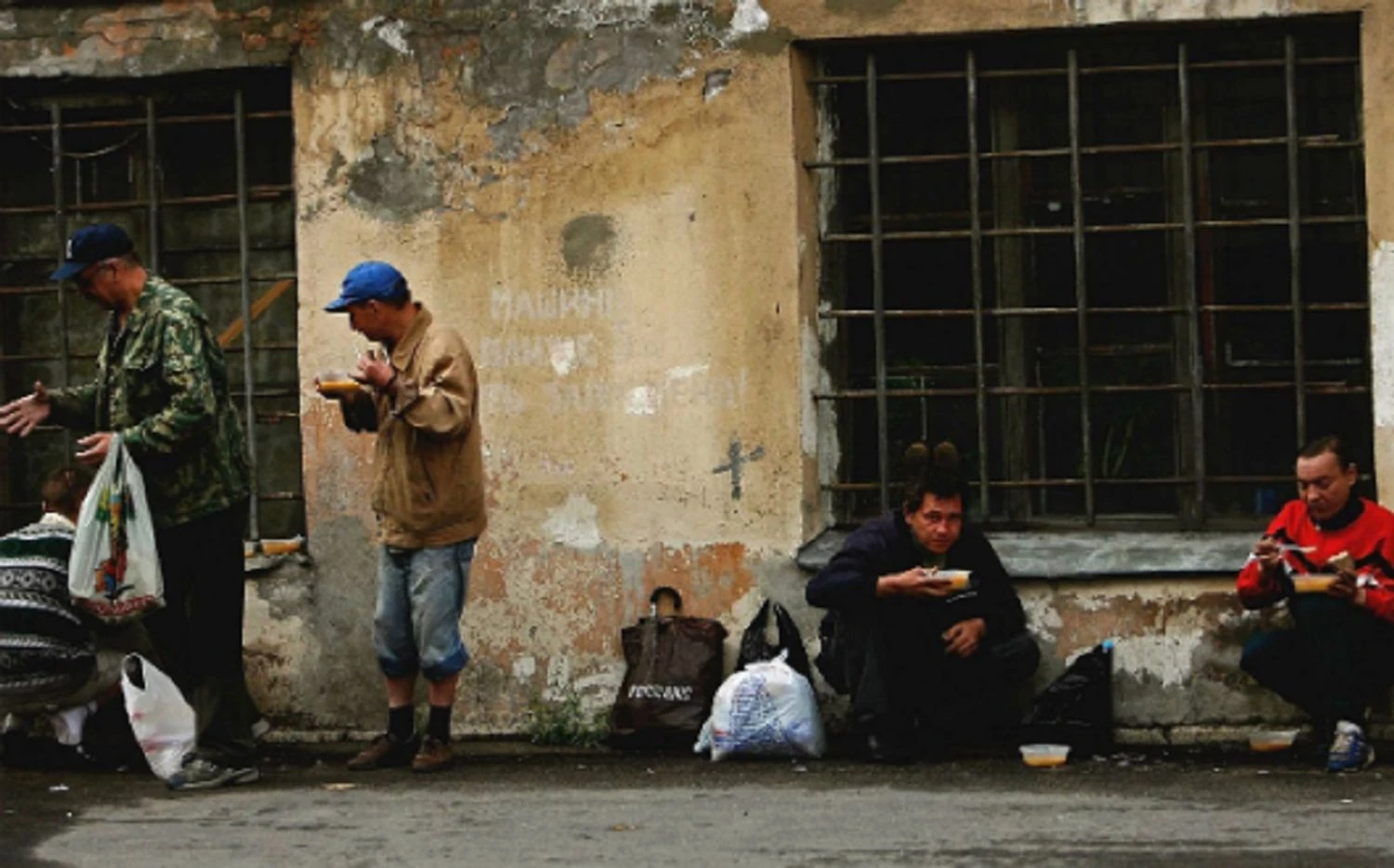
“ISW: Russians increasingly feel the consequences of the Kremlin’s bet on the defense industry due to the war in UkraineRussians are increasingly feeling the consequences of the Kremlin’s bet on the defense-industrial complex to continue the “special
military operation.” This leads to rising inflation and a decline in the quality of life. Putin has increased VAT, shifting the
burden of war onto the population.
”, — write: unn.ua
DetailsIt is noted that at a meeting on January 12 with Russian dictator Vladimir Putin, First Deputy Prime Minister of the Russian Federation Denis Manturov emphasized the growth of Russia’s industrial development in 2025, mainly within the framework of the Russian DIC.
Putin’s prioritization of the Russian DIC comes at a high cost to the Russian people, as Russian banks pass on credit pressure from the Russian DIC to consumers. Labor shortages in Russia and competition between Russia’s defense and civilian sectors have increased average wages in Russian industry, fueling inflation and causing price spikes.
Russia’s economy exhausted by war, 2026 will be critical – WP23.12.25, 01:00 • 5634 views
They remind that several large Russian “civilian” manufacturers introduced a four-day work week and announced layoffs in the second half of 2025 due to falling demand. At the same time, Russian citizens cannot afford housing, as most Russian commercial housing rates were estimated at 20 percent or higher in January 2026.
Putin also signed a law in November 2025 to increase the value-added tax – a federal tax levied on most Russian goods and services domestically – from 20 to 22 percent, placing much of the burden of Russia’s costly war in Ukraine on the Russian people.
The authors conclude that increased Western economic pressure on Russia, as well as assistance to Ukraine in maintaining and even increasing pressure on the battlefield, remains critically important for changing Putin’s plans and forcing him to make more serious compromises between continuing his maximalist war goals and the quality of life of the Russian population.
RecallAccording to the Foreign Intelligence Service of Ukraine, Russian regions are experiencing increasingly deeper despair, as sanctions and the loss of external markets have exposed the structural weakness of their budgets. The worst situation is observed in depressed regions, as well as in industrial and metallurgical regions, where significant budget deficits are predicted.
Russia’s economy enters stagnation: GDP growth in November is the lowest since the beginning of 202301.01.26, 23:41 • 11378 views