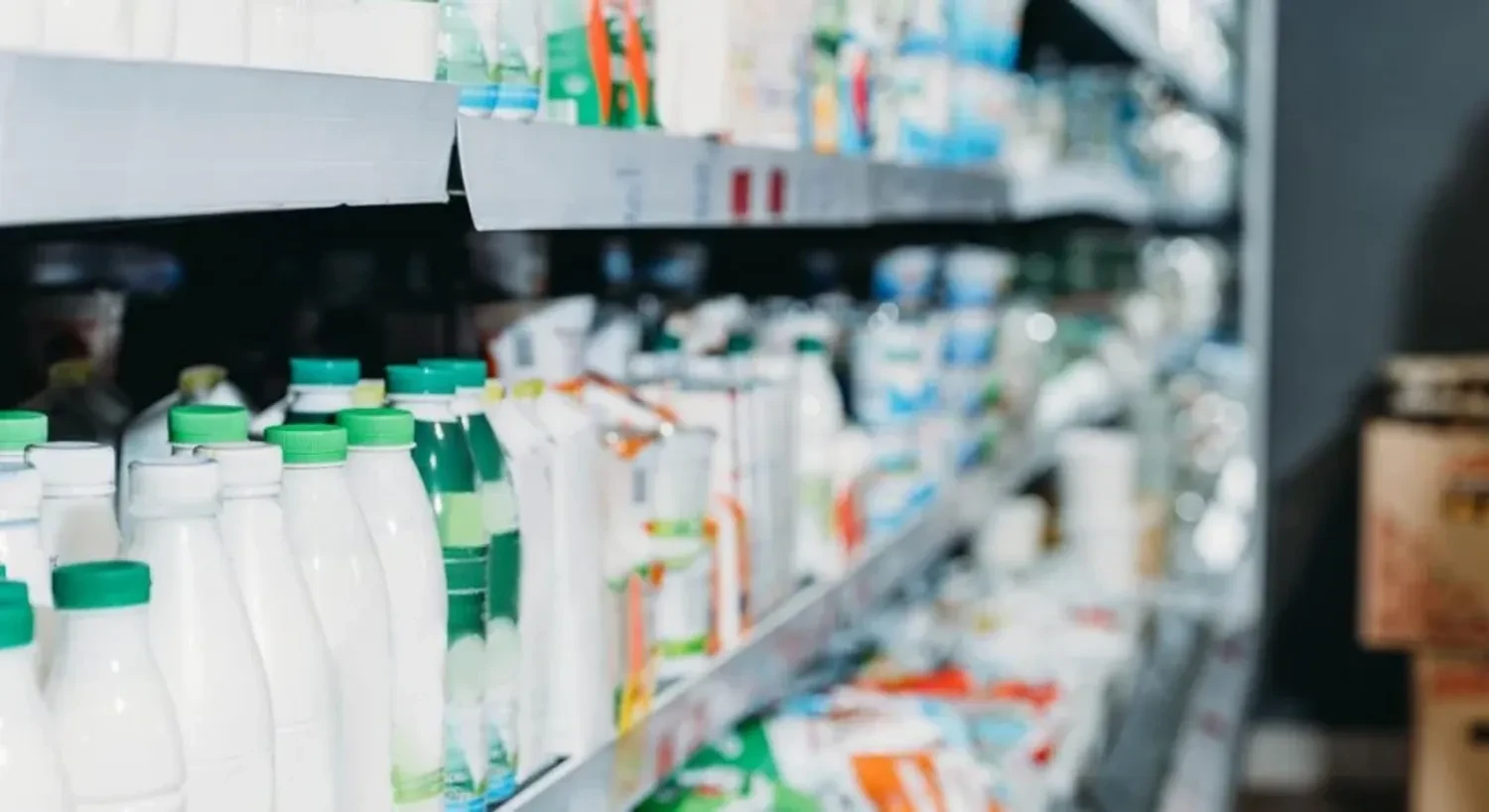
“From production to shelf: how unstable electricity supply changes the cost of productsPower outages increase the costs of food production, storage, and logistics. This leads to a gradual increase in prices for
energy-dependent goods such as meat, dairy products, and bread.
”, — write: unn.ua
Electricity supply disruptions affect the food market by increasing costs in production, storage, and logistics. For most processes in the food industry, electricity is a necessary component: it ensures the operation of technological equipment, maintaining temperature regimes, and the functioning of warehouse infrastructure and distribution.
In the event of outages, enterprises are forced to switch to backup power sources. This entails additional costs for fuel, generator maintenance, equipment purchase or rental, as well as organizational costs associated with controlling process continuity. In segments where a stable temperature regime is critical (especially during storage and transportation), costs may also increase due to the need for enhanced control and redundancy.
To understand the situation, UNN spoke with a number of Ukrainian experts who explained the mechanism of the energy crisis’s impact on food prices and gave forecasts for the near future.
Electricity outages as an inflation factorEconomists explain that additional costs arise at all stages of the supply chain. In production, this means an increase in the cost of energy-intensive operations and a decrease in productivity due to forced shutdowns or reconfigurations. In storage, it means an increase in costs for maintaining cold regimes, warehouse operations, and refrigeration equipment. In logistics, it means an increase in the cost of transportation, especially when it comes to temperature-controlled transportation, as well as an increase in costs for transshipment and short-term storage in distribution centers.
Olena Nusinova, Director of Smart Corporate Service LTD, Doctor of Economic Sciences, confirms: electricity is needed not only for light in the workshop, but also for equipment operation, processing, cooling, freezing, warehouse ventilation, and logistics. When electricity supply becomes unstable, enterprises are forced to switch to backup energy sources, primarily generators. And this almost always means a significantly higher cost per ton of product produced or stored.
In addition, generator costs also affect the final prices set by retail. After all, domestic supermarket chains also incur costs in this area. For example, ATB spends an average of 30,000 liters of diesel fuel per day to ensure the operation of its stores.
Under such conditions, producers and distributors cannot fully compensate for the increase in energy costs at their own expense. Part of this burden is transferred to final prices
An important nuance is that blackouts do not always have a one-day effect, when prices are suddenly rewritten by 10-20%. On the contrary, as Olena Nusinova notes, they become a one-time factor of constant cost pressure. That is, each wave of electricity outages adds costs, which then gradually manifest themselves in the final price of goods, as contracts are renewed, logistics tariffs are reviewed, and storage and processing costs are recalculated.
Their impact (blackouts, – ed.) is manifested not in an immediate price jump, but in a gradual increase in the price of certain food groups, primarily energy-dependent ones.
Generators and prices: why products are getting more expensive slowly, and small businesses suffer firstHowever, there is another point of view in the professional community: problems with electricity supply do indeed increase business costs, but an automatic, dramatic increase in food prices should not be expected.
The key reason is simple: the purchasing power of Ukrainian consumers is currently limited, and imports curb the appetites of producers. This is the vector outlined in a conversation with the editorial board by Oleg Pendzin, a member of the Economic Discussion Club and expert.
The first brake on price acceleration, according to him, is the solvency of the population.
The commodity producer can raise the price as much as you are willing to pay, based on the thickness of your wallet.
Pendzin explained: if incomes have not grown by 30-40% in the last month, then where will there be room for the same growth on the shelves? The consumer can look for an alternative within 7-10% of the cost of necessary goods, but then demand inevitably breaks down.
The second brake is competition from imports. Even if a Ukrainian producer has a higher cost due to electricity, they cannot raise the price indiscriminately when there is an imported analogue nearby.
Here, the economist gave a striking example of the dairy industry: producers, according to him, asked the Government to review the parameters of the “Ukrainian Cashback” program (in particular, to increase the refund for dairy products) because the industry cannot withstand competition.
Oleg Pendzin also named a number of industries that are most dependent on energy consumption. First of all, this refers to processing and those areas where continuous processes and stable equipment power supply are required. The expert directly calls energy-dependent processing the most vulnerable segment.
For small and medium-sized businesses, the problem is more acute:
“They have nowhere to ‘spread’ additional expenses over a huge assortment. A large bakery or meat processing plant can distribute costs among different positions and optimize procurement and logistics. A small producer or a small point of sale does not have such a ‘cushion’,” says Pendzin.
However, he emphasizes an important nuance: costs are not always passed on to the price tag.
“That is, a business can set any figure, but if the buyer does not come, the enterprise simply will not withstand competition,” the economist explains.
Hence the main risk of the current energy instability: not so much an inflationary shock, but the “washing out” of small businesses from the market.
A common example is coffee shops with an extra charge for drinks when the generator is running. This shows the mechanics: autonomous power quickly eats into the margin, but the upper limit is still determined by the customer’s willingness to pay.
Separately, the expert draws attention to territorial differences.
In each particular locality, the situation is different, depending on the actual income of the population.
That is, the same energy problem yields different price results in a metropolis and in a small community. Where demand is weaker, businesses are more likely to reduce assortment, decrease volumes, or close down, rather than raise prices to a level that no one can afford. In cities with higher incomes, some costs can still be passed on to the buyer, but even there, the limit is set by consumer reaction.
For the consumer in the near future, the totality of all these economic factors means the following: the greatest pressure will be on goods with a high share of processing and energy-intensive storage: meat processing, dairy products (especially cheeses), bakery products, and frozen semi-finished products.
At the same time, the “anchors” set by imports and the weak increase in household incomes will not allow prices to “shoot up” at once. Rather, it will be a creeping increase in the price of individual items, not an instant increase in the price of the entire food basket.
“Spot” price increases and the search for alternatives: what is the situation in the fish and seafood market26.01.26, 12:01 • 43067 views
Dairy products under blackouts: why factories won’t raise prices now, but the risk of price increases hasn’t disappearedAgainst the backdrop of electricity supply disruptions, it is logical to expect a rapid increase in the price of energy-intensive products. In the dairy sector, the most energy-dependent are butter and hard cheese production. However, in the short term (next few months), a significant increase in ex-factory prices is not predicted, according to industry estimates. The key reason is that the main component of the cost (raw milk) has significantly decreased in price.
According to Olena Zhupinas, Deputy General Director of the Association of Milk Producers (AMP), butter and cheese production require the most electricity in processing. However, in these categories, producers have a significant “cushion” due to warehouse stocks.
The Ukrainian dairy enterprise has a fairly large stock of these products, which is due to the fact that, due to problems with the export of these products, they remain in warehouses. Butter, for example, is approximately 10 thousand tons, a large stock of hard cheese.
Additionally, imports narrow the price space.
A significant part of these imported products enters Ukraine at dumping prices. Therefore, we do not expect price increases for either butter or cheese.
However, despite this, the energy factor increases the cost of finished dairy products. The UNN interlocutor explains:
“Power outages, switching to generators (and one kilowatt of electricity from a generator is 2-2.5 times more expensive than usual), as well as switching to imported electricity, which is significantly more expensive than domestic, increase the cost of finished products.”
At the same time, the cost of raw milk remains the key brake on price growth.
The price of raw milk in January 2026 is more than 20% lower than in January 2025. Therefore, due to the decrease in the price of raw milk, we do not expect an increase in the price of these products.
The specialist adds: the price drop continues unusually long.
It has been declining for the fourth consecutive month, starting from October. And (the decline, – ed.) in prices during such a period is an anomaly for our industry.
The reason, according to Zhupinas, is a global imbalance.
Ukraine depends on the global dairy market. And in the global dairy market, we have overproduction of finished products and a dairy crisis. The price of raw milk is falling all over the world.
Inflation slowed to 8% over the year: what prices increased and what became cheaper09.01.26, 15:30 • 34135 views
The specialist clarifies:
“And in the European Union, and in the United States, and in New Zealand, that is, in the main exporting countries, the price also (falls, – ed.). And therefore we have a surplus of milk on the market and are lowering the price.”
In addition, according to Olena Zhupinas, European surpluses are putting additional pressure on the Ukrainian milk market.
In the European Union, there are large surpluses of cheese and butter, which they import into Ukraine at dumping prices. (Our country, – ed.) has no protective barriers, meaning our borders are open. However, the export opportunities of Ukrainian producers are limited. We cannot export because new export requirements have been introduced, meaning licensing must be obtained. And this has seriously affected the price of raw milk.
For a deeper understanding of the market situation, she named potential risks for the industry in 2026.
The most vulnerable link in the chain now, according to her, is milk producers. After all, energy costs are also growing on farms.
Dairy farms have also switched to diesel generators, and this has increased the cost of milk. Now almost all of them are operating at a loss. And this is a big challenge for us, because many milk producers are already thinking about reducing production. And in December, for the first time in all months of 2025, we saw a decrease in milk production on dairy farms compared to the previous period of the same 2024.
And if the trend continues, the forecast for 2026 is alarming. After all, already in the second half of 2026, we may see a shortage of raw milk, which will provoke an increase in the price of dairy products.
For now, we can say one thing: electricity supply disruptions increase costs at every stage of the food chain. The greatest pressure is felt by energy-dependent categories where process continuity and temperature regimes are critical, including meat processing, dairy products, bakery products, and frozen semi-finished products. At the same time, the speed of price increases will be restrained by limited purchasing power of the population and competition from imports, which effectively set a limit above which the producer risks losing demand.