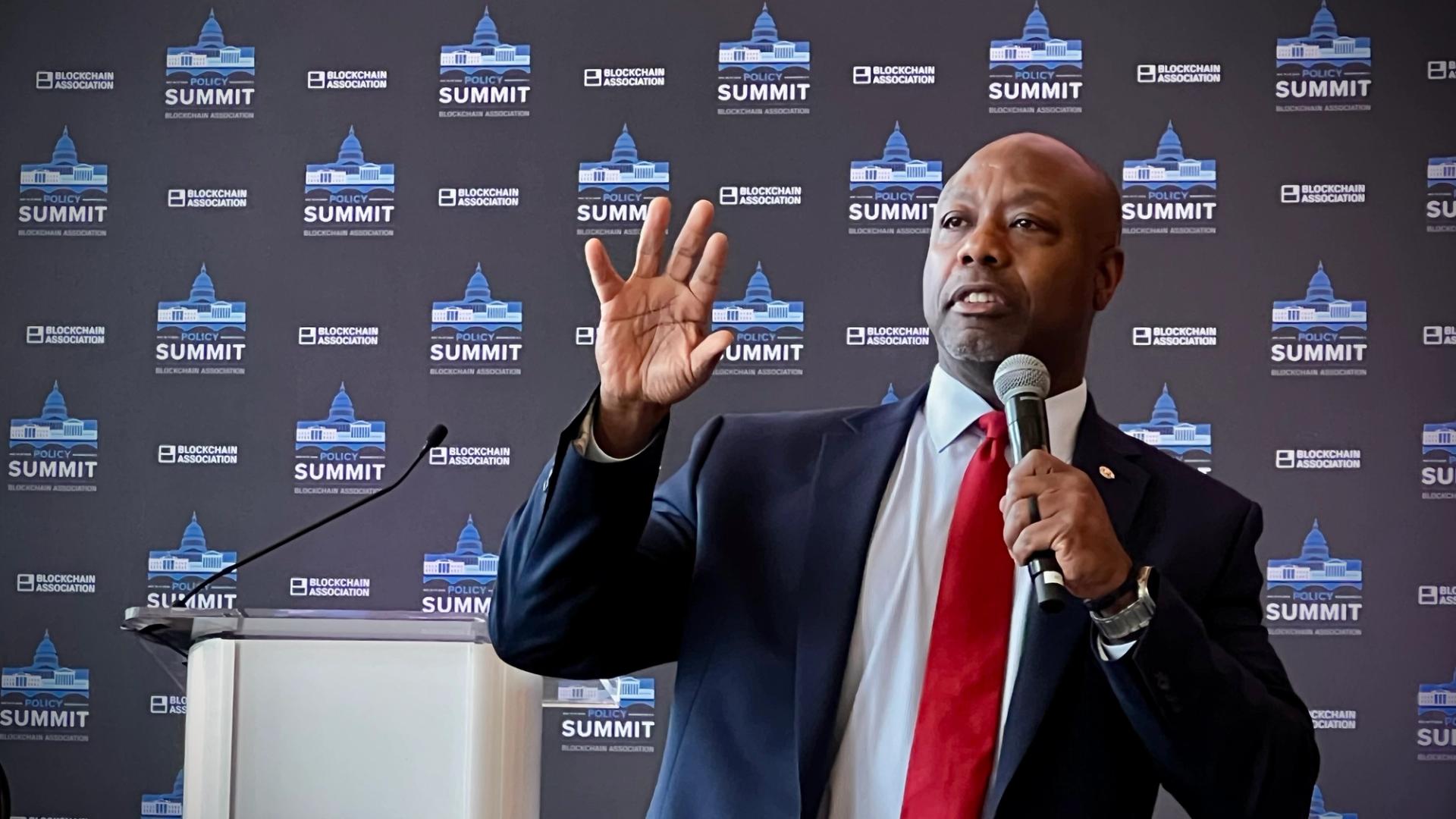
“Senators met to restart the high-stakes negotiation over the crypto market structure bill, and one of them reportedly said a markup is planned next week.”, — write: www.coindesk.com
One of those meetings today, Senator John Kennedy, told Punchbowl News that the chairman of the Senate Banking Committee, Tim Scott, was planning for a bill markup next week on January 15. The committee would likely have to release an updated draft bill before the markup, but the latest draft was shared months ago.
After months of back-and-forth that failed to reach a finished product in last year’s congressional session, the process begins anew for 2026, although lawmakers face a constrained and politically dangerous calendar. Members of the Senate have been tussling over President Donald Trump’s Venezuela actions, and they have a few weeks to meet a January 30 deadline for a federal spending plan that can head off another government shutdown, but crypto remains in the mix as another congressional priority.
If Scott presses for a markup next week, it could avoid some of the budget stress, but it’s not likely to be a bipartisan effort unless the senators can very quickly resolve several outstanding points that Democrats have been pressing. The Democrats — some of whom were involved in the Tuesday meeting, according to people familiar — have pressed for ethics standards in the crypto bill to ban senior government officials from profiting from digital assets activity, as President Donald Trump has. They’re also seeking constraints on decentralized finance (DeFi) platforms and limits on crypto yield that could allow the industry to compete head-to-head with banks.
These are all sticky issues and potential deal-breakers for industry support of the legislation, although members of both parties have said they’re motivated to make an agreement and pass legislation. If the timing suggested by Kennedy for next week comes to pass, it may force Democratic negotiators to oppose whatever is voted on, unless common ground has been reached.
Trump’s crypto czar, David Sacks, had similarly suggested last month in a posting on social media site X that Scott committed to a January markup, although Scott hasn’t yet made that commitment publicly.
Several sources of pressure are all combining to increase the urgency of crypto action in the Senate. The House of Representatives has long since approved its own Digital Asset Market Clarity Act to set up US crypto regulation, so that chamber is waiting on the Senate. And the January 30 deadline looms to set a federal spending plan or risk a shutdown like the 43-day record-breaker from a few months ago. Also, this year will bring the midterm congressional elections that adds further political pressure and calendar constraints.
On Tuesday, the banking industry again reiterated its strong interest in using this bill to rehash last year’s Guiding and Establishing National Innovation for US Stablecoins (GENIUS) Act to stop crypto affiliates from paying yield on stablecoins. That’s been a months-long lobbying battle between the two industries, and the legislation produced by the Senate negotiations may determine which sector comes out on top.
Read More: What if crypto’s US market structure effort just never gets there?
 KuCoin captured a record share of centralized exchange volume in 2025, with more than $1.25tn traded as its volumes grew faster than the broader crypto market.
- KuCoin recorded over $1.25 trillion in total trading volume in 2025equivalent to an average of roughly $114 billion per monthmarking its strongest year on record.
- This performance translated into an all-time high share of centralized exchange volumeas KuCoin’s activity expanded faster than aggregate CEX volumeswhich slowed during periods of lower market volatility.
- Spot and derivatives volumes were evenly spliteach exceeding $500 billion for the year, signaling broad-based usage rather than reliance on a single product line.
- Altcoins accounted for the majority of trading activityreinforcing KuCoin’s role as a primary liquidity venue beyond BTC and ETH at a time when majors saw more muted turnover.
- Even as overall crypto volumes softened mid-year, KuCoin maintained elevated baseline activityindicating structurally higher user engagement rather than short-lived volume spikes.
View Full Report
 After holiday leadership shifts, the two US market regulators — the SEC and CFTC — are now run only by pro-crypto Republicans, with Congress still debating.
- The crypto industry finally has two permanent, crypto-friendly chairmen at the Securities and Exchange Commission and the Commodity Futures Trading Commission, and they have no Democratic pushback.
- The lack of fully stocked commissions at the market regulators is a big problem in the eyes of Senate Democrats negotiating the crypto market structure bill.
- The lone remaining Democrat, Caroline Crenshaw, left the SEC last week.
Read full story