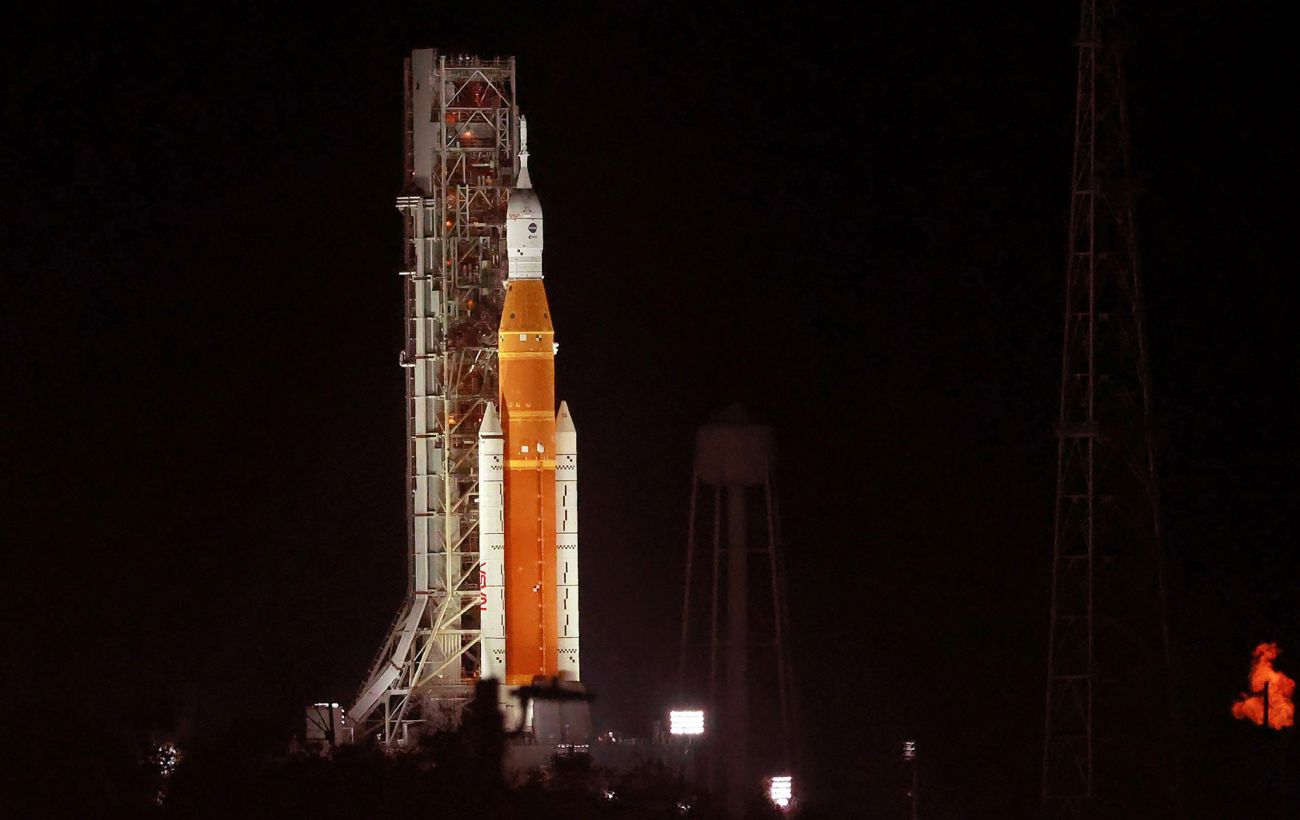
On April 1, 2026, NASA successfully launched Artemis II, marking the first crewed mission to the Moon in over fifty years. This ten-day journey will see four astronauts orbiting Earth’s satellite, heralding a new chapter in lunar exploration.
The Space Launch System (SLS), a towering rocket comparable to a 30-story building, lifted off from Kennedy Space Center. The ascent was accompanied by a massive plume of white vapor illuminated by the evening sun.
On board the Orion capsule is an international crew that includes:
-
Reid Wiseman (NASA) – Commander;
-
Victor Glover (NASA) – Pilot;
-
Christina Koch (NASA) – Mission Specialist;
-
Jeremy Hansen (Canadian Space Agency) – Mission Specialist.
Just moments before liftoff, Canadian astronaut Jeremy Hansen addressed the world, stating, “We are going for all humanity.”
The Artemis II mission is not merely a flight; it serves as a crucial test for the multi-billion dollar U.S. program aimed at outpacing China in the new lunar race. Beijing plans its lunar landing for 2030, while the U.S. aims to land astronauts on the Moon by 2028 with Artemis IV.
This expedition will set a new record, as astronauts will travel approximately 406,000 kilometers from Earth, marking the farthest human journey into space, surpassing even the legendary Apollo 13 mission.
During the ten-day flight, the crew will undertake a series of complex tasks:
-
Manual Control: About 3.5 hours post-launch, Orion will separate from the rocket’s upper stage, allowing astronauts to take control and test the spacecraft’s maneuverability.
-
Life Support System Check: As this is Orion’s first crewed flight, experts will closely monitor how the systems perform in deep space conditions.
-
Gravity Assist Maneuver: The spacecraft will fly around the far side of the Moon, utilizing its gravity to return to Earth.
The success of this launch represents a significant achievement for key contractors, including Boeing and Northrop Grumman, who have spent over a decade developing the SLS rocket. Meanwhile, NASA is increasingly relying on the private sector, with companies like SpaceX and Blue Origin competing to create landing modules that will eventually transport astronauts to the lunar surface.
NASA Administrator Jared Isaacman has emphasized that every aspect of Artemis II has been meticulously planned, as this mission paves the way for a sustained human presence on the Moon and future missions to Mars.
NASA's Artemis II mission has launched, marking a significant step in lunar exploration with a crewed flight around the Moon. This mission is critical for the U.S. space program, aiming to establish a human presence on the Moon and compete in the new lunar race.