“An Anti-Bitcoin Rebellion? The Trump administration not only radically changed the US approach to cryptocurrencies after four years of an anti-crypto war under Biden, but also introduced clear rules for the management of digital funds seized during legal proceedings. This is why the recent sale of Bitcoin (BTC) in the Samurai Wallet case raises significant questions, as this transaction may well violate the President’s Executive Order […]”, — write: businessua.com.ua
An Anti-Bitcoin Rebellion? The Trump administration is not alone radically changed the US approach to cryptocurrencies after four years of the anti-crypto war under Biden, but also introduced clear rules regarding the management of digital funds seized during legal proceedings. That’s why recent bitcoin sale (BTC) in the case Samurai Wallet raises significant questions as this transaction may well violate the executive order President Donald Trump.
Key points of this article:
- The Trump administration has given clear directives for the management of seized digital funds, with the aim of establishing a Strategic Bitcoin Reserve in the United States.
- Despite these directives, the US Marshall Service reportedly sold $6.3 million worth of BTC, potentially in violation of Donald Trump’s executive order.
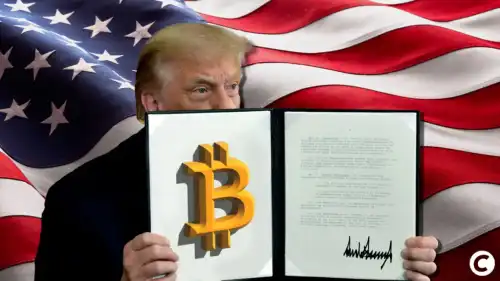
Bitcoin: National Strategic Reserve for the US IN March 2025 the president of the United States Donald Trump signed a historic executive order creating the Strategic Bitcoin Reserve in the United States. A stated goal? keep bitcoins, acquired by the government through criminal or civil arrests .
This decision is part of a broader effort to promotion of cryptocurrencies as strategic assets and not just assets to be liquidated. And it’s safe to say that the United States has a significant share in this field, in particular close to 328,000 BTC only for the king of cryptocurrencies!
However, despite this clear directive, various media reports that November 3, 2025 US Marshals Service (USMS) obviously sold $6.3 million worth of bitcoins out of business Samurai Wallet . These actions may well contradict Trump’s executive order.
Selling BTC in violation of President Trump’s Executive Order 14233 The Samurai Wallet case has caused considerable controversy in the United States through mixing BTC transactions which made them extremely difficult to trace. Developers Keonn Rodriguez and William Lonergan Gill agreed to transfer to the Ministry of Justice ( DOJ ) bitcoins worth $6.3 million (approx 57.55 BTC at the time of the agreement) as part of a plea agreement.
However, according to documents published by Bitcoin Magazine, among others, these BTC were potentially sold through Coinbase Prime by the management service by United States Maritime Services (USMS). This solution can violate President Trump’s Executive Order 14233 which assumes that BTC purchased by the government through confiscation should not be sold a must be kept in the Strategic Reserve .
This case raises the question of how some federal agencies still accepting bitcoin. Obviously not how a strategic asset that should be held as the US president would like, or rather how an unwanted asset that should be liquidated as soon as possible .
Despite directives from the Trump administration, some agencies still seem reluctant to hold bitcoins. Therefore, the US president probably still has a lot of work ahead of him to to completely end the war on Bitcoin and cryptocurrencies being waged by the Biden administration . In any case, USMS’s potential sale of Samurai Wallet bitcoins will be evidence that some members of the US judicial system will have to learn to comply with the President’s Strategic Bitcoin Reserve Order.
Please wait…