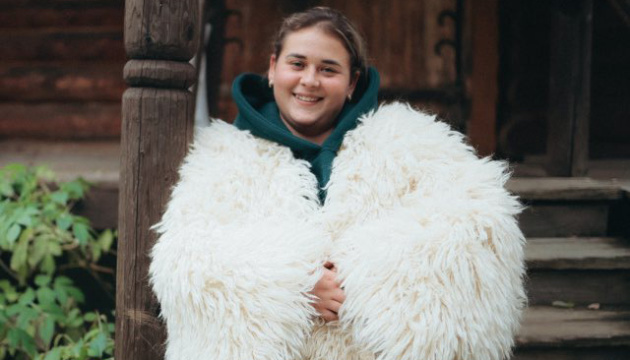
Natalia Taranova, a combat medic in the Ukrainian Armed Forces, enlisted at the age of 20 after completing her medical studies. Serving as a senior combat medic in the anti-tank artillery battery of the 36th Marine Brigade, she has played a crucial role in defending Ukraine’s eastern borders.
Hailing from Mykolaiv, Taranova’s early exposure to medicine came from her mother, a hospital worker. From a young age, she cared for sick stray animals, which solidified her desire to become a nurse. Her brother, Alexander, who served in Crimea during the onset of the conflict with Russia in 2014, also influenced her decision to join the military.
“I wanted to help the soldiers,” Taranova said, recalling her determination to enlist on the day she graduated as a nurse in 2020. She approached various military units in Mykolaiv and chose the marine corps, finding it the most appealing. Since signing her contract, she has rarely returned home, with her first leave only occurring in 2024.
Taranova’s initial assignment was in an anti-tank unit, where she dedicated herself fully to her work, often taking on the most challenging tasks. Before the full-scale invasion of Ukraine, her brigade was stationed near Mariupol, preparing for potential conflict.
“In December 2021, we sensed that something was imminent,” she recalled. On February 19, 2022, she returned to her unit after recovering from COVID-19. Shortly after, she received a call from her brigade’s medical officer, indicating an urgent deployment. She quickly gathered medical supplies and, along with a driver, loaded them into an ambulance. Just as she was about to rest, orders came through for immediate deployment, and her vehicle was the first to leave.
Upon arriving at the front lines near Hnutove, Taranova described the situation as chaotic, with Russian forces bombarding their positions. “We were forced to retreat and establish new defenses near the village of Lebedynske,” she said. The conditions were dire, with days and nights spent without sleep, relying on energy drinks to sustain them. By early March, they had moved to the Illich Steel Plant, where they continued to hold their ground despite being surrounded. After two unsuccessful attempts to break through enemy lines, Taranova and her unit were captured on April 12.
Initially detained in Olenivka, Taranova and 20 other women were placed in a cell designed for six. “The conditions were dreadful,” she recounted, detailing the lack of medical care and substandard food. They were later moved to Taganrog and then to Valuyki in the Belgorod region, where they faced further abuse from their captors. “We endured constant interrogations and humiliation,” she said, recalling her experience of being subjected to a lie detector test.
During her captivity, Taranova and her fellow detainees found solace in singing the Ukrainian national anthem. “We would coordinate to sing it at the same time, despite the consequences,” she noted. After enduring six months of harsh conditions, Taranova was exchanged on October 17, 2022. However, her health had deteriorated significantly during her time in captivity, leading to surgery upon her return to Ukraine.
Following her recovery, Taranova underwent psychological rehabilitation and rejoined the military within two months. Despite being diagnosed with several health issues, she remains committed to her role in the armed forces. “I have no regrets about my decision to serve,” she stated.
Taranova described the emotional toll of her experiences, particularly when she was unable to save soldiers. “I was the only medic for 70 fighters in my unit,” she explained, recalling a traumatic incident when three soldiers were injured simultaneously. “I felt overwhelmed by the responsibility for their lives.”
Despite the challenges, Taranova finds motivation in the gratitude expressed by those she has helped. “When soldiers thank you for saving their lives, it drives you to work even harder,” she said. She is determined to continue her service until all her comrades return home from captivity.
After her release, Taranova faced difficulties reintegrating into civilian life, encountering hostility from some members of society. “It was exhausting to explain the realities of war to those who have never experienced it,” she noted. This led her to return to her combat unit, where she feels a sense of belonging among those who understand her experiences.
In 2024, Taranova participated in a psychological recovery program in Denmark, which she found transformative. “Being among people who understand your trauma was incredibly comforting,” she said. She later continued her recovery in Ukraine, which allowed her to resume her military duties with renewed purpose.
Now a section commander, Taranova is also studying psychology to further assist her fellow soldiers. “My experience in combat medicine provides a solid foundation for understanding how to help them,” she concluded. Taranova has received numerous accolades for her service, but she considers her survival and return home to be her greatest achievement.
Alla Miroshnychenko, Mykolaiv
Photos from Natalia Taranova’s archive
Natalia Taranova, a Ukrainian combat medic, shares her experiences of service, captivity, and recovery. Despite facing significant challenges, she remains committed to her role in the military and helping others.
