On March 29, 2026, significant events unfolded in Ukraine and the broader international landscape, particularly concerning ongoing conflicts and diplomatic efforts.
Ukrainian President Volodymyr Zelenskyy arrived in Jordan for an official visit, as reported on his social media account. In an interview with NBC News, he stated that Russia had captured satellite images of a U.S. airbase in Saudi Arabia shortly before an Iranian strike and reaffirmed Ukraine’s willingness to engage in peace negotiations anywhere except Russia and Belarus.
Middle East Conflict
The USS Tripoli, an American amphibious assault ship, has been deployed to the Central Command area in the Middle East, carrying approximately 3,500 sailors and Marines, according to U.S. Central Command. Meanwhile, Iran has permitted the passage of 20 Pakistani vessels through the Strait of Hormuz, as confirmed by Pakistan’s Foreign Minister, Bilawal Bhutto Zardari.
A small shipment of Saudi oil is en route to Pakistan, having navigated the Strait of Hormuz along the Iranian coastline, according to Bloomberg. In a related development, the Islamic Revolutionary Guard Corps (IRGC) threatened to target American universities in the region, citing the destruction of two Iranian universities due to strikes by the U.S. and Israel.
Additionally, an Iranian missile attack on Prince Sultan Air Base in Saudi Arabia resulted in damage to several military aircraft, including a valuable U.S. early warning and control aircraft, the E-3 Sentry, as reported by Bloomberg. The United Arab Emirates’ air defense intercepted 58 aerial threats launched from Iran on Sunday, according to the UAE Ministry of Defense.
In a historic first, Saudi Arabia has fully activated its East-West oil pipeline, a move aimed at mitigating the energy crisis exacerbated by military operations against Iran, as reported by Al Arabiya.
Statements from Ukrainian Officials
President Zelenskyy commented, “Russia is intensifying its war against our state and people while simultaneously investing in prolonging another conflict that leads to global destabilization.” Ukrainian Foreign Minister Dmytro Kuleba emphasized the unique military capabilities of Ukraine, referring to drones and countermeasures as vital geopolitical tools that should be leveraged for national interests.
Military Developments
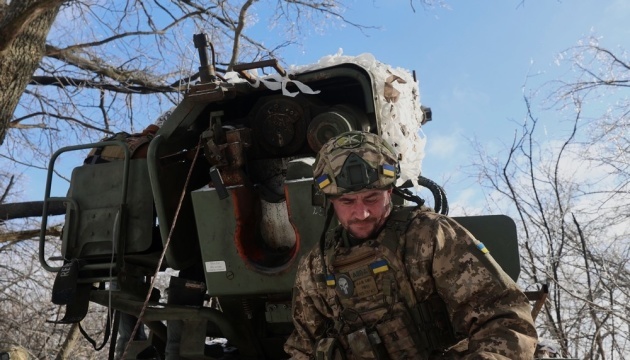
On the front lines, Ukrainian forces reported 66 attacks by Russian troops, with the most intense fighting occurring in the Pokrovsk and Kostiantynivka directions. Ukrainian drone units destroyed three Russian ‘Smerch/Tornado-S’ systems overnight in Crimea, along with fuel tanks in the Luhansk region, according to reports from Commander Robert ‘Madyar’ Brovdi.
In Russia, damage was reported at the Ust-Luga port following a drone attack, while Ukrainian forces targeted the oil terminal infrastructure in the same area. Over the past week, Russian forces have directed more than 3,000 drones and various munitions towards Ukraine, as stated by President Zelenskyy.
Ukrainian air defense systems neutralized 380 out of 443 attacking drones, according to the Air Forces of Ukraine.
Casualties and Humanitarian Impact
In Mykolaiv, ten individuals, including nine children, were injured due to Russian attacks, with a 13-year-old girl succumbing to her injuries in the hospital. In Kramatorsk, an aerial bomb dropped by Russian forces resulted in three fatalities, including a teenager, and left twelve others injured, as reported by local authorities.
The Ukrainian government has allocated 22.35 billion UAH for the construction of protective structures for critical infrastructure, according to Deputy Prime Minister Oleksiy Kuleba.
In energy news, Russian attacks on Naftogaz facilities have continued for four consecutive days, causing damage, while civilian infrastructure in Kyiv region has also been affected.
International Reactions
Globally, the ongoing conflict has prompted discussions about security dynamics, with Turkish defense industry director Haluk Gorgun emphasizing the role of information in security architecture. Meanwhile, German defense contractor Rheinmetall praised the innovative spirit and combat readiness of the Ukrainian people.
Finnish Prime Minister Petteri Orpo called for Europe to take greater responsibility in facilitating peace negotiations to end the war in Ukraine. In Poland, authorities have extended temporary border controls with Germany and Lithuania until October 1.
In the United States, widespread protests under the slogan “No Kings” took place, opposing President Donald Trump’s policies, with millions participating across all 50 states.
The Pentagon is reportedly preparing for potential ground operations in Iran, although a final decision is pending from President Trump.
In the energy sector, leaders from major oil and gas companies have warned that the conflict with Iran poses serious risks to global energy supplies, with potential shortages anticipated in Asia and Europe if the situation escalates.
Conclusion
The events of March 29, 2026, reflect a complex interplay of military actions, diplomatic efforts, and humanitarian concerns, both within Ukraine and on the international stage.
On March 29, 2026, Ukraine's President Zelenskyy visited Jordan and addressed ongoing military conflicts, while significant developments occurred in the Middle East, including U.S. military deployments and Iranian actions. The situation continues to evolve with humanitarian impacts and international responses shaping the geopolitical landscape.
