“The willingness of Ukrainians to make territorial concessions to end the war varies depending on the region. Oleksiy Antipovich, the head of the “Rating” sociological group, told about this in an interview with RBC-Ukraine. A study conducted by the sociological group “Rating” under the leadership of Oleksiy Antipovich showed that in the west of the country, the majority of the population is against any compromises, while in the frontline regions, the demand for a cessation of hostilities is growing. “What”, — write on: ua.news
The willingness of Ukrainians to make territorial concessions to end the war varies depending on the region.
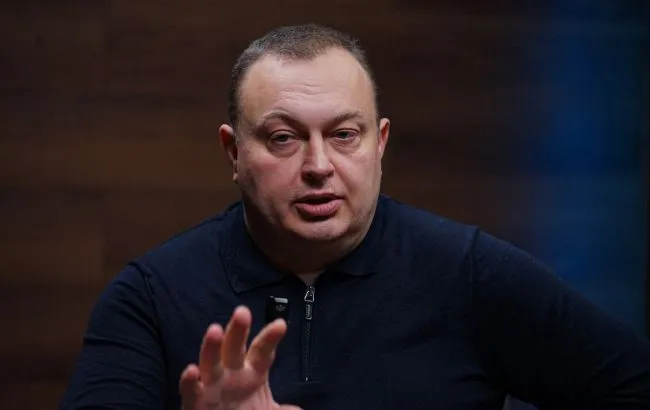
About this in an interview with RBC-Ukraine said Oleksiy Antipovich, head of the “Rating” sociological group.
A study conducted by the sociological group “Rating” under the leadership of Oleksiy Antipovich showed that in the west of the country, the majority of the population is against any compromises, while in the frontline regions, the demand for a cessation of hostilities is growing.
“The more western, the greater the opposition to any territorial concessions, and the more eastern, the greater the agreement,” said the sociologist.
This is caused by the direct threat facing the people in the east, which makes them think about the possibility of ending the conflict.
“And the closer you are to the front line, the more dangerous it is, there the Russians are already shooting at you and flying drones and so on,” Antipovich added.
In general, almost two-thirds of Ukrainians believe that the war can be ended only by diplomatic means. However, a third of the population adheres to a more rigid position, insisting on the full restoration of Ukraine’s 1991 borders.
“That’s why you’re already starting to say: listen, why do we need all this, let’s stop at what we have,” he explained, noting that the difference in mood between regions is not critical, but the trend itself is stable.
Even higher indicators are recorded when Ukrainians are asked not about the desired, but about the realistic way to end the war. According to Antipovich, about 80% of citizens believe that the negotiation model is the real one.
“And when you ask a Ukrainian: what is the real way to end the war – and not the desired one – 80 percent of them say that the real way is only negotiations,” he said.
This 80% includes various dialogue formats. Some Ukrainians support negotiations with the participation of international partners, others allow direct contacts with Russia.
“The same 60% say about negotiations with the involvement of international partners, 20% say that we need direct negotiations with the Russians,” the sociologist clarified, adding that a little more than 10% are in favor of continuing the war until the territories are completely liberated.
At the same time, Antipovich emphasized that support for negotiations does not mean automatic readiness for concrete concessions. The attitude of Ukrainians varies depending on the topic.
“When it comes to specifics, such as the topic of NATO, the topic of the Russian language, the Russian church, the territory, exit from Donbas, and so on, it is all perceived a little differently,” he said.
Territories remain the most painful issue, according to the sociologist.
“No one wants and will not recognize the occupied territories as Russian. All the more so to leave those places occupied by the Ukrainian military,” Antipovich stressed.
At the same time, he admitted that in the absence of alternatives, society will have to make difficult decisions.
“However, if such a compromise is offered, if this is the only possible configuration of these negotiations, then the Ukrainian, who, again, is mostly in favor of the negotiation process, will have to accept it,” the sociologist concluded.
Read us on Telegram and Sends