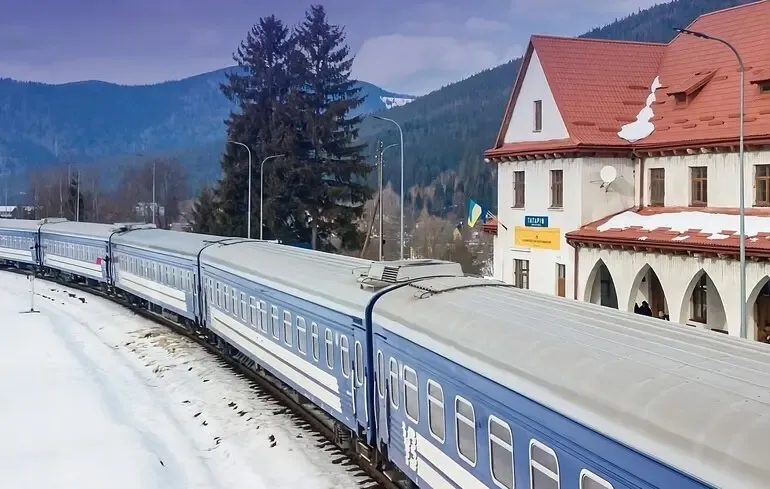
“On the Dnipro-Khelm train, passengers stood for more than three hours in a carriage with a toilet at the Polish border, where the temperature was about -11°C. No information was received either from the Polish border guards or from Ukrzaliznytsia, due to which the children were especially affected, who had to wait in the middle of the night without heat. The reason for the long delay was an incident with smuggling: Polish customs officials”, — write on: ua.news
On the Dnipro-Khelm train, passengers stood for more than three hours in a carriage with a toilet at the Polish border, where the temperature was about -11°C. No information was received either from the Polish border guards or from Ukrzaliznytsia, due to which the children were especially affected, who had to wait in the middle of the night without heat.
The reason for the long delay was an incident with smuggling: Polish customs officers discovered 150 packs of cigarettes from the employees of Ukrzaliznytsia. Due to investigative actions, the train was delayed for more than three hours, which led to the fact that many passengers did not have time for the onward transport to Warsaw. The situation was also complicated by the fact that there is no normal station in Chelm due to renovations, and people, in particular children, were forced to wait almost in the open air in the cold.
This situation raises serious concerns about the organization of passenger transportation and communication in emergency circumstances, especially at international borders, where delays can threaten not only the comfort, but also the safety of travelers.
Over the past two years (2024–early 2026), Ukraine’s migration situation remains a “frozen crisis”: millions of people continue to live outside their homes as refugees or IDPs, and displacement in waves is exacerbated by shelling, infrastructure destruction, and labor market instability. According to UNHCR estimates, the scale of external displacement is measured in the millions, and internal displacement also remains very large; in parallel, the return of some people to relatively safer regions is recorded, but these are often “partial” and depend on security and access to housing/work.
The key “immigration” problem is uncertainty with long-term status and prospects: in the EU, millions of Ukrainians are under temporary protection (the largest are Germany, Poland, the Czech Republic), but countries are already planning how to transfer some people to regular residence/work/study permits or support voluntary return. In 2025, the European Commission proposed to extend temporary protection until March 2027, which gives stability to people, but at the same time “postpones” the solution to the issue of integration or return. A separate dimension is the rules for leaving Ukraine during martial law (including discussions about relaxations for certain groups), which affects demographics and the labor market.
Read us on Telegram and Sends