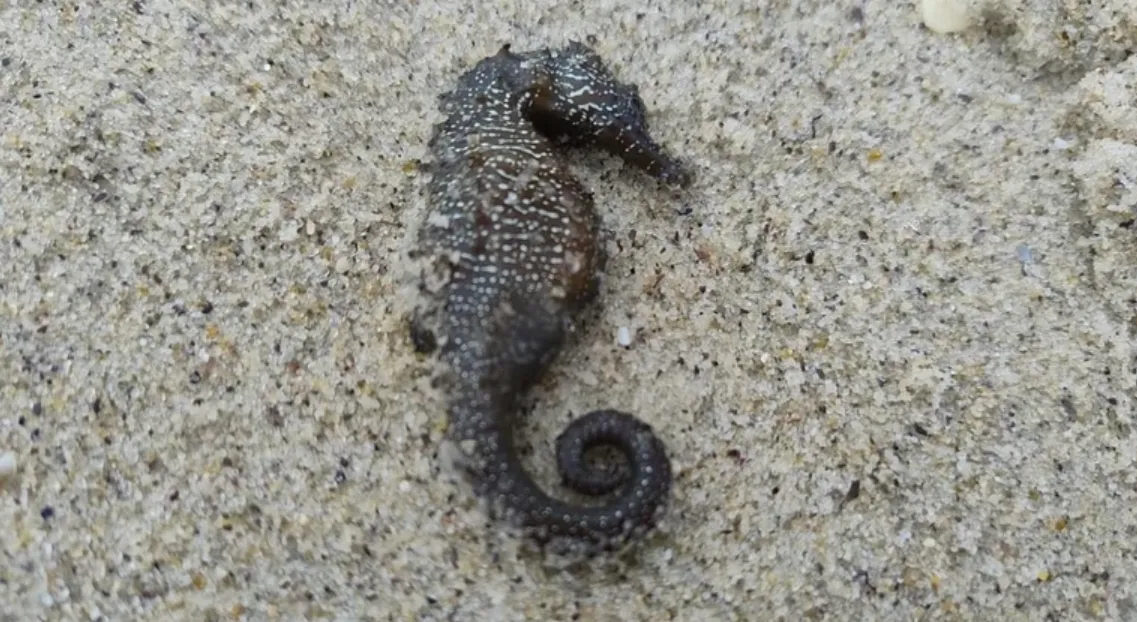
“Red book seahorses, whose mass release was recorded on the coast of Odesa at the end of January 2025, probably did not die due to water pollution. This was reported in the State Environmental Inspection of the South-Western District. Specialists surveyed the coastal strip and took samples of sea water. Laboratory studies of the Institute of Marine Biology of the National Academy of Sciences of Ukraine showed that no hydrogen sulfide was detected in the samples, but water indicators”, — write on: ua.news
Red book seahorses, whose mass release was recorded on the coast of Odesa at the end of January 2025, probably did not die due to water pollution.
This was reported in the State Environmental Inspection of the South-Western District.
Specialists surveyed the coastal strip and took samples of sea water. Laboratory studies of the Institute of Marine Biology of the National Academy of Sciences of Ukraine showed that no hydrogen sulfide was detected in the samples, and the water parameters were within normal limits:
-
suspended substances;
-
total iron;
-
ammonium nitrogen;
-
nitrates;
-
phosphates;
-
dissolved oxygen;
-
biochemical oxygen consumption;
-
pH level;
-
salinity.
“The probability of toxic or chemical pollution of the aquatic environment as the cause of the death of seahorses was assessed as extremely low,” the inspection noted.
The most likely cause of mass death is a combination of natural factors:
-
a powerful storm from the southeast direction;
-
low temperature of sea water;
-
limited mobility of seahorses in winter;
-
lack of natural shelters;
-
increased population size.
According to scientists, due to this complex of factors, seahorses broke away from the substrate and were washed ashore, where they died.
“The inspectorate continues monitoring the state of the marine environment and interacts with scientific institutions to ensure an objective assessment of environmental processes and events,” the service added.
We will remind, at the front noticed rare animals that have not been seen in Ukraine for decades. Also scientists opened a new species of giant rhinoceros that was taller than a giraffe. The animal lived approximately 26.5 million years ago.
Read us on Telegram and Sends
