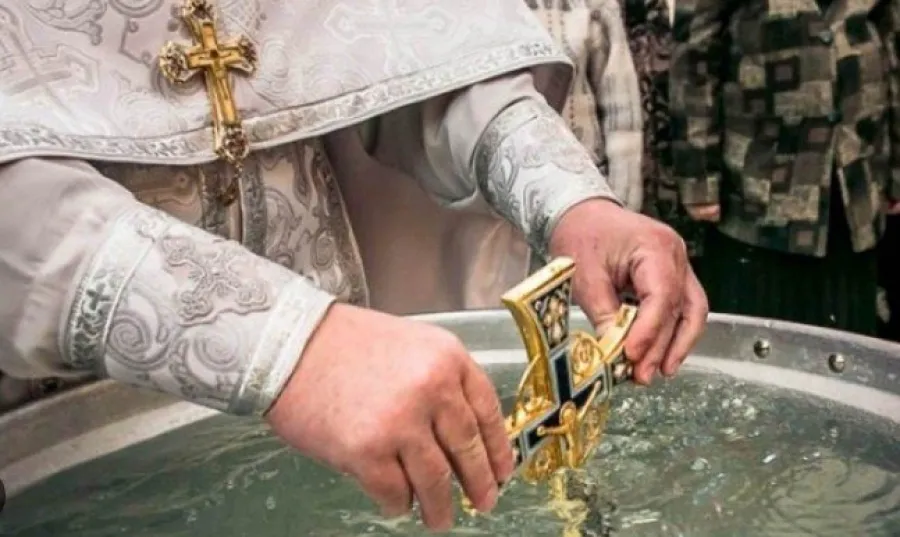
“Epiphany is one of the most important Christian holidays in Ukraine. On this day, believers remember the baptism of Jesus Christ in the Jordan River, sanctify the water and observe ancient church and folk traditions. Until 2023, Epiphany in Ukraine was celebrated on January 19, but after the transition of the Orthodox Church of Ukraine to the new Julian calendar, the date shifted to January 6. So”, — write on: ua.news
Epiphany is one of the most important Christian holidays in Ukraine. On this day, believers remember the baptism of Jesus Christ in the Jordan River, sanctify the water and observe ancient church and folk traditions.
Until 2023, Epiphany in Ukraine was celebrated on January 19, but after the transition of the Orthodox Church of Ukraine to the new Julian calendar, the date shifted to January 6.
Thus, Epiphany completes the Christmas cycle of holidays and has a special spiritual significance for Christians.
During the Savior’s baptism, the Holy Trinity appeared to the world for the first time: God the Father spoke from heaven, the Son of God was baptized in the waters of the Jordan, and the Holy Spirit descended in the form of a dove.
That is why Baptism symbolizes spiritual renewal, purification and grace, and the water of this day is considered special – sanctified and healing.
Traditions on Epiphany
Many traditions associated with this holiday have survived in Ukraine:
-
Water consecration — consecration of water in temples and open water bodies, which is attributed healing and protective properties;
-
Bathing in a puddle (Jordan) — immersion in icy water as a symbol of cleansing from sins and spiritual renewal;
-
Epiphany evening — a fasting dinner on the eve of the holiday with kutya, uzvar, fasting borscht and other traditional dishes;
-
Folk customs — cleaning the house, giving generously, releasing doves during the consecration of water;
-
Wax crosses – they were placed near icons or doors as a talisman for the family and a symbol of the Holy Trinity.
A separate place is occupied by the preparation of a cross-shaped pit, which is consecrated by the priest. Some of the rites have their roots in pre-Christian times, but were organically combined with the Christian tradition.
Prohibitions on Vodokhreshcha
According to folk beliefs, certain prohibitions should be observed on the Epiphany day and after it:
-
you can’t curse, gossip, wish harm to others;
-
it is desirable to refrain from crying and negative emotions so as not to “attract” them for the whole year;
-
for seven days after the holiday, do not wash things in open water, so as not to defile the holy water;
-
on this day it is not recommended to work, sew or knit;
-
it is forbidden to throw away food – it was considered a bad omen for the coming year;
-
one cannot dive into a well or collect holy water with bad thoughts, because, according to beliefs, it can lose its power.
As a reminder, on January 2, 2026, Orthodox Christians honored the memory of Saint Sylvester I, Pope of Rome. He is one of the spiritual leaders of the early Church, whose service fell on the time when Christianity came out of the underground and became an openly professed faith. The saint’s day is associated with prayer, gratitude and inner renewal.
Read us on Telegram and Sends