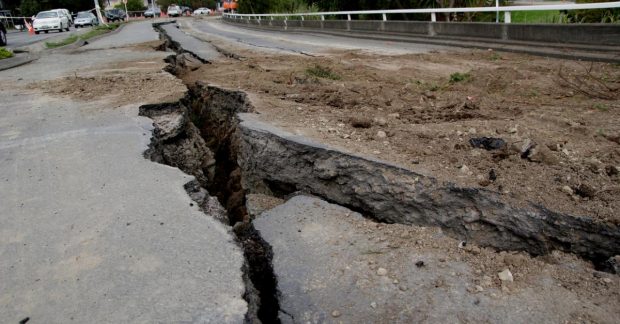
Recent data indicate a rise in seismic activity in the Poltava region of Ukraine, with reports suggesting that between three to five earthquakes occur annually. Dmitry Grin, a leading researcher at the Institute of Geophysics, noted that this trend has been evident since 2020.
Historically, the Poltava area experienced minimal seismic events prior to the 1970s. Grin explained that the increase in earthquakes can be attributed to a combination of human activities and natural geological factors.
He elaborated that the region’s complex geological structure includes significant tectonic blocks and large faults. The extraction of oil and gas has disrupted the stability of the geological system, leading to changes in pressure that may result in seismic events.
Potential for Major Earthquakes
When asked about the possibility of significant earthquakes in the region, Grin reassured that the conditions do not favor the development of large seismic events. He stated, “If there are any movements, they are only a few millimeters, which do not lead to major earthquakes.”
Furthermore, the earthquakes recorded in Poltava typically occur at shallow depths of three to five kilometers. Their impact is limited, with energy dissipating over distances of 50 to 60 kilometers, resulting in magnitudes between 2 and 4 on the Richter scale, which are classified as barely perceptible.
Recent Seismic Activity
On March 28, a minor earthquake was registered in the Machukhiv territorial community, with a magnitude of 3.2. This event, occurring at a depth of eight kilometers, was classified as barely noticeable.
As the region continues to monitor seismic activity, authorities emphasize the importance of understanding these geological phenomena to mitigate potential risks.
The Poltava region has seen an increase in seismic activity since 2020, with experts indicating that while minor earthquakes are common, the potential for significant seismic events remains low. The geological complexities and human activities contribute to this trend.