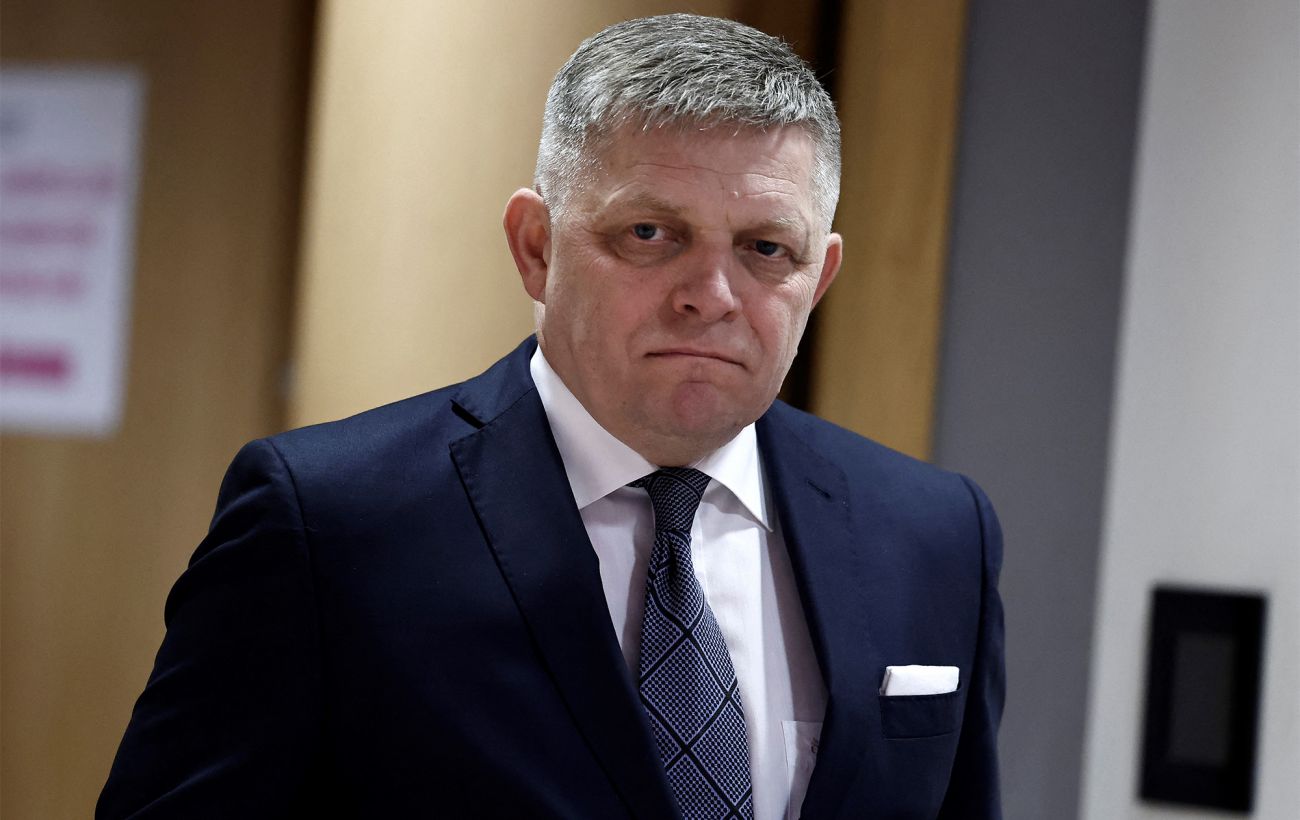
Slovak Prime Minister Robert Fico has indicated that he may initiate a suspension of emergency electricity supplies to Ukraine if oil deliveries to Slovakia are not restored by Monday. Fico’s statement comes as tensions rise over energy resource supplies between the two countries.
Fico emphasized that Slovakia has been supportive of Ukraine since the onset of the war, having welcomed approximately 180,000 Ukrainian refugees and provided humanitarian assistance. However, he has accused Ukraine of halting energy resource supplies, which he claims has significantly impacted Slovakia.
“Initially, he (Ukrainian President Volodymyr Zelensky) stopped gas supplies to Slovakia, resulting in annual losses of 500 million euros for us. Now, he has halted oil supplies, causing further losses and logistical challenges,” Fico stated.
In addition to the electricity supply threat, Fico has also refused to endorse a new military loan for Ukraine, citing his country’s position on the matter.
Market analyst Daria Orlova from ExPro Consulting noted that Slovakia accounts for about 18% of Ukraine’s electricity imports, while Hungary contributes around 45%. Together, these two countries provided approximately 70% of Ukraine’s electricity imports in February, equating to over 1.4 GW of additional capacity.
Orlova pointed out that while Ukraine could partially redistribute energy supplies through other channels, fully compensating for the loss would be challenging. She suggested that Slovakia’s recent statements might be more politically motivated than practical.
According to Orlova, energy system operators across EU countries do not make unilateral decisions regarding supply suspensions, as their operations are coordinated within the European network ENTSO-E.
It is important to note that the transit of Russian oil through Ukraine to Slovakia and Hungary ceased at the end of January following a Russian strike on a pumping station along the Druzhba pipeline. This disruption forced Ukraine to halt oil transportation to refineries in these nations.
In response to the situation, Slovakia and Hungary have begun utilizing strategic reserves and have reached out to Croatia to explore the possibility of organizing supply through its port and pipeline, although Zagreb has agreed to assist only without the transport of Russian oil.
On February 18, Hungarian Foreign Minister Peter Szijjarto announced that Budapest would suspend diesel fuel exports to Ukraine until the transit of Russian oil is reinstated, a stance supported by the Slovak government.
Experts in the Ukrainian fuel market, including Sergey Kuyun and Alexander Sirenko, have noted that the share of Hungarian and Slovak diesel in Ukraine’s market is around 10%, suggesting that potential losses could be offset by imports from other sources.
Furthermore, on February 18, the Slovak government hinted at the possibility of ceasing electricity exports to Ukraine if the oil pipeline operations are not restored. The following day, reports indicated that Budapest was considering additional restrictions, potentially halting not only diesel but also electricity and gas supplies to Ukraine.
Slovak Prime Minister Robert Fico has threatened to suspend electricity exports to Ukraine unless oil supplies are restored. This escalation follows accusations against Ukraine regarding energy resource disruptions, raising concerns about the impact on Ukraine's energy stability.