Serhiy Ivanchenko, a former naval officer, found himself at the forefront of the conflict in Ukraine shortly after the war escalated in February 2022. Just days after returning home from vacation with his wife, he enlisted to defend his hometown of Zaporizhzhia, joining a battalion tasked with fortifying the city against advancing Russian forces.
After weeks of preparation, Ivanchenko’s unit was deployed to Donetsk, where they encountered heavy enemy fire. In a fierce battle, only Ivanchenko and two of his comrades survived after being captured by Russian troops.
During his captivity, Ivanchenko was transported through occupied territories and ultimately to Crimea, where he endured a grueling 38 months in various detention facilities. He recalled the hope of a quick exchange for prisoners, which soon faded as he faced the harsh realities of life in captivity.
“My only task was to survive each day,” Ivanchenko said, reflecting on the psychological toll of isolation and uncertainty.
Initially allowed to send letters home in June 2022, Ivanchenko had no assurance they reached his family. It wasn’t until 2024 that he received a letter from his mother, affirming that his loved ones were safe and that Zaporizhzhia had not fallen to enemy forces. This news provided a glimmer of hope amid the darkness of his situation.
His wife, Kamilla, faced her own struggle during his absence. After not hearing from Ivanchenko for several days, she sought information from military authorities, only to be met with vague responses. On April 7, 2022, she received devastating news: Ivanchenko was reported dead in combat. However, after searching morgues and hospitals, she discovered his body was not among the deceased.
Kamilla’s determination to find her husband led her to contact various organizations, including the Red Cross and government agencies, in hopes of locating him. A month later, she received confirmation that Ivanchenko was alive and held as a prisoner of war.
“I was shocked but relieved to know he was alive,” she recalled, highlighting the emotional rollercoaster of the preceding weeks.
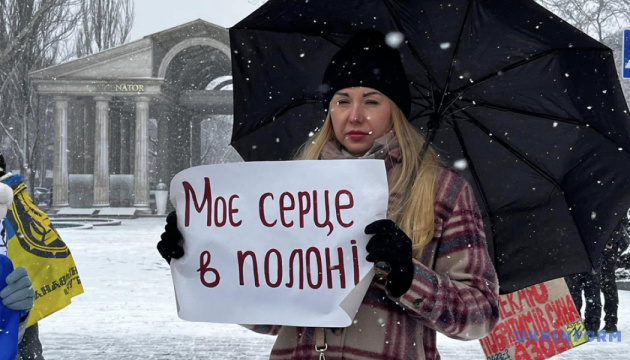
As time passed, Kamilla participated in weekly rallies to support families of missing soldiers, sharing her husband’s story and advocating for those still unaccounted for. In 2024, she learned from a recently released prisoner that Ivanchenko had not received her letters and was living in dire conditions.
In May 2025, Ivanchenko received a letter from Kamilla, which reignited his hope and determination to survive. “Receiving that letter was the greatest gift,” he said, emphasizing the importance of connection during his ordeal.
On May 23, 2025, a prisoner exchange facilitated by Turkey marked a turning point in their lives. After days of anxious waiting, Kamilla received notification that her husband was among those being released.
Upon his return, Ivanchenko faced the challenge of reintegrating into civilian life after years of captivity. Both he and Kamilla acknowledged the toll the experience had taken on their health and aspirations but remained committed to rebuilding their lives together.
“We are learning to live together again. It feels like a second chance,” Ivanchenko said, reflecting on their renewed relationship.
As they resumed their lives, Kamilla completed home renovations they had started together, creating a comfortable space for Ivanchenko’s rehabilitation. The couple celebrated their first New Year together since his return and continued to cherish the small moments that signify their shared dreams and aspirations.
“Happiness is simply being together and having the opportunity to realize our dreams, no matter how small,” Kamilla concluded.
The story of Serhiy Ivanchenko, a Ukrainian soldier who endured 38 months of captivity, highlights the emotional and physical toll of war on individuals and their families. His journey from enlistment to survival and reunion with his wife, Kamilla, underscores the resilience of those affected by the conflict.
